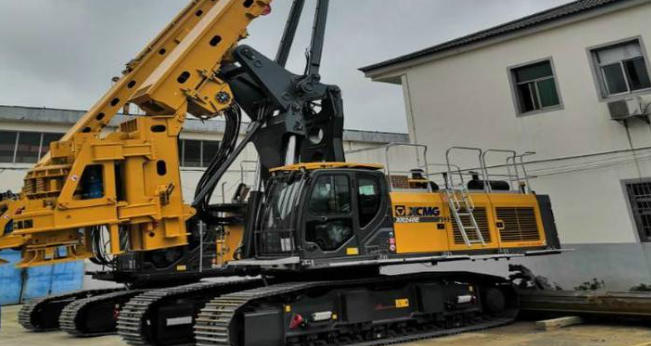


Quick Troubleshooting and Diagnosis Tips for Common Faults of the Three Core Systems of Rotary Drilling Rigs
Release time: 2026-09-10
Hydraulic system fault diagnosis: solving the core problem of equipment power transmission
The hydraulic system is the core transmission system of the rotary drilling rig operation, which directly determines the stability of the core working conditions such as drilling, lifting, and rotation of the equipment, and is also the core module with high incidence of faults on the construction site. In daily operations, common hydraulic failures of equipment are concentrated in four major problems: insufficient pressure, slow action, high oil temperature, and pipeline leakage. They are often caused by factors such as hydraulic oil deterioration, filter blockage, valve group jamming, and oil circuit intake. Quick diagnosis can follow the principle of “external first, internal second” and “simple first, complex second”. Firstly, check the hydraulic oil level, oil quality and color, and investigate whether there is leakage or damage to the oil pipe joints and seals; Secondly, check the pressure difference of the hydraulic filter element and replace the clogged and aged filter element in a timely manner; Finally, the system pressure is monitored through a pressure gauge to determine if there is any pressure regulation failure or stuck valve core in the main pump, overflow valve, and multi way valve. Targeted troubleshooting can quickly solve problems such as weak drilling, lagging movements, and overall pressure relief, avoiding major issues such as pump wear and cylinder damage caused by faulty hydraulic systems during operation, and ensuring continuous and stable equipment construction.
Electrical system troubleshooting: Accurately solving equipment control failure problems
As the control center of the rotary drilling rig, the electrical system is responsible for signal transmission, working condition regulation, and safety warning of the entire machine. Malfunctions often manifest as abnormal startup, instrument alarms, unresponsive operation, sensor failures, etc., which are common problems affecting equipment startup operations. Outdoor construction sites have high levels of dust, humidity, and long-term vibration and wear of wiring, which can easily cause loose wiring, oxidized plugs, sensor failure, fuse melting, and other malfunctions. In practical quick diagnosis, priority should be given to checking the dashboard fault codes and warning prompts, and relying on the self checking function of the equipment’s electronic control system to lock in the fault range; Subsequently, check the battery voltage, circuit connectors, power fuses, and investigate issues such as virtual connections, short circuits, oxidation, and corrosion in the circuit; Finally, inspect the core components such as the tilt sensor, pressure sensor, and control module of the operating handle one by one. By conducting layered troubleshooting, circuit faults can be quickly resolved, eliminating misoperations and shutdowns caused by electrical control failures, ensuring precise equipment control and controllable operating conditions.
Fault diagnosis of power system: eliminate the short board of equipment power output
The power system (engine) is the power source of the rotary drilling rig, and its operating status directly determines the construction efficiency and load capacity of the equipment. Common faults include difficulty starting, insufficient power, unstable idle, abnormal exhaust, and high water temperature. Long term high load operations on construction sites, uneven fuel quality, and clogged air filters are the main causes of malfunctions. Quick diagnosis first observes the operating status of the equipment, distinguishing between different working conditions such as cold start faults, thermal power attenuation, and heavy load shutdown; Next, check the fuel circuit, air filter, and oil level to identify basic issues such as poor fuel supply, insufficient intake, and poor lubrication; Finally, monitor the engine speed, water temperature, and oil pressure parameters to accurately determine whether there are faults in the fuel injectors, turbocharger, and cooling system. Timely investigation of power system hazards can effectively solve problems such as equipment overload and weakness, frequent engine shutdowns, and soaring fuel consumption, extending the service life of the engine.
Key points of comprehensive system operation and maintenance: reducing the frequency of failures to ensure construction efficiency
The hydraulic, electrical, and power systems of the rotary drilling rig are interrelated and work together, and a single system failure can easily cause chain problems. Therefore, the core of rapid fault diagnosis includes both precise troubleshooting and daily preventive operation and maintenance. The construction site has a complex working environment, with large fluctuations in soil and rock construction loads. The equipment is in a high-intensity operating state for a long time, and a regular inspection mechanism needs to be established. Before daily homework, focus on checking the hydraulic oil, circuit lines, and core parameters of the power system. After homework, do a good job in equipment dust removal, circuit protection, and oil maintenance; Regularly replace hydraulic oil, filter element, and engine oil, calibrate electronic control sensors, and tighten circuit connectors. By combining rapid fault diagnosis with normalized operation and maintenance, the equipment failure rate can be significantly reduced, the downtime for maintenance can be reduced, and the stability and continuity of rotary drilling rig field construction can be effectively improved, adapting to the high-intensity operation requirements of various infrastructure pile foundation projects.