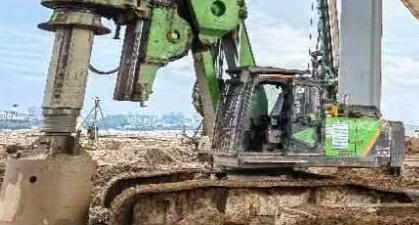


Core Troubleshooting Tips for Rotary Drilling Rigs: Resolving Abnormal Noise, Oil Leakage and Insufficient Power Issues
Release time: 2026-09-28
Overview and practical principles of equipment troubleshooting
As the core equipment of pile foundation engineering, rotary drilling rig operates under complex conditions of high load, high dust, and strong vibration for a long time, which is prone to three types of high-frequency faults: abnormal noise, oil leakage, and insufficient power, directly affecting construction efficiency, operation safety, and equipment service life. In engineering practice, fault diagnosis should follow the core principles of “external first, internal second”, “simple first, complex second”, and the combination of no-load load load, to prevent blind disassembly and maintenance. By accurately identifying the appearance of faults, locating the root cause of faults, and standardizing the troubleshooting process, common equipment problems can be quickly solved, ensuring the continuous and stable operation of pile foundation construction, and reducing equipment downtime losses and maintenance costs.
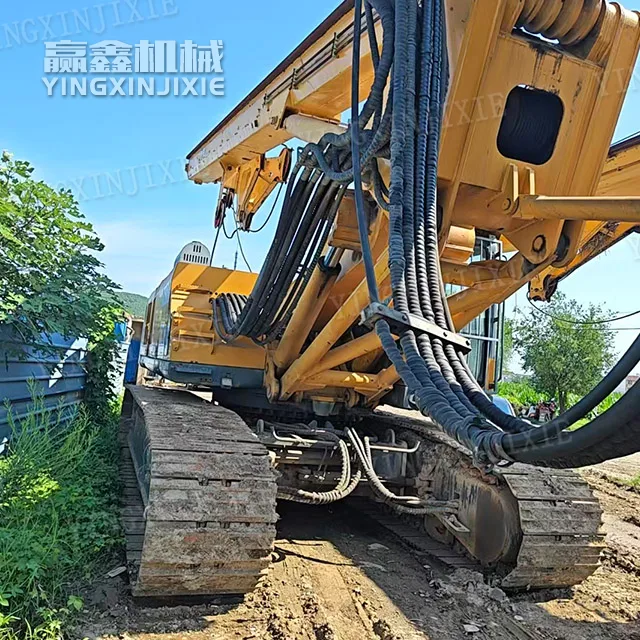
Accurate identification and step-by-step troubleshooting method for equipment abnormal noise
The abnormal noise of the rotary drilling rig is mainly concentrated in the four core parts of the power head, reducer, hydraulic pump, and engine. Different abnormal sounds correspond to different fault problems, which can be accurately investigated through dual scenarios of idle and no-load operations. When the equipment is idling, if there is a uniform and slight buzzing sound, it is a normal working condition. Once there is a sharp whistling sound, it is mostly caused by air intake in the hydraulic system, filter blockage, or oil pump wear; If there is a dull rattling or irregular friction sound, it is highly likely that the gearbox gears are worn, bearings are damaged, or hard impurities are mixed inside. When drilling with load, abnormal noise from the power head is accompanied by jamming, which is often caused by abnormal gear meshing and lack of lubricating oil leading to dry friction problems. When troubleshooting, priority should be given to checking the lubricating oil level and quality of each part, cleaning the hydraulic filter element, checking the sealing of the oil circuit, then detecting the hydraulic system pressure through a pressure gauge, and finally checking the wear of mechanical transmission components to gradually identify the root cause of abnormal noise.
Key points for identifying and troubleshooting system oil leakage points
Oil leakage is the most common hidden danger of rotary drilling rigs, mainly divided into three types: hydraulic oil leakage, gearbox oil leakage, and engine oil leakage. It is often caused by aging of accessories, wear and tear under working conditions, and improper installation. Daily inspections mainly rely on visual inspection, with a focus on key points such as oil pipe joints, sealing rings, cylinder piston rods, and gearbox end caps. Minor oil leaks are mostly caused by aging sealing rings and loose joints, while large-scale oil leaks are most likely caused by oil pipe damage, valve body sealing failure, and box cracks. At the same time, it is necessary to combine the oil state to assist in judgment. Hydraulic oil is turbid and contains impurities, which will accelerate the wear of seals and cause leakage; The sudden drop in gear oil level and the accumulation of oil stains are often caused by faults in the sealing system of the gearbox. During the inspection process, it is necessary to stop the machine for pressure relief operations to avoid safety accidents caused by pressure maintenance. After the inspection, aging parts should be replaced, joints should be tightened, and impurities in the oil circuit should be cleaned in a timely manner to prevent repeated leakage problems.
Traceability and targeted troubleshooting techniques for power shortage faults
The insufficient power of rotary drilling rig is manifested as insufficient drilling torque, slow lifting and lowering of drill rods, and weak load operation. The core causes are concentrated in the hydraulic system and fuel system. Hydraulic system failure is the main cause. Insufficient hydraulic oil level, oil contamination, and clogged filter elements can lead to poor oil supply in the oil circuit. Blockage of the relief valve and wear of the hydraulic pump can cause low system pressure, which cannot meet the torque requirements for operation. In terms of fuel system, blockage of fuel filter, intake of oil circuit, and insufficient diesel combustion can directly lead to a decrease in engine power and cause overall power weakness. In practical troubleshooting, first check the working conditions of the fuel filter and air filter, investigate the intake problem of the oil circuit, then check whether the hydraulic system pressure meets the rated standard, observe the hydraulic oil temperature and oil quality status, and finally troubleshoot the transmission faults of the power head motor and reducer, accurately distinguish hydraulic, mechanical, and fuel power faults, and achieve efficient repair.
Daily operation and maintenance to avoid faults and ensure stable construction of equipment
The three core faults of rotary drilling rigs are mostly caused by inadequate daily maintenance, and normalized and precise operation and maintenance can significantly reduce the occurrence rate of faults. Regularly check the oil level and quality before and after construction, regularly replace filter elements, hydraulic oil, gear oil, and timely replace aging seals and oil pipes; Avoid long-term overload operation of equipment during homework, and reduce the loss of transmission and hydraulic components caused by severe vibration; Clean the equipment after shutdown to prevent dust and impurities from entering the valve body and gearbox and causing malfunctions. At the same time, establish an equipment operating condition ledger to record abnormal noise, pressure, and fuel consumption changes, predict potential faults in advance, achieve early detection, early investigation, and early repair, and continuously ensure the efficient and stable operation of rotary drilling rigs in various pile foundation projects.