

¡El mercado apunta a alcanzar los 5 mil millones! Análisis en profundidad de la lógica de crecimiento y el panorama competitivo de la industria de plataformas de perforación rotatoria.
Release time: 2026-05-11
With the improvement of domestic infrastructure and the promotion of new urbanization, as well as the continuous expansion of overseas infrastructure markets, rotary drilling rigs, as the core equipment for pile foundation construction, continue to release industry demand and steadily climb the market size, aiming at the 5 billion mark. At present, the rotary drilling rig industry is in a critical development period of “demand upgrading, technological iteration, and intensified competition”. It benefits from the dual drive of policy dividends and market demand, but also faces industry pain points such as homogeneous competition and overseas expansion challenges. This article is based on the actual situation of the industry, deeply dismantling the core logic of industry growth, analyzing the current competitive landscape, and helping practitioners to clearly grasp the development trend of the industry and seize market development opportunities.
Industry Overview: Pile foundation urgently needs support, with a market potential of 5 billion yuan
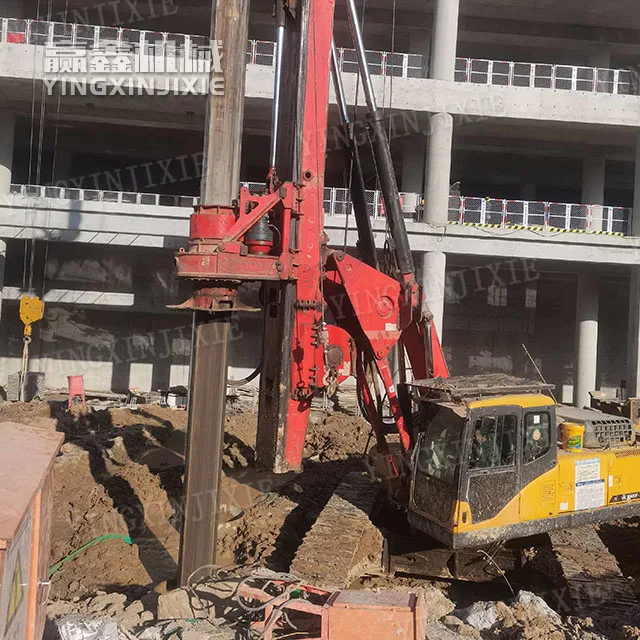
Rotary drilling rigs are mainly used for pile foundation drilling in fields such as bridges, rail transit, wind power foundations, municipal ingeniería, and real estate. They are a core category highly tied to infrastructure investment in the field of construction machinery. In recent years, domestic policies to stabilize growth have continued to be implemented, with intensive projects such as new infrastructure, urban renewal, and rural revitalization landing, driving the normalization of demand for pile foundation construction; At the same time, domestic rotary drilling rigs have gradually opened up overseas markets with the advantages of high cost-effectiveness and strong adaptability, and their export volume has been increasing year by year. Under the combination of multiple favorable factors, the market size of the rotary drilling rig industry continues to expand, steadily moving from the past 3 billion level to 5 billion level. The industry’s development potential continues to be released, becoming one of the most dynamic sub sectors in the field of construction machinery.
Growth logic one: Policy dividends empower, infrastructure demand continues to bottom out
Policy driven development is the core engine driving the growth of the rotary drilling rig industry, and the sustained investment in domestic infrastructure provides solid demand support for the industry. The country continues to increase investment in infrastructure such as transportation, water conservancy, and energy. The construction of large-scale projects such as highways, high-speed railways, and urban rail transit has significantly increased the demand for rotary drilling rigs. Especially in emerging infrastructure fields such as wind power foundations and underground pipe galleries, the performance requirements for plataformas de perforación rotatoria are higher, driving the growth of demand for mid to high end models. In addition, the infrastructure support policies and equipment renewal subsidies introduced by local governments have further reduced the purchasing costs of construction enterprises, stimulated the release of market demand, and injected policy impetus into the industry to break through the 5 billion mark.
Growth logic 2: Technological iteration and upgrading, continuous improvement of product adaptability
Technological iteration is the core competitiveness for the continuous growth of the industry. Domestic rotary drilling rig enterprises are continuously increasing their research and development investment, promoting the upgrading of products towards intelligence, large-scale, and energy-saving, and adapting to more complex construction scenarios. Early rotary drilling rigs were mainly used for small and medium-sized tonnage, suitable for shallow hole and soft soil geological construction; Nowadays, large tonnage and high torque plataformas de perforación rotatoria have gradually become the mainstream in the market, which can adapt to complex geological conditions such as hard rock, deep holes, and large apertures, and meet the needs of high-end projects such as wind power foundations and bridge pile foundations. At the same time, the application of intelligent technology, such as remote monitoring, automatic drilling, and fault warning, has improved construction efficiency, reduced the labor intensity of operators, further expanded product application scenarios, and driven industry demand upgrades.
Growth logic three: Overseas market expansion, continuous expansion of export increment space
Against the backdrop of increasingly fierce competition in the domestic market, overseas markets have become an important incremental pole for the growth of the rotary drilling rig industry. Domestic rotary drilling rigs, with their cost-effectiveness advantages, have gradually broken the monopoly of European, American, and Japanese brands, and their export markets cover Southeast Asia, the Middle East, Africa, Latin America, and other regions. These regions have a strong demand for infrastructure and are highly sensitive to equipment prices, highlighting the high cost-effectiveness of domestically produced rotary drilling rigs. At the same time, with the deepening of the “the Belt and Road” initiative, Chinese enterprises have increased their participation in overseas infrastructure projects, driving the export volume of rotary drilling rigs to continue to grow, and becoming an important support for the industry scale to exceed 5 billion.
Growth logic four: Release of aftermarket potential and improvement of profit ecology
With the continuous increase in the number of rotary drilling rigs, aftermarket services have become a new growth highlight in the industry, improving the industry’s profit ecosystem. As heavy equipment, rotary drilling rigs have a long service life and high maintenance requirements. The demand for aftermarket services such as maintenance, leasing, and parts supply continues to be released. Enterprises in the industry are gradually shifting from selling single equipment to an integrated service model of “sales+leasing+maintenance+accessories”, which not only enhances customer stickiness but also expands profit margins. The standardized and specialized development of aftermarket services has further promoted the healthy development of the industry and provided sustained momentum for the growth of market size.
Competitive landscape: Three legged competition, coexistence of homogenization and differentiation
The current rotary drilling rig industry has formed a three legged competition pattern of “leading by top brands and supplemented by small and medium-sized brands”, mainly divided into three tiers, where homogeneous competition and differentiated competition coexist. Top enterprises dominate the market by leveraging their technological, financial, and channel advantages; Small and medium-sized brands focus on segmented markets, seizing a portion of the market share with their cost-effectiveness advantage, and the industry competition is becoming increasingly fierce.
First tier: Leading companies in both technology and channels
The first tier mainly includes leading engineering machinery enterprises such as XCMG, Sany, and Zoomlion, which collectively occupy over 60% of the market share and dominate the industry’s development direction. These types of enterprises have sufficient R&D investment, strong technical strength, and product coverage of all tonnages and scenarios. They have layouts ranging from small and medium-sized tonnages to large high torque models, and are at the forefront of the industry in intelligent and energy-saving technologies. At the same time, top enterprises have well-established sales channels and after-sales systems, extensive coverage of domestic branches, mature overseas market layout, strong brand influence, and are the core driving force for the industry to break through the 5 billion mark.
Second tier: Segmenting leading companies, focusing on distinctive areas to break through
The second tier mainly focuses on enterprises in the subdivision field of rotary drilling rigs, such as Shanhe Intelligence, Foton Lovol, etc., occupying a total market share of 25% -30%. These types of enterprises do not pursue a full category layout, but focus on specific niche scenarios, such as small rotary drilling rigs, high cost-effective mid-range models, or deep cultivation in specific regional markets, relying on product features and regional channel advantages to achieve differentiated breakthroughs. Some companies also focus on overseas segmented markets, gradually establishing their own market advantages and becoming an important supplement to industry growth.
Third tier: Small and medium-sized brands, relying on cost-effectiveness to seize the low-end market
The third tier mainly consists of numerous small and medium-sized rotary drilling rig enterprises with numerous brands and small scales, occupying less than 10% of the market share, mainly focusing on the low-end market. These types of enterprises have limited R&D investment, with products mainly based on imitation and low technological content. They mainly rely on low price strategies to seize the market, and their products are mostly suitable for shallow hole and soft soil geological construction scenarios such as small municipal and rural infrastructure. Due to the lack of core technology and after-sales support, these enterprises have weak market competitiveness and face the risk of being squeezed and eliminated by top enterprises.
Industry challenges and future trends: Breaking through homogenization and moving towards high-quality development
Although the market size of the rotary drilling rig industry is aiming at 5 billion yuan and has enormous growth potential, it also faces many challenges: severe homogenization competition in the industry, low price competition among small and medium-sized brands leading to compressed profit margins; The core components rely on imports, and some high-end technologies still have a gap with the international advanced level; Overseas market expansion faces issues such as trade barriers and insufficient localized services. In the future, the industry will gradually move towards high-quality development, with technological innovation, differentiated competition, overseas deep cultivation, and post market improvement becoming the core development directions. Leading enterprises will continue to increase research and development investment, break through core technologies, and small and medium-sized brands need to find the right segmentation positioning to achieve differentiated development, jointly promoting the industry’s scale towards the goal of 5 billion or even higher.