

Revision of the EU Cybersecurity Act Impacts Cross-border Logistics of Large Engineering Equipment Between China and the EU
Release time: 2026-05-09
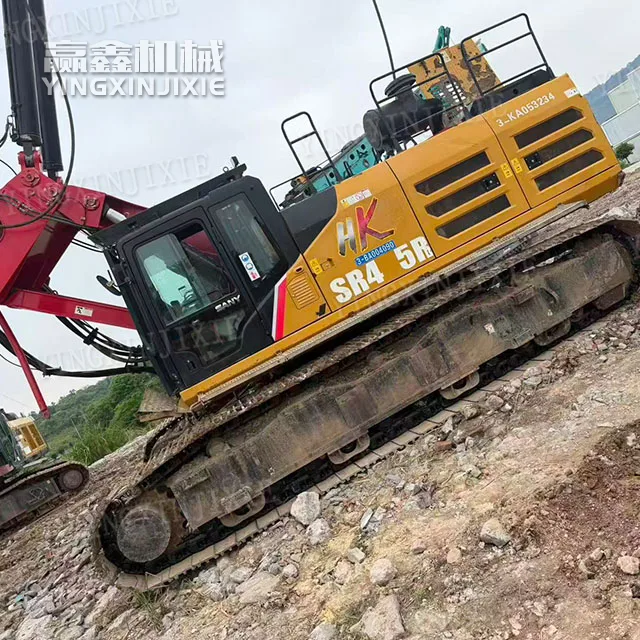
The EU plans to revise the Cybersecurity Law under the name of “cybersecurity”, listing Chinese companies as “high-risk suppliers”, prohibiting them from participating in the construction of 18 key areas such as energy, transportation, and infrastructure, and requiring the dismantling and replacement of existing Chinese hardware within 5 years, with a total cost of over 367.8 billion euros. This bill ignores WTO rules and market principles, has obvious discrimination, and directly impacts the trade and logistics links of large engineering equipment such as rotary drilling rigs and pile drivers between China and Europe, changing the stable pattern of cross-border transportation. As an important exporter of global engineering equipment, China’s rotary drilling rigs and pile drivers have long supplied the EU infrastructure market with high cost-effectiveness and technological advantages. However, the exclusive provisions of the bill have cut off the supply and demand link from the procurement side, forcing the passive adjustment of the logistics system for large equipment in China and Europe.
The contraction of export markets is forcing the reconstruction of logistics routes and capacity
The ban on Chinese equipment in key areas of EU infrastructure has directly led to a sharp decline in export orders for large equipment such as rotary drilling rigs and pile drivers to Europe, and a significant reduction in the previously stable sea and railway transportation flow. Previously, large-scale kỹ thuật equipment between China and Europe relied heavily on sea transportation via the Suez Canal or the China Europe freight trains passing through Kazakhstan, Russia, and Belarus. The route and capacity were planned around normalized export demand. Nowadays, the market is shrinking, and logistics companies are facing the problems of insufficient route utilization and idle capacity. Some ships and trains specializing in the transportation of large equipment between China and Europe are forced to adjust their routes and turn to emerging markets such as Southeast Asia and the Middle East, or reduce their schedules to lower operating costs. At the same time, the decline in equipment exports has led to a transfer of bargaining power in logistics, intensified fluctuations in transportation prices, and further compressed the profit margins of cross-border logistics enterprises.
The lifting of compliance barriers has pushed up the comprehensive cost of logistics for large equipment
After the implementation of the bill, the EU’s scrutiny of Chinese engineering equipment has become stricter, with additional compliance processes and restrictive measures significantly increasing the cross-border logistics costs of large equipment such as giàn khoan quay and pile drivers. On the one hand, the export of equipment requires the addition of compliance testing, qualification certification, and other processes, which prolongs the document review cycle, resulting in slower logistics efficiency and increased capital occupation costs; On the other hand, some EU member states have imposed port inspections and transfer restrictions on large equipment from China, requiring equipment dismantling and inspection or replacement of parts, significantly increasing additional costs such as loading, unloading, modification, and warehousing. In addition, to avoid policy risks, logistics companies need to re plan their transportation routes, choose more circuitous routes or transit nodes, increase transportation distance and time, directly push up basic logistics costs such as fuel and labor, and ultimately lead to an increase in the arrival price of equipment such as rotary drilling rigs and pile drivers, weakening the competitiveness of Chinese products.
Replacement of existing equipment stimulates reverse logistics and special transportation needs
The bill requires the dismantling and replacement of existing Chinese hardware equipment within the EU within 5 years, which has led to a demand for reverse logistics of large engineering equipment such as rotary drilling rigs and pile drivers, becoming a new variable in the logistics field between China and Europe. These devices to be dismantled are mostly distributed in infrastructure construction sites in EU countries, with large volume and heavy weight. Some of the thiết bị has problems such as component aging and difficulty in dismantling due to long-term use, which puts higher demands on transportation vehicles, loading and unloading technology, and packaging protection. Reverse logistics involves multiple stages such as site dismantling, short distance transportation, port lifting, cross-border transportation, customs clearance, and declaration. The process is complex and carries high risks, which is significantly different from the standardized operations of traditional export logistics. At the same time, some equipment that can be repaired and reused needs to be transported back to China and require supporting services such as testing and refurbishment, which forces logistics companies to expand value-added services such as special transportation, large-scale lifting, and cross-border maintenance, promoting the transformation of large-scale equipment logistics in China and Europe towards diversification and specialization.
Global supply chain adjustment accelerates logistics substitution path cultivation
The discriminatory trade policies of the European Union have forced Chinese engineering equipment and logistics companies to accelerate their expansion into markets outside the EU, promoting the restructuring of global large-scale equipment logistics supply chains. To reduce dependence on the European market, enterprises are increasing their export efforts to regions with strong infrastructure demand such as Southeast Asia, Latin America, and Africa, gradually establishing new logistics backbone networks. At the same time, although the China Europe freight train is more efficient than sea freight, due to geopolitical policies, companies have begun to explore alternative transportation routes such as land routes through Central Asia and the Middle East, or Arctic routes, to diversify logistics risks. In addition, domestic logistics companies are deepening cooperation with engineering equipment manufacturers, laying out warehousing bases and assembly factories in overseas target markets, adopting the “local production+regional distribution” model, reducing the frequency of cross-border long-distance transportation, avoiding the impact of trade barriers, and promoting the development of a more flexible and diversified global large-scale engineering equipment logistics system.