


Sudden Policy Shift in the Strait of Hormuz Brings New Adjustments to the Logistics Landscape for Large Engineering Equipment Shipping Overseas
Release time: 2026-07-15
Rapid reversal of cross-strait policies, precise iteration of shipping control rules
The shipping policy in the Strait of Hormuz has undergone a significant reversal within 24 hours, completely reversing previous market expectations. On the 13th, the United States announced the resumption of its maritime blockade against Iran and plans to impose a 20% toll on all cargo passing through the strait, causing panic in the global shipping market. Just one day later, the US urgently adjusted its policy and announced the cancellation of the toll collection plan, replacing the original charging rules with trade and investment agreements with Gulf countries. At the same time, the United States has clarified a new control boundary, and the Strait of Hormuz is normally open to all ships except for those associated with Iran. The blockade only applies to ships traveling to and from Iranian ports and carrying Iranian related goods, completely abandoning the one size fits all control model. The regional navigation situation has quickly stabilized, eliminating widespread uncertainty in the cross-border shipping market.
Logistics costs have dropped significantly, and foreign trade profits for engineering equipment have been restored
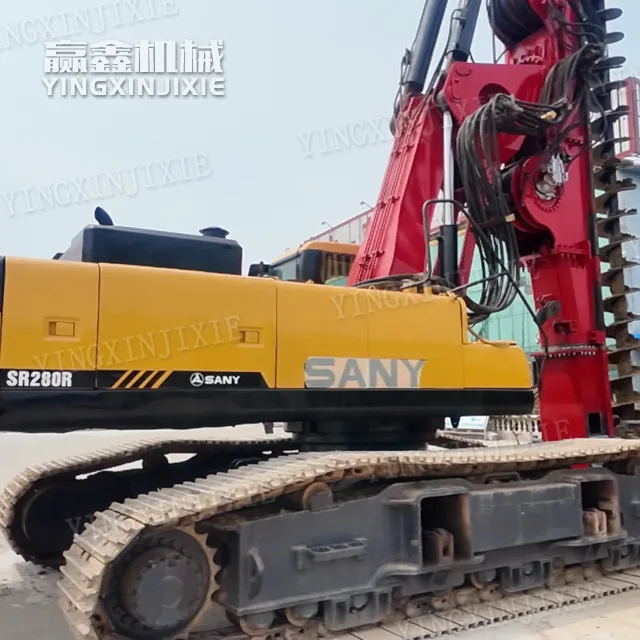
This policy adjustment has significantly benefited the overseas trade of large-scale pile foundation engineering equipment such as rotary drilling rigs and pile drivers. This type of large-scale equipment belongs to ultra large special cargo transportation, relying on semi submersible ships and large special ships for transportation. The single navigation capacity occupies a large amount and the transportation base is high. If the 20% cargo charging policy is implemented, it will generate huge additional logistics expenses and significantly compress the foreign trade profits of equipment. With the complete cancellation of toll policies, large equipment export enterprises no longer need to bear high shipping costs, and the core logistics expenses for equipment going abroad along the Middle East and Europe have significantly decreased. At the same time, the premium for safe haven freight rates in the market has subsided, and the prices of special vessel leasing and maritime cargo insurance have returned to a reasonable range, effectively alleviating the cost problem of long-term pressure on engineering equipment going abroad and helping domestic infrastructure equipment enhance its overseas price competitiveness.
The resumption of normal flight routes has improved the controllability of equipment delivery cycles
Previously, the US charges and the expectation of a comprehensive blockade have led most shipping companies to avoid risks and detour around the Cape of Good Hope in Africa, resulting in frequent problems of long transportation routes and delays in the delivery of large equipment. After the implementation of the new control rules, non Iranian related shipping can pass through the Strait of Hormuz normally, and traditional direct shipping routes in the Persian Gulf have been fully restored, completely ending the passive situation of large-scale detours. For overseas infrastructure projects with strict schedule requirements, core construction equipment such as rotary drilling rigs and pile drivers can be shipped out via the shortest route, significantly reducing the transportation cycle. Ship scheduling, port berthing, customs clearance and transportation processes have returned to a normalized rhythm. The stable delivery time of equipment effectively solves the risks of construction delays and schedule breaches caused by logistics delays in overseas pile foundation projects, greatly improving the stability of large-scale equipment delivery overseas.
Precise control and division of boundary equipment for overseas risk control, reshaping the pattern of risk control
The differentiated blockade policy of the United States has led to a significant shift in the risk prevention and control logic for large-scale engineering equipment going abroad. The policy only applies to the blockade of Iran related freight links, and the export routes of conventional equipment to Middle Eastern Gulf countries, Europe, and Southeast Asia are completely unrestricted. The vast majority of domestic rotary drilling rigs and pile drivers can carry out foreign trade business normally. Enterprises do not need to adjust their logistics plans across the entire region. They only need to verify the source and direction of goods during the order docking and route planning stages, and avoid Iran related freight links. Compared to the previously unknown risks of global control, precise and differentiated control rules make enterprise logistics risk management more targeted, significantly reducing compliance risks and operational uncertainties in cross-border logistics.
Upgrading equipment for regional economic and trade linkage and unleashing the potential of the overseas market
The United States has adopted a new model of replacing strait tolls with trade and investment agreements with Gulf countries, promoting sustained economic and trade cooperation in the Middle East region and opening up new development space for large-scale engineering equipment to go global. While Gulf countries deepen trade and investment cooperation with the United States, the vitality of regional infrastructure investment continues to be released, and projects such as municipal pile foundations, rail transit, and new energy infrastructure in the Middle East continue to land, significantly increasing the market demand for equipment such as rotary drilling rigs and pile drivers. The stable navigation environment, controllable logistics costs, active regional economic and trade atmosphere, combined with normalized shipping order, provide high-quality conditions for domestic large-scale engineering equipment to deeply cultivate the Middle East market and expand cross-border trade in Europe, continuously supporting the steady development of the infrastructure equipment foreign trade industry.