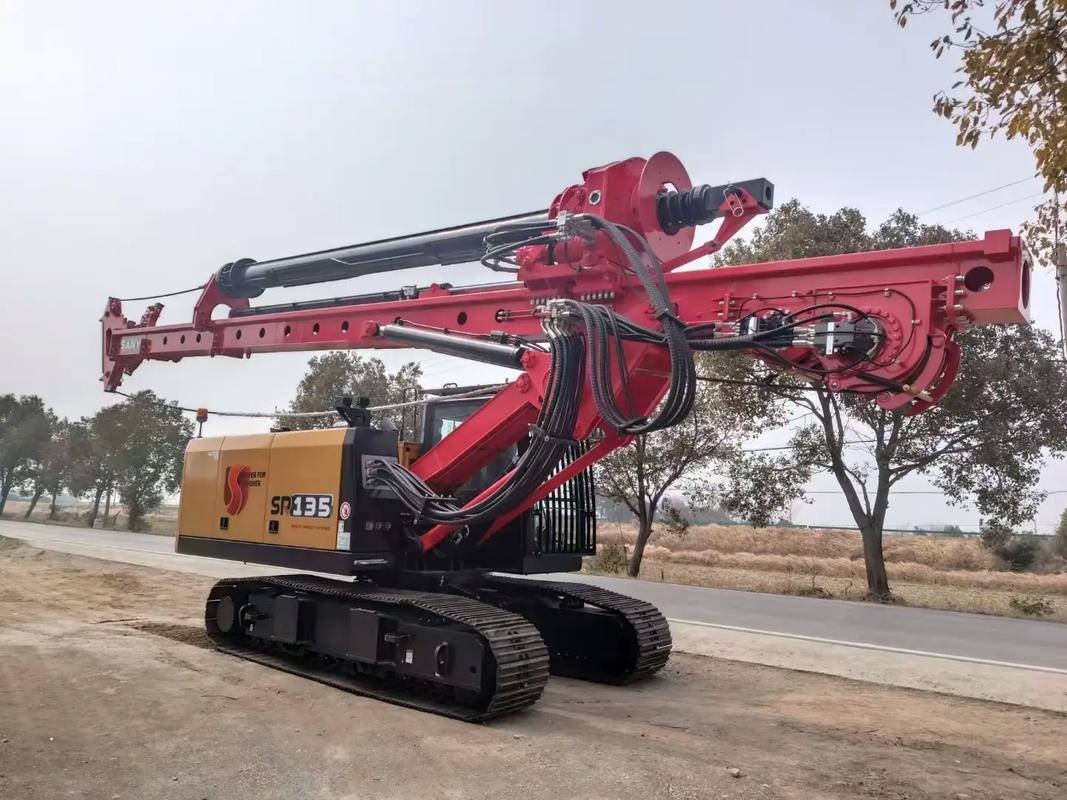


Comprehensive Analysis of Borehole Precision Control for Rotary Drilling Rigs: Parameter Settings And Practical Operation Techniques
Дата выпуска: 17.06.2026
The three precision indicators of verticality, aperture, and depth of pile foundation holes directly determine the acceptance rate of pile foundation and the overall engineering quality. Problems such as hole position deviation, diameter reduction, diameter expansion, and hole depth deviation are mostly caused by improper parameter debugging and non-standard manual operation. Combining common construction geology such as soft soil, sand layers, pebbles, and moderately weathered rock layers, practical control methods are sorted out from three dimensions: core parameter preset, standardized operation methods, and sudden working condition correction. This helps machine operators accurately control the quality of drilled holes and reduce rework losses.
Accurate preset of core construction parameters, laying a solid foundation for hole accuracy
The basic parameters of the equipment at the factory cannot be adapted to all geological formations. Before starting work, targeted debugging must be carried out in conjunction with geological reports, which is the first hurdle of precision control. Adjust the torque parameters as needed, reduce the rated torque in soft soil layers, and avoid excessive torque disturbing the hole wall and causing diameter expansion; Moderately increase torque in hard rock and gravel layers to prevent drilling slippage and hole displacement. Drilling pressure parameters differentiate working conditions, and low-pressure slow pressure is used for shallow drilling to ensure that the hole opening is vertical and regular; Бурение at a constant speed and pressure in the middle and deep layers to prevent the hole from bending due to sudden changes in speed and speed. At the same time, calibrate the aircraft level and mast verticality sensor in advance to eliminate mechanical errors in the equipment itself and avoid congenital hole position deviations from the source.
Standardized drilling operation techniques to avoid manual operation errors
Most of the defects in pore forming accuracy come from the non-standard operating habits of the operators. The бурение stage is crucial for verticality control. The mast must be kept upright, and low-speed slow drilling should be used to cut into the soil layer. It is strictly prohibited to start the machine and directly press down at high speed to prevent the hole from deviating from the beginning. The drilling process should be smooth and continuous, and frequent starting and stopping, sudden lifting and dropping of the drill pipe should be prohibited to avoid the drill pipe shaking and rubbing against the hole wall, causing shrinkage and deviation of the hole. Maintain coaxiality between drilling and releasing, move smoothly and uniformly, and reduce the secondary disturbance of drill pipe swing on the hole wall; Control the rotation speed during the hole cleaning stage to avoid high-speed rotation damaging the original accuracy of the hole body and ensure uniform and compliant aperture throughout the entire process.
Differentiated response to complex geological formations, targeted correction and precision control
There are significant geological differences among different strata, and a unified operating mode can easily lead to loss of accuracy, requiring flexible adjustment of operating logic. Reduce бурение pressure and rotation speed in weak formations such as quicksand and silt, increase the proportion of protective mud, and prevent hole wall collapse and diameter reduction; Gravel mixed with strata, slow down the drilling rate, reduce the depth of single drilling, and avoid the displacement of the mast caused by the compression of the drilling rod by the stones; In hard rock formations, forced pressure drilling should be avoided, and the rock layers should be broken by torque to prevent the drilling rig from deviating due to force and exceeding the verticality limit. When encountering slight deviation holes, there is no need to blindly lift the drill. Instead, use low-speed scanning to slowly correct the hole body and avoid secondary damage to the hole wall.
Daily equipment maintenance+process testing, long-term stable drilling accuracy
The aging and wear of equipment will continue to affect the accuracy of hole formation, and both daily maintenance and mid-term testing are indispensable. Regularly check the straightness of the drill pipe, the clearance between the slewing bearings, and the wear of the mast pin shaft, and replace deformed drill pipes and aging accessories in a timely manner to avoid drilling shaking caused by excessive mechanical clearance. Re measure the verticality and aperture of the hole every ten meters of drilling, compare with the construction standards in real time, and immediately correct any minor deviations on site to avoid continuous accumulation of errors. Paired with a vehicle mounted intelligent monitoring system, real-time monitoring of drilling data is achieved to achieve precise human-machine coordination and control, ensuring comprehensive and qualified one-time acceptance of pile foundation drilling.