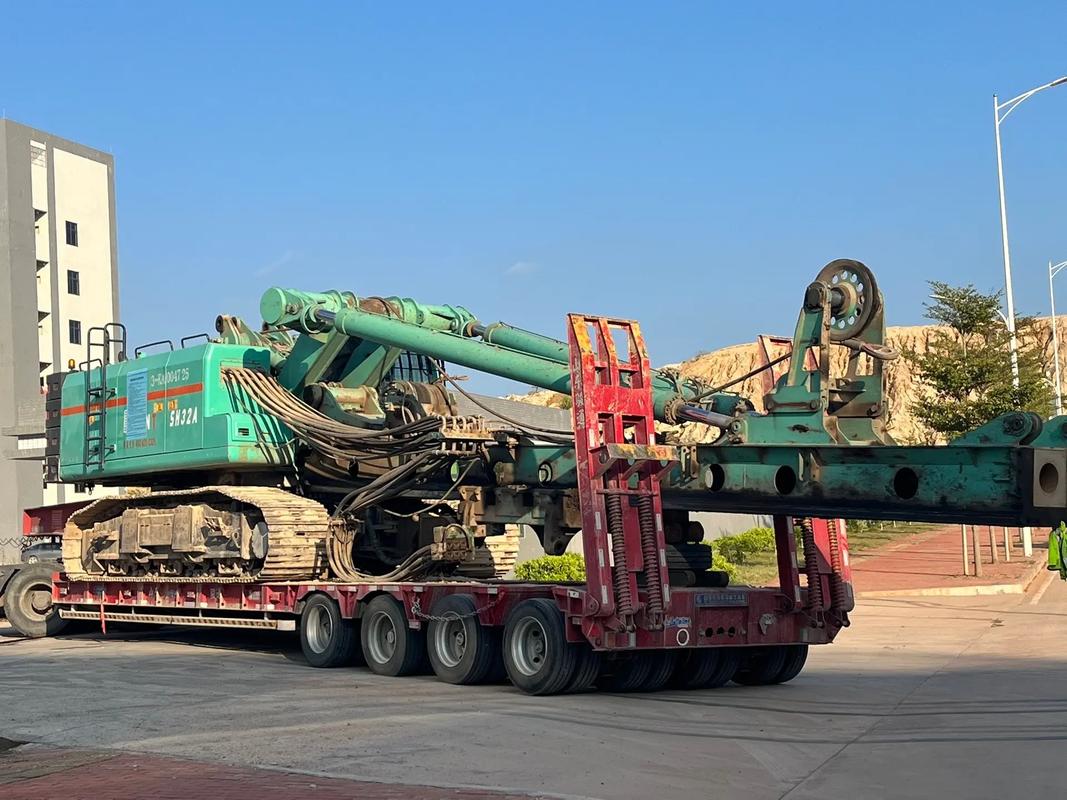


Анализ причин обрушения скважины при бурении роторной буровой установки и схема оказания экстренной помощи на месте происшествия.
Дата выпуска: 06.07.2026
Overview of hole collapse and construction impact
Rotary drilling rig drilling construction is the core construction technology of building pile foundation and road and bridge foundation engineering, which is widely used in various infrastructure projects with high efficiency and strong adaptability. Hole collapse is the highest and most influential potential quality safety hazard in rotary excavation construction, which refers to the phenomenon of instability, falling off and collapse of soil mass on the hole wall after the hole is formed. Once hole collapse occurs, it will not only cause insufficient hole depth, hole diameter deformation, pile position deviation and other engineering quality problems, but also cause construction progress delay, material loss increase, and in serious cases, it will cause drill burying and jamming accidents, threaten the safety of on-site construction equipment and personnel, greatly increase the rework cost and construction risk of pile foundation project, and it is the key and difficult problem of on-site construction control.
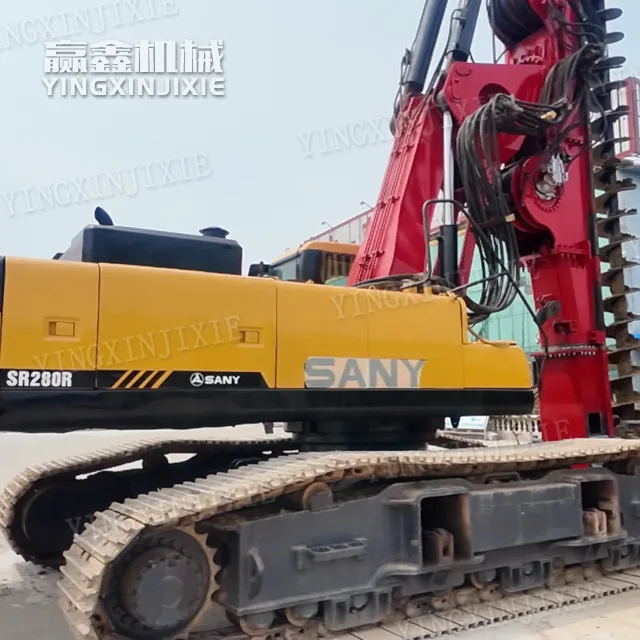
Depth Analysis of Core Cause of Construction Hole Collapse
Causes of hole collapse of rotary drilling rig mainly focus on geological conditions, construction process, equipment operation and site control. The geological layer, loose permeable stratum such as sandy soil, silt and mucky soil, as well as the working condition of high groundwater level and rich confined water in the stratum, the hole wall soil has poor cohesive property and weak stability, which is very easy to collapse. At the process level, the mud ratio is not reasonable, the mud proportion and viscosity are not up to the standard, the mud skin for protecting the wall cannot be effectively formed, and it is difficult to balance the water and soil pressure of the hole wall; At the same time, too fast drilling speed, too long standing time after hole forming, and not timely pouring concrete will damage the stability of the hole wall. At the operation level, the drilling rig will directly impact and scratch the hole wall to cause soil fall due to large swing during drilling, too fast lifting and бурение and too large disturbance of hole orifice. In addition, external factors such as disturbance of site foundation pit, surrounding mechanical vibration and rain-washing orifice will also induce hole collapse in different degrees.
Core Scheme for Site Emergency Disposal of Hole Collapse
Emergency treatment shall be carried out in accordance with the principle of “hole stabilization first, cleaning later and re-drilling later” for hole collapse of different degrees at the construction site to eliminate secondary hidden dangers caused by blind construction. For slight hole collapse, local falling off of hole wall and small collapse range, mud parameters can be adjusted immediately, mud proportion and viscosity can be increased, drill shall be lifted up and down at a constant speed to polish the hole wall to form a complete mud skin for wall protection, and the drilling construction can be continued after the hole is kept stationary and stable. Drilling shall be stopped immediately in case of moderate hole collapse, large area falling off of hole wall and serious sedimentation in the hole. Such dense materials as clay and rubble shall be backfilled to block the collapsed area. Drilling shall be carried out slowly after settlement and compaction, and slurry shall be supplemented and stabilized synchronously to ensure the stability of hole wall. For working conditions with serious hole collapse, hole mouth collapse or accompanying бурение risks, it is required to shut down the machine for evacuation of personnel and equipment at the first time, close the working area, backfill with plain soil and compact in layers. After the stratum is completely stable, re-measure the pile position and optimize the construction scheme before restarting the construction.
Key Points for Follow-up Repair and Quality Control of Hole Collapse
Upon completion of hole collapse emergency treatment, follow-up repair construction and overall quality control shall be carried out to avoid secondary collapse and quality defects of pile foundation. During the re-drilling construction, the drilling rate shall be reduced, the буровая установка shall be kept vertical and stable, the mechanical disturbance to the hole wall shall be reduced, the mud level, specific gravity and viscosity shall be monitored in real time throughout the process, and the parameter fluctuation shall be adjusted in time. Compress the standing time after the completion of hole forming, organize the lowering of reinforcement cage and concrete pouring operation as soon as possible, and shorten the exposure time of open hole. At the same time, for pile foundation after hole collapse treatment, pile foundation inspection shall be strengthened after construction. Pile body integrity shall be checked through ultrasonic wave, low strain detection and other methods to ensure that the bearing capacity of pile foundation meets the engineering design standards and completely eliminate the hidden dangers of engineering quality.
Early-stage prevention and normalized construction control
In the construction of rotary drilling, the prevention and control of hole collapse is prior to the disposal, and the normalized fine control can reduce the accident rate from the root. Before construction, the geological conditions and groundwater distribution on the construction site shall be comprehensively surveyed. Special construction scheme shall be prepared for loose stratum and water-rich stratum in advance, and emergency materials such as high-quality wall protection mud and backfill materials shall be prepared in advance. During construction, strictly regulate the operation process, strictly control the drilling, lifting and dropping speed, keep the mud level in the hole stable, and prohibit long-time exposure of open hole. At the same time, the construction site shall be well protected to avoid the surrounding mechanical vibration, rainwater ponding and foundation pit disturbance affecting the drilling stability. Through standardized construction and normal patrol inspection, the safety and quality problems of hole collapse shall be eliminated from the source.