

Key Points for Purchasing Small Rotary Drilling Rigs: A Guide to Models Suitable for Rural Infrastructure and Small-scale Projects
Release time: 2026-07-27
Fit the construction scene and match the core parameters of the machine model
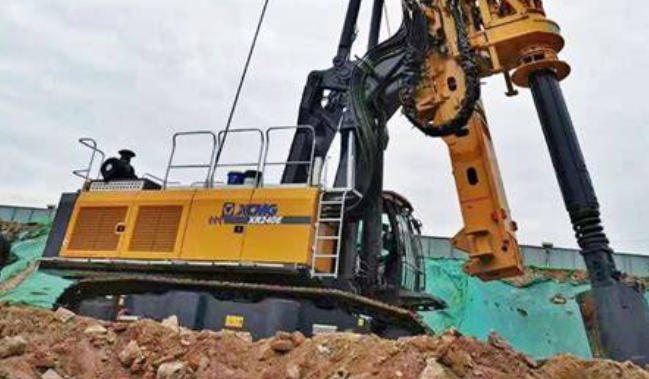
The construction environment of rural infrastructure and small-scale municipal engineering is significantly different from that of large-scale infrastructure projects, and it is also the core basis for selecting small rotary drilling rigs. This type of scenario is mostly for rural self built house pile foundations, farmland water conservancy foundations, rural road guardrail pile foundations, small foundation pit support and other engineering projects. The construction site is narrow, and the field roads are narrow. Some sites have complex terrain such as slopes and soft soil foundations, and the depth and aperture requirements for single piles are relatively small. When choosing, there is no need to pursue high-end models with large tonnage and torque. Focus on the body size, overall weight, maximum hole depth, and aperture parameters. Priority should be given to models with compact bodies and flexible transitions, suitable for narrow rural roads and operations in narrow fields. At the same time, corresponding power parameters should be matched based on common local geology to avoid cost waste caused by excessive parameters and to prevent insufficient parameters from meeting construction needs.
Value transition adaptability and adapt to complex rural road conditions
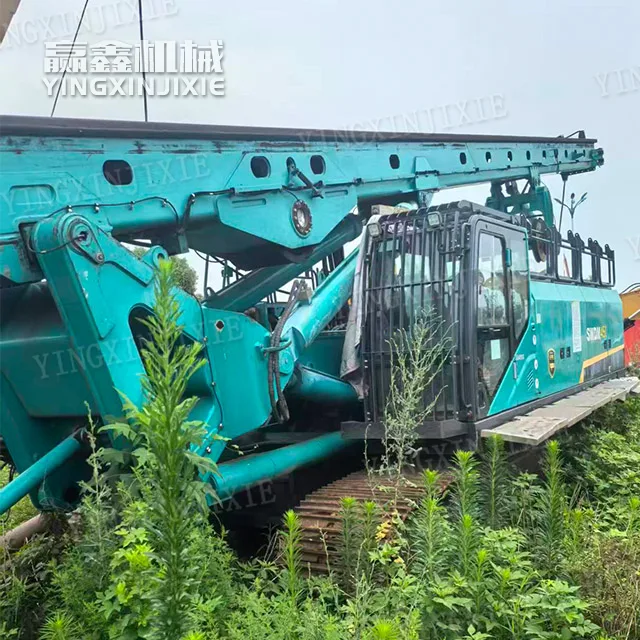
Convenience of transition is a core purchasing indicator in small-scale engineering and rural infrastructure scenarios, directly determining construction efficiency and transportation costs. Large rotary drilling rigs require specialized trailers for transportation, with high transfer costs and limited access, making them unsuitable for scattered and multi-point rural small-scale construction projects. Small rotary drilling rigs suitable for rural scenes generally adopt a tracked walking structure, which has good climbing, anti-skid, and anti sinking capabilities. They can easily cope with complex road conditions such as dirt roads, mud roads, and steep slopes in rural areas, without the need for complex disassembly and assembly, and can achieve short distance autonomous transfer. When selecting equipment, it is important to focus on checking the walking system, ease of disassembly and assembly of the entire machine, and transportation dimensions. Priority should be given to selecting models that are compliant for towing and transfer without the need to disassemble large items, significantly reducing the time and economic costs of multi-point construction and short distance transportation, and adapting to the decentralized and fragmented construction characteristics of rural infrastructure.
Balancing energy consumption and cost-effectiveness, meeting the profit needs of small and micro projects
Rural infrastructure and small-scale projects are mostly small-scale, short-term construction projects with limited profit margins. Energy consumption and cost-effectiveness of equipment are key considerations when choosing. Compared to large drilling rigs, the core advantages of small rotary drilling rigs are low fuel consumption, low operation and maintenance costs, and low purchase threshold, which are more suitable for the business needs of small and micro construction teams and individual engineering households. During the selection process, priority should be given to models equipped with well-known diesel power systems, which have stable power output and strong fuel economy. Long term construction can effectively reduce energy consumption costs. At the same time, avoid high-end models with redundant configurations, choose basic configurations as needed, focus on the durability of equipment core components, including drill rods, drill bits, hydraulic systems, and other core component quality, balance purchase costs, operation and maintenance costs, and construction performance, avoid high investment and low return, and fit the lightweight profit model of small projects.
Focus on operation and maintenance, adapt to grassroots construction scenarios
Rural infrastructure construction personnel are mostly grassroots workers with limited professional operation skills. The ease of operation, low failure rate, and convenient operation and maintenance attributes of equipment are particularly important. When selecting a machine model, priority should be given to small rotary drilling rigs with simple operating interfaces, moderate intelligence, and simplified control processes to reduce the difficulty for operators to learn and get started, and to adapt to the operational capabilities of grassroots construction teams. At the same time, there is a lack of professional maintenance stations in remote rural areas, and the convenience of equipment failure repair and parts replacement is crucial. It is necessary to select brand models with a large market share, high universality of parts, and after-sales network coverage in rural areas. This type of equipment has a low failure rate, simple daily maintenance, and can quickly complete repairs when problems occur, effectively avoiding equipment failures and delays in the construction period of rural small-scale projects, ensuring construction continuity.
Match homework requirements and select suitable mainstream models
Combining with the general construction standards for rural infrastructure and small-scale municipal projects, multiple lightweight small rotary drilling rigs have strong adaptability. For the construction of conventional rural building pile foundations and small-scale water conservancy pile foundations, micro rotary drilling machines with a capacity of up to 20 tons can be used. The drilling depth is 10-20 meters, and the aperture is suitable for the needs of civilian pile foundations. The machine body is compact and flexible, with extremely high cost-effectiveness. For larger projects such as rural road renovation and small foundation pit reinforcement, a 25-30 ton small rotary drilling rig can be selected, which has sufficient power and strong operational stability, and can cope with common rural geology such as ordinary clay, sand, and soft rock. When making a purchase, it is important to avoid blindly choosing large models or low-quality miscellaneous equipment just for the sake of low prices. It is necessary to consider the types of projects that one has been undertaking for many years, local geological conditions, and choose mature models that are suitable for the project, taking into account construction quality, operational efficiency, and long-term use value.