

Việc gia hạn Hiệp định Mỹ-Malaysia bị đình trệ, và hoạt động vận chuyển xuyên biên giới các thiết bị kỹ thuật cỡ lớn đang đối mặt với sự thay đổi.
Release time: 2026-07-08
Normalization of agreement review, loss of long-term stable expectation of equipment cross-border trade
The agreement was refused to extend, reviewed and implemented year by year in a decade, and the North American trade rules say goodbye to the long-term fixed framework. Large engineering equipment such as rotary drilling rig and pile driver belongs to long-period cross-border circulation category. Enterprises can plan overseas stock and cross-border transportation routes according to stable tariff and origin rules for more than ten years in the past. Now, the annual review is likely to adjust the regional content of parts and the control standard of the third-party supply chain. The equipment exporter cannot lock the long-term logistics cost and customs clearance requirements, the overseas storage, booking and land transportation supporting layout all lose a stable reference, and the operation risk of the cross-North American line of large and medium-sized engineering equipment for global shipping continues to rise.
Rules of origin tightened, and customs clearance and logistics process of rotary drilling rig fully reconstructed
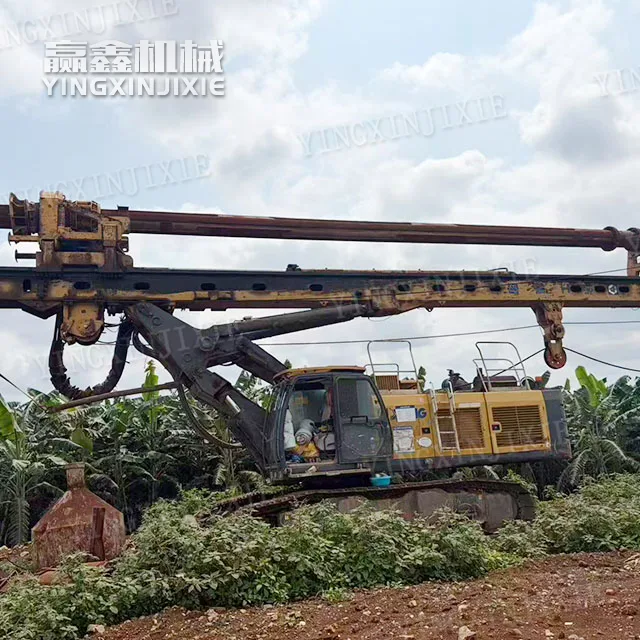
The United States plans to adjust the regional value content standard of automobile and add the rigid index of American local parts, and the similar control logic will synchronously extend to the complete machine and accessories of engineering machinery. Giàn khoan quay and piling machines include a large number of hydraulic parts, electrical control components and steel components. Many core parts are from Asia. In the past, customs declaration and tariff reduction can be simplified based on the North American Free Trade Rules. Under the trend of new regulations, the customs will refine and distinguish the source of local accessories in the United States, Canada and India. Logistics enterprises need to add a full set of parts traceability documents, split the origin accounting data of the whole machine, lengthen the time for ocean customs clearance of large equipment, and synchronously increase the cost of port stockpiling and inland large trailer transfer.
Superimposed unilateral tariff policies, continuous rising of comprehensive shipping cost of large equipment
In recent years, the special tariff and temporary general tariff of American steel and aluminum continue to disturb the regional trade. The rotary drilling rig is mainly composed of thick and heavy steel structure, with a high proportion of steel, which is easy to become the key category of tariff control. If there is no exemption buffer from customs duties in the agreement between Mexico and Canada, the average tax rate of imported engineering equipment in Mexico and Canada will rise significantly. Besides the ocean freight cost of large cargo, port hoisting cost and cross-border over-limit transportation cost, enterprises will also bear additional tariff expenses. Many second-hand giàn khoan quay exporters used to rely on the North American zero tariff dividend to stabilize the shipment, currently they can only narrow the profit space, or adjust the shipping date, split the parts and transport in batches to avoid high taxes, and the loading plan of global large cargo shipping is forced to be complicated.
Fluctuation of North American automobile industry chain, synchronous conduction of engineering equipment supporting shipping demand
The automobile industry is the core sector of the trade between the United States and Indonesia. The adjustment of the production capacity layout of the complete vehicle factory will directly drive the change of the infrastructure operating volume. As the core equipment for pile foundation construction, the giàn khoan quay and pile driver are highly bound to the market demand and the infrastructure construction and plant expansion in North America. Due to trade uncertainty, enterprises suspend factory construction and reduce overseas investment, and the purchase orders of site equipment in Mexico and Canada are shrunk, so the demand for shipping space of large equipment sent to North America is reduced. At the same time, the local capacity transfer of auto enterprises drives the change of shipping lines of parts and components, the flow direction of supporting resources for heavy-cargo hoisting at the port is split, and the stability of cargo volume of shipping enterprises mainly engaged in engineering equipment is greatly reduced.
Diversion of bilateral negotiations between the United States, Mexico and Canada, fragmentation of cross-border large cargo logistics lines
The United States promoted trade negotiations on a bilateral basis. The pace of negotiations between the United States and Mexico was faster, and the differences between the United States and Canada were prominent. In the future, the two countries may introduce differential equipment clearance terms. The unified trilateral rules are no longer applicable to the cross-border land transportation and sea transportation routes of rotary drilling rigs and piling rigs, and two sets of independent customs declaration materials and two sets of over-limit transportation approval standards are required for the whole machine sent to Mexico and Canada. Shipping enterprises are unable to uniformly plan the North American trunk line loading, and need to separately design ink and add two large cargo logistics links. Inland cross-border large cargo trailers and border large cargo inspection procedures are not common with each other, and the cross-border logistics operation efficiency is significantly reduced.
Diversified layout of Mexico-Canada trade, new overseas channel for engineering equipment shipping
In order to hedge the trade policy risk to the United States, Mexico and Canada actively expand the European Union, Latin America and Asian-Pacific markets, and the export destinations of rotary drilling rigs and piling rigs are gradually dispersed. The original focus was on large ships sailing to West America and East America ports, with newly increased stowage demand for routes to Europe, Southeast Asia and South America, and the global large shipping capacity distribution was readjusted. Some suppliers bypass the continental United States and directly export to Latin America through Mexican ports. Canada docks with Asian-Pacific infrastructure market through trans-Pacific routes, breaking the monopoly pattern of large cargo shipping of single trunk line in North America.
Long-term uncertainty squeezes investment, and cross-border circulation of second-hand rotary drilling rigs is cooled
The risk of rule change caused by annual review makes the overseas purchasers suspend the procurement plan of large amount of engineering equipment. Due to high unit price and long service period of rotary drilling rig and pile driver, overseas buyers are unwilling to store large amount of goods during policy swing period, and cross-border trade volume of second-hand equipment shrinks. Longer booking period of large equipment at shipping end, increased number of complete machines detained in the port for a long time, accumulated additional costs for storage, security and hoisting, reduced turnover efficiency of cross-border logistics of engineering equipment, and continuously narrowed profitability of relevant business of global large shipping.
Regional friction pushes up terminal cost, and the demand for ocean transportation of infrastructure equipment in North America continues to be weak
The rise of customs clearance, tariff and logistics comprehensive costs caused by the trade game is finally transmitted to the infrastructure project in North America. The pile foundation construction enterprises compress the equipment procurement budget and reduce the import volume of rotary drilling rigs and piling machines. Freight flow increment of large equipment of shipping enterprises in North America is insufficient, and some ships are forced to reduce loading rate or turn to other overseas markets to find freight source. The continuously fluctuating trade policy forms a vicious circle, the shipping business of line engineering equipment in North America is difficult to recover in a short term, and the global large cargo logistics industry enters a structural adjustment cycle.