


Análise da influência do material e do número de seções da haste de perfuração da plataforma de perfuração rotativa na estabilidade da perfuração.
Release time: 2026-07-22
The fundamental impact of core attributes of drill rods on drilling operations
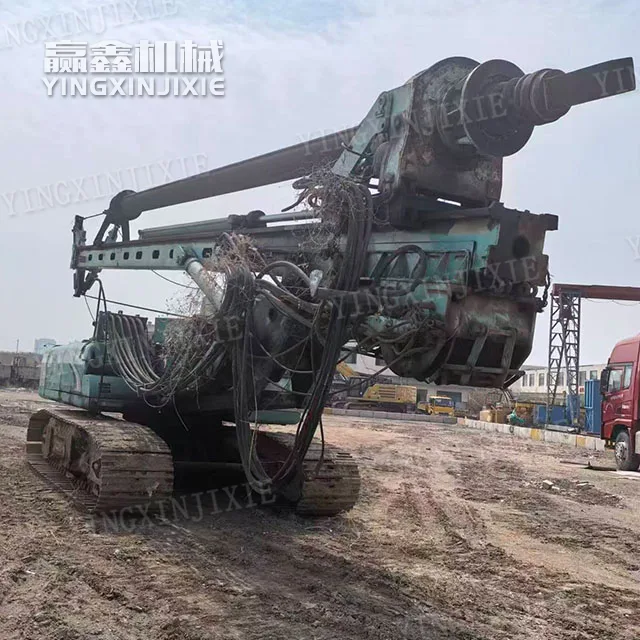
The drill rod of the rotary drilling rig is the core force transmission component in pile foundation construction, which plays a key role in torque transmission, pressure bearing, and deep drilling. Its comprehensive performance directly determines the accuracy, efficiency, and safety of pile foundation construction. The drilling stability is mainly reflected in the absence of obvious shaking, deviation, or deformation of the drill rod during the construction process, the drilling verticality meets the standard, the hole wall is regular, and there are no construction defects such as collapse or diameter reduction. In actual geotechnical construction scenarios, factors such as alternating soft and hard geological layers, changes in drilling depth, and fluctuations in construction loads can easily cause stress imbalance on drill rods. The material selection and section design of drill rods are the two core technical indicators for offsetting external interference and ensuring continuous and stable drilling, and are also important basis for engineering construction selection.
Deep correlation between drill pipe material performance and drilling stability
The material strength, toughness, wear resistance, and fatigue resistance of drill rods fundamentally determine the upper limit of stability for drilling operations. At present, the mainstream drilling rods in the industry are made of high-strength alloy structural steel material, which has undergone refined heat treatment processes such as quenching and tempering, and has the characteristics of high strength and high deformation resistance. High quality alloy materials can withstand high torque and high pressure composite construction loads. When drilling in complex geological conditions such as hard soil layers and sand and gravel layers, it is not easy to encounter problems such as rod bending and local deformation. It can always maintain the coaxiality of the drilling tool and ensure the vertical accuracy of the drilling. Low end drill rods made of ordinary carbon steel have insufficient toughness and poor fatigue resistance. They are prone to small deformations and stress concentrations due to long-term exposure to alternating loads and formation resistance, which can cause drilling shaking and deviation. This not only reduces the quality of drilling, but also easily leads to construction failures such as drill rod fracture and jamming, seriously damaging drilling stability. At the same time, high-quality materials have better wear and corrosion resistance, which can reduce the wear gap of the rod body and avoid construction shaking caused by loose or deformed accessories.
The control effect of drill pipe section design on drilling conditions
The number of drill pipe sections directly affects the overall length, flexibility, and force transmission mode of the rod, adapting to different drilling depths and construction scenarios, and forming differentiated effects on stability. The integral drill rod with a single section length and few sections has strong overall integrity, minimal connection clearance, uniform torque transmission, high coaxiality during construction, and almost no radial shaking. It has excellent stability and higher drilling accuracy in shallow and medium pile foundation construction. The multi section combination drill rod is adapted to the drilling requisitos of ultra deep pile foundations through multi section splicing, but the more sections there are, the more joint interfaces the rod body has, and the larger the cumulative fit clearance, which is prone to radial displacement and small swinging during the drilling process. As the drilling depth increases, the flexibility of the multi section drill pipe increases significantly. Under conditions of uneven geological resistance, problems such as rod shaking and borehole inclination are prone to occur. Reasonably matching the number of sections is the key to balancing drilling depth and construction stability. For shallow construction, priority should be given to reducing the number of long sections, while for deep construction, control the number of sections, optimize splicing accuracy, and avoid stability degradation issues.
The collaborative adaptation of material and number of sections and the improvement logic of construction stability
The material and number of drill rods do not independently affect the drilling effect, and the scientific adaptation of the two is the core key to achieving efficient and stable drilling. The combination of short section long poles and high-strength alloy materials can maximize the anti deformation advantage of the material, completely avoid the shaking problem caused by joint gaps, and is suitable for conventional working conditions such as municipal pile foundations and ordinary building pile foundations. It has both stability and construction efficiency. For complex geological construction with ultra deep and high hardness, it is necessary to use multi section drill rods to adapt to the drilling depth. At this time, special alloy materials with high toughness and ultra-high strength need to be used. With the excellent fatigue and deformation resistance of the material, the flexible deviation and gap error caused by the multi section structure can be offset, effectively suppressing the swinging of the rod body and the deviation of the drilling hole. If low-end materials are used for multiple drill rods, problems such as insufficient rigidity and increased deformation may occur, coupled with defects in the splicing structure, which can easily lead to serious construction accidents. Therefore, adapting to working conditions, matching materials, and optimizing the number of sections are all indispensable.
Summary of Selection Optimization and Application in Engineering Scenarios
In actual pile foundation construction, it is necessary to comprehensively select based on geological conditions, drilling depth, and construction load, and ensure drilling stability through a reasonable combination of materials and sections. Conventional shallow to deep pile foundation construction can use high-strength alloy drill rods with few sections to balance stability and economy; For the construction of ultra deep pile foundations and complex rock formations, priority should be given to using high toughness special material drill rods, while strictly controlling the number of drill rod sections, reducing the number of joint levels, and minimizing the risk of structural shaking. In daily construction and maintenance, it is necessary to conduct targeted inspections of the wear and fatigue deformation of drill rods made of different materials, timely check the interface clearance and fastening status of multiple drill rods, and avoid drilling instability problems from the core structure level of drill rods through selection optimization and operation and maintenance control, in order to improve the quality of pile foundation drilling and construction safety.