

How to Match a Rotary Drilling Rig to Required Pile Diameter and Drilling Depth?
Release time: 2026-10-16
Table of Contents
Choosing the right rotary drilling rig starts with the requirements of the foundation project. Pile diameter, drilling depth, soil conditions, and site access all affect equipment selection. A machine that meets the required dimensions but lacks sufficient torque or lifting capacity may struggle to maintain consistent progress on site.
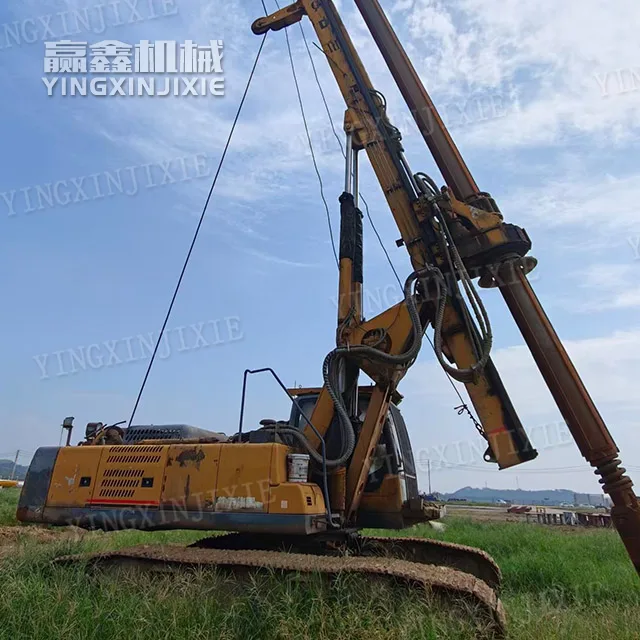
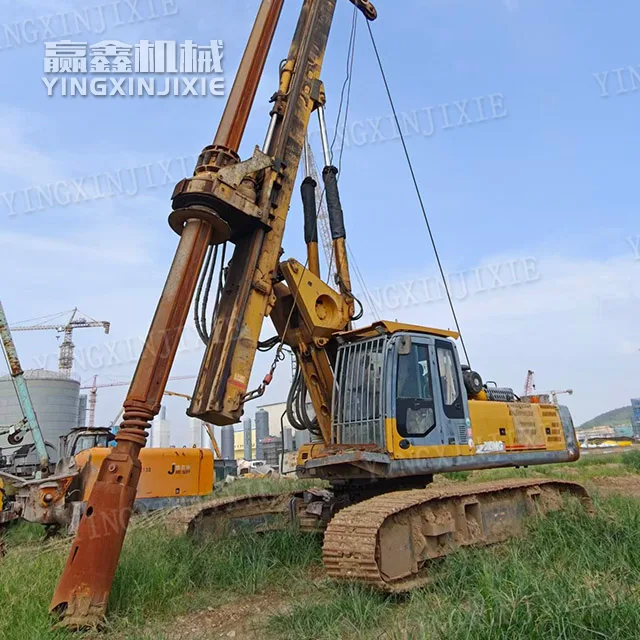
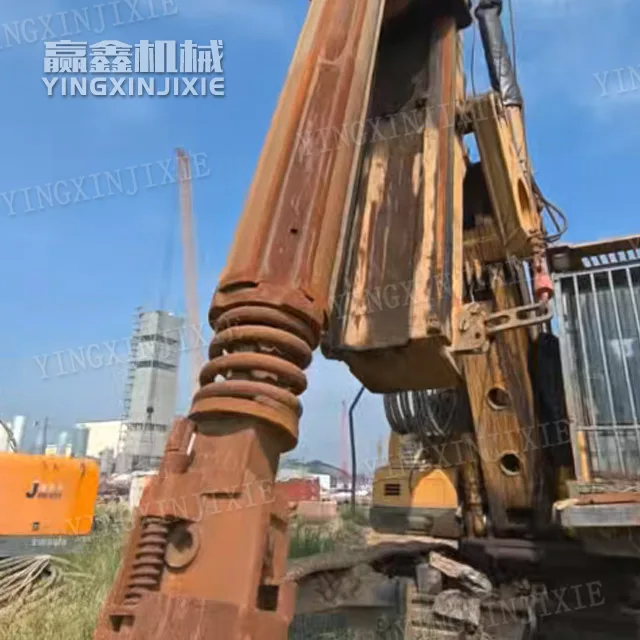
Suzhou Yingxin Engineering Machinery Co., Ltd. supplies used rotary drilling rigs and other construction machinery for domestic and international customers. When evaluating a XCMG XR150D III rotary drilling rig, buyers should consider not only its maximum drilling capacity but also its hydraulic performance, drilling configuration, and actual operating condition. These factors help determine whether the machine is suitable for the intended project.
1. Start with the Required Pile Diameter
Pile diameter is one of the first specifications to check when selecting a rotary drilling rig. Different projects require different pile sizes depending on structural loads, foundation design, and ground conditions. Residential buildings, commercial developments, bridges, and municipal infrastructure may all have different piling requirements.
The XCMG XR150D III has a maximum drilling diameter of 1,500 mm. This capacity provides a useful reference for contractors handling small- to medium-sized foundation projects, although the appropriate working diameter depends on the drilling tools, ground conditions, and construction method.
When comparing a rotary drilling rig, buyers should check whether its maximum drilling diameter covers the project’s largest required pile. It is also important to confirm that the available drill buckets, augers, and Kelly bar configuration are compatible with the intended diameter.
A machine’s maximum capacity should not be treated as its ideal working diameter for every project. Actual performance depends on the formation being drilled and the tools used. Selecting equipment with appropriate capacity helps avoid unnecessary limitations without investing in a machine substantially larger than the project requires.
2. Match the Maximum Drilling Depth to Project Requirements
Drilling depth is another important factor in equipment selection. Shallow foundation piles and deep foundation piles place different demands on the drilling rig, drill rod, winch, and overall structure.
The XR150D III offers a maximum drilling depth of 56 m. This specification makes it worth considering for projects requiring relatively deep piles, provided the selected drilling configuration and site conditions support the required depth.
Before purchasing equipment, contractors should establish the maximum pile depth, the typical depth across the project, and the number of piles that must be completed. They should also confirm whether the stated drilling depth applies to the available friction Kelly bar or another configuration.
A rig’s maximum drilling depth does not automatically mean that every pile can be completed to that depth under all geological conditions. Dense soil, gravel, rock layers, groundwater, and borehole stability may affect the actual construction process.
For buyers comparing different models, the most useful approach is to match the machine’s rated capability to the project’s engineering requirements rather than choosing solely by the largest advertised depth.
3. Consider Torque and Engine Power Together
Pile diameter and drilling depth provide the starting point, but they do not fully determine drilling performance. The rig must also generate sufficient rotary torque and maintain stable power delivery under working loads.
The XCMG XR150D III is equipped with a Cummins QSB7 engine rated at 150 kW at 2,050 r/min. Its rotary head provides a maximum torque of 150 kN·m, with a rotational speed range of 7–33 r/min.
These specifications should be evaluated together. Rotary torque helps the drilling tool overcome resistance from the surrounding soil, while engine power supports the combined demands of the hydraulic system and other machine functions.
The required performance depends on the formation. Soft soil, sand, dense gravel, and rock do not impose the same drilling resistance. Contractors should therefore consider the expected ground conditions and the drilling tools required before deciding whether the machine has adequate capacity.
For projects with changing geological conditions, a suitable combination of torque, rotational speed, and drilling tools is more useful than focusing on one specification in isolation.
4. Understand the Role of Hydraulic Control
Hydraulic performance affects how effectively a rotary drilling rig distributes power between its working functions. The hydraulic system supports rotary movement, winch operation, and the forces required to press the drilling tool into the ground or extract it from the borehole.
The XR150D III uses a negative-flow and ultimate-power-control hydraulic system. According to the product description, this arrangement distributes hydraulic flow according to demand and helps reduce unnecessary power consumption.
When assessing rotary drilling rig hydraulic control, buyers should consider how the system responds under different operating loads. Stable flow distribution is important when several machine functions are used during a drilling cycle. Hydraulic performance can also influence fuel consumption, operating consistency, and the workload placed on individual components.
The machine’s listed main winch pulling force is 160 kN, while the crowd system provides a maximum push force of 120 kN and a pull force of 160 kN. These specifications are relevant when evaluating the rig’s ability to apply pressure during drilling and lift equipment or remove drilling tools.
However, published specifications are only a starting point when assessing the machine’s actual condition. The hydraulic pumps, cylinders, hoses, control valves, and winch system should be inspected to establish whether the machine performs as expected.
5. Check the Chassis, Mast, and Site Conditions
A rotary drilling rig must be suitable for the physical conditions of the construction site, not just the required pile dimensions.
The XR150D III features a hydraulic telescopic crawler chassis. Its track width can be adjusted to support operating stability and reduce the overall width for transportation. This design can be useful for projects where equipment must move between sites or pass through restricted access routes.
The machine also uses a rear-tilting triangular drilling mast designed to provide structural rigidity and support drilling-hole verticality. Maintaining borehole alignment is important because deviations can affect pile installation and foundation quality.
Before selecting a rig, contractors should review the available working space, ground bearing conditions, access roads, transport restrictions, and required setup area. They should also consider whether the machine can be delivered to the site without excessive dismantling or additional transport arrangements.
These checks are particularly important for projects involving narrow access roads, uneven ground, or multiple construction locations.
6. What Should Buyers Inspect When Purchasing a Used Rig?
When evaluating a rotary drilling rig, buyers need to assess the condition of the actual machine rather than relying entirely on the model’s original specifications. Two machines of the same model may have different operating histories, maintenance records, and levels of component wear.
The following checks are worth prioritizing:
Engine condition: Check starting performance, abnormal noise, exhaust emissions, fluid leaks, and maintenance records.
Hydraulic system: Inspect pumps, cylinders, hoses, valves, and connections for leakage or unstable operation.
Rotary head and Kelly bar: Examine the drive mechanism, wear surfaces, locking components, and compatibility with the required drilling tools.
Winch and wire rope: Check the rope condition, winding arrangement, braking performance, and lifting operation.
Chassis and mast: Look for structural damage, excessive wear, loose connections, and signs of previous repairs.
Working hours and service history: Compare the recorded operating hours with maintenance documentation and the machine’s physical condition.
A practical inspection should also include a functional test where possible. The aim is to confirm that the machine’s current performance is consistent with the requirements of the planned project.
For buyers considering a XCMG XR150D III rotary drilling rig, the maximum drilling diameter of 1,500 mm, maximum drilling depth of 56 m, and maximum rotary torque of 150 kN·m provide useful starting points. The final decision should also account for actual condition, available accessories, maintenance needs, and transport costs.
7. A Practical Selection Checklist
Before finalizing a purchase, compare the project requirements with the machine’s specifications and condition.
| Selection factor | What to confirm |
| Pile diameter | The required diameter falls within the machine’s supported drilling range |
| Drilling depth | The available drilling configuration can reach the required depth |
| Ground conditions | Torque, drilling tools, and operating forces suit the expected formation |
| Hydraulic control | The system operates smoothly and delivers stable performance |
| Site access | The chassis dimensions and transport arrangements suit the site |
| Machine condition | Engine, hydraulics, winch, mast, and rotary head pass inspection |
| Total cost | Purchase, transport, maintenance, and operating costs fit the project budget |
This checklist helps contractors compare machines based on practical requirements instead of price or maximum specifications alone. It also makes it easier to identify any additional drilling tools, replacement parts, or servicing needed before the rig enters operation.
Frequently Asked Questions
1. What is the maximum drilling depth of the XCMG XR150D III?
The product specifications list a maximum drilling depth of 56 m. The achievable depth depends on the drilling configuration, geological conditions, and construction method.
2. What is the maximum pile diameter of this model?
The XR150D III has a maximum drilling diameter of 1,500 mm. Buyers should confirm that the available drilling tools and machine configuration meet the project’s actual pile diameter requirements.
3. Why is hydraulic control important when choosing a rotary drilling rig?
Hydraulic control affects power distribution, the operation of working functions, and overall operating consistency. Buyers should assess both the system design and the condition of the hydraulic components, particularly when purchasing equipment that has been in service.
4. Is the XR150D III suitable for every foundation project?
No. Its suitability depends on the required pile dimensions, ground conditions, drilling tools, site access, and the condition of the individual machine. A technical assessment should be completed before purchase.
Conclusion
Matching a rotary drilling rig to pile diameter and drilling depth requires a balanced assessment of drilling capacity, torque, hydraulic performance, site conditions, and equipment condition. The XCMG XR150D III offers a maximum drilling diameter of 1,500 mm, a maximum drilling depth of 56 m, and a maximum rotary torque of 150 kN·m, providing clear specifications for initial project evaluation.
For contractors considering a used XCMG XR150D III rotary drilling rig, these figures should be compared with the project’s engineering requirements and verified against the actual machine’s condition. Suzhou Yingxin Engineering Machinery Co., Ltd. provides construction machinery supply and supporting services for domestic and international customers, helping buyers evaluate equipment options according to their project needs.