


How Does Crowd System Stroke Affect Rotary Drilling Rig Performance?
Release time: 2026-10-28
Table of Contents
Selecting a rotary drilling rig involves more than comparing maximum drilling diameter and depth. The crowd system also plays an important role in how the drilling tool engages with the ground, particularly when soil resistance changes or additional downward pressure is required. Understanding crowd system stroke helps contractors evaluate whether a machine’s configuration matches their foundation construction needs.
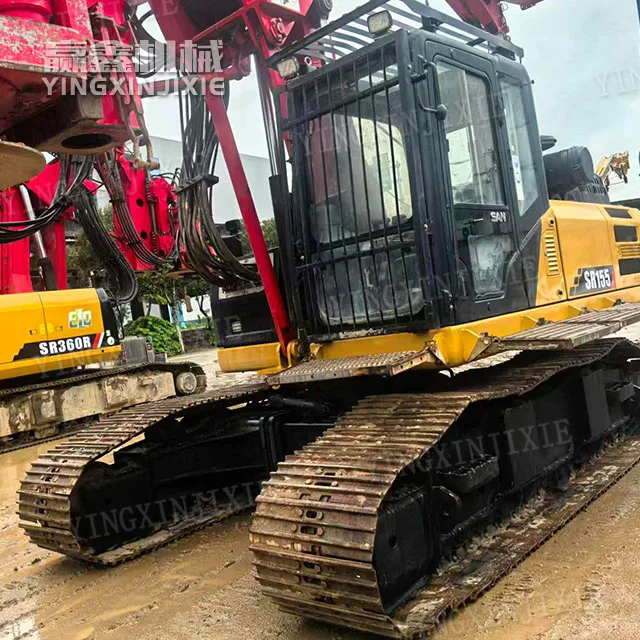
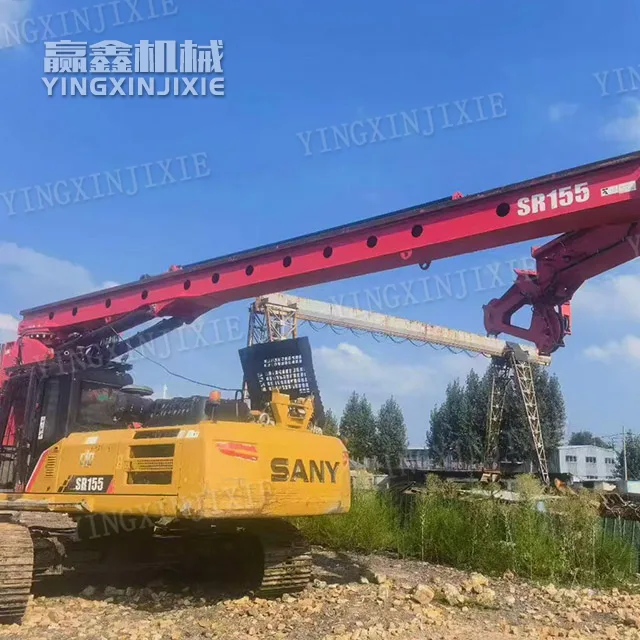
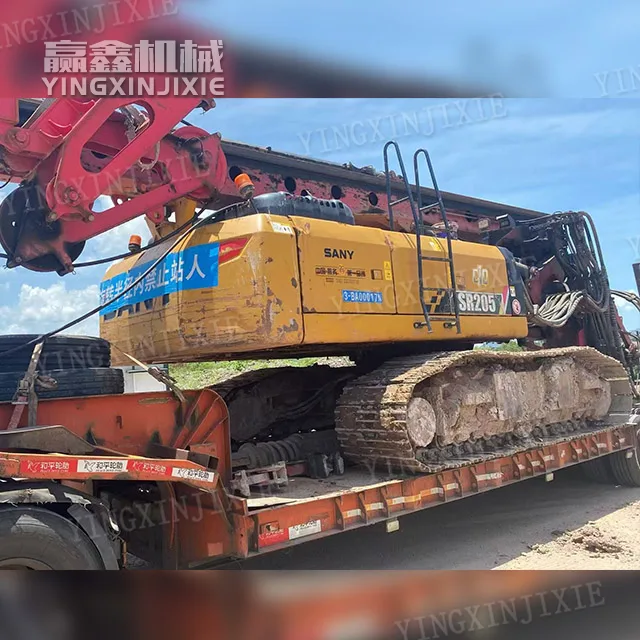
Suzhou Yingxin Engineering Machinery Co., Ltd. specializes in the supply, leasing, and supporting services of construction machinery, with a focus on used rotary drilling rigs and foundation equipment for domestic and international markets. When evaluating a SANY SR155 rotary drilling rig, buyers should consider crowd system stroke alongside crowd force, pull-out force, rotary torque, and the machine’s overall condition.
1. What Is Crowd System Stroke in a Rotary Drilling Rig?
Crowd system stroke refers to the distance through which the crowd mechanism can travel while applying downward pressure to the drilling tool or pulling it upward. Depending on the machine’s design, the system may use hydraulic cylinders, a crowd winch, or a combination of mechanisms.
During drilling, the crowd system helps the drilling tool penetrate the ground by applying additional force. When the tool needs to be withdrawn, the system provides pulling assistance. The available stroke determines the distance over which this movement can take place before the mechanism reaches its travel limit.
A longer stroke can provide greater movement flexibility within the crowd system, but it does not automatically mean that the machine will drill faster or reach a greater maximum depth. Actual performance also depends on the drilling tool, Kelly bar configuration, ground conditions, rotary torque, and available crowd force.
For contractors, the key is to understand how the stroke fits into the complete drilling cycle rather than evaluating it as an isolated specification.
2. What Does a 4,200 mm Crowd Stroke Mean for the SANY SR155?
The SANY SR155 rotary drilling rig has a crowd system stroke of 4,200 mm, allowing the drilling tool to move through a substantial working range during pile construction. The rotary drilling rig crowd stroke determines the available travel of the crowd system, helping operators apply downward pressure and lift the drilling tool during different stages of the drilling process. Combined with a crowd force of 155 kN and a pull-out force of 160 kN, this configuration supports drilling operations that require controlled tool movement and effective soil removal.
The machine also has a rated rotary head torque of 155 kN·m, a crowd force of 155 kN, and a pull-out force of 160 kN. These figures describe different aspects of the drilling process:
- Crowd stroke determines the available travel of the crowd mechanism.
- Crowd force indicates the downward force available to assist penetration.
- Pull-out force indicates the force available to help withdraw the drilling tool.
- Rotary torque describes the rotational force available at the rotary head.
These specifications work together, but they are not interchangeable. A longer stroke cannot compensate for insufficient crowd force, and high crowd force alone does not guarantee effective drilling if the drilling tool is unsuitable for the ground conditions.
When assessing a rotary drilling rig, contractors should review all four factors together with the intended pile dimensions and drilling method. This provides a more complete basis for equipment selection than comparing a single maximum value.
3. How Does Crowd Stroke Affect the Drilling Cycle?
The crowd system influences several stages of foundation drilling. Its stroke affects the available movement of the mechanism, while force and control determine how effectively that movement is used.
Drilling tool penetration
When a drilling tool enters the ground, downward pressure can help it engage with the soil or other material. The crowd mechanism provides controlled movement and force during this stage.
The required movement depends on the drilling tool and the operating sequence. A suitable stroke allows the mechanism to work within its intended travel range without unnecessarily reaching its limit during normal operations.
Tool lifting and withdrawal
After the drilling tool has collected material, it must be raised so that the material can be discharged. The crowd system’s pulling capability can assist this process, depending on the rig’s design and operating arrangement.
The SR155 lists a pull-out force of 160 kN. However, the actual force required to extract a tool depends on soil resistance, tool design, borehole conditions, and whether the tool becomes obstructed.
Repeated drilling operations
Foundation construction involves repeated cycles of drilling, lifting, discharging material, and returning the tool to the borehole. The crowd system must provide sufficient travel for the intended operating sequence.
A suitable stroke can help the operator carry out these movements within the mechanism’s designed range. However, overall cycle time also depends on rotary head speed, winch performance, soil conditions, operator technique, and the amount of material removed per cycle.
For this reason, contractors should consider crowd stroke as one part of the rig’s operating system rather than treating it as a direct measure of productivity.
4. Why Must Crowd Stroke Be Evaluated Alongside Ground Conditions?
Different soil conditions place different demands on the drilling tool and crowd mechanism. Loose soil, cohesive clay, dense sand, and gravel may require different combinations of rotary action, downward pressure, and tool selection.
In relatively soft soil, the drilling tool may penetrate without requiring the maximum available crowd force. In denser formations, additional pressure may be needed, depending on the tool and geological conditions. Gravel and other challenging materials can also affect penetration and extraction resistance.
A longer crowd stroke does not necessarily improve performance in every formation. If the drilling tool is poorly matched to the soil, increasing the available travel will not resolve the underlying problem.
Before selecting a rotary drilling rig, contractors should therefore identify the expected ground conditions, required pile dimensions, and drilling tools. They should also consider whether the crowd mechanism provides suitable force and travel for the intended operating method.
For projects with changing soil conditions, a balanced combination of crowd stroke, crowd force, rotary torque, and suitable drilling tools is generally more useful than maximizing any single specification.
5. How Do Crowd Stroke and Rotary Torque Work Together?
Crowd stroke and rotary torque perform different functions during drilling. The crowd mechanism provides axial movement and downward or upward force, while the rotary head turns the drilling tool.
The SR155 has a rated rotary head torque of 155 kN·m and a crowd force of 155 kN. These specifications provide useful information about its rotational and axial capabilities.
In practice, the operator must coordinate rotation and downward pressure according to the drilling tool and ground conditions. Applying excessive pressure without appropriate rotation may not improve penetration and can place unnecessary loads on the equipment. Conversely, rotation without sufficient engagement between the tool and the ground may not produce the desired drilling result.
The crowd system’s available stroke determines how far the mechanism can travel during this process. Torque and force influence how the drilling tool works against the ground within that movement range.
The relationship between these parameters is particularly important when comparing machines for foundation projects with different soil profiles. Buyers should assess the complete operating configuration rather than assume that a longer stroke or higher torque alone will deliver better results.
6. What Should Buyers Check Before Purchasing a Used SR155?
Published specifications provide a starting point, but the condition of an individual machine matters when purchasing used equipment. Wear, previous repairs, and hydraulic performance can affect how well the crowd mechanism operates.
Before purchasing a SANY SR155 rotary drilling rig, buyers should pay attention to the following areas:
- Crowd mechanism: Inspect the travel mechanism, connection points, and relevant structural components for abnormal wear, damage, or deformation.
- Hydraulic cylinders and hoses: Check for leakage, damaged hoses, and inconsistent movement throughout the operating range.
- Crowd force and pull-out performance: Where possible, carry out functional tests to confirm that the mechanism operates smoothly under appropriate working conditions.
- Rotary head: Check for abnormal noise, excessive vibration, and signs of wear that could affect drilling operations.
- Kelly bar and drilling tools: Verify compatibility with the intended pile dimensions and inspect wear on the drive keys and connecting sections.
- Maintenance records: Review available service history and compare recorded working hours with the machine’s physical condition.
Buyers should also confirm the actual machine configuration. The available stroke, drilling tools, and other specifications should be verified against the equipment being offered rather than assumed from the model name alone.
A practical inspection helps identify potential maintenance requirements before the rig is transported to the construction site. It also allows buyers to estimate the total cost of ownership more realistically.
7. How to Compare Crowd System Specifications Between Rigs
When comparing different rotary drilling rigs, buyers should evaluate crowd stroke together with the other specifications that affect drilling operations.
| Specification | What buyers should evaluate |
| Crowd system stroke | Whether the available travel suits the intended drilling sequence |
| Crowd force | Whether the downward force is appropriate for the drilling tools and ground conditions |
| Pull-out force | Whether the extraction capability suits the expected resistance |
| Rotary head torque | Whether the rotational capability matches the anticipated formation |
| Rotary head speed | Whether the available speed range suits the drilling method |
| Main winch capacity | Whether the lifting capacity meets the requirements of the operating configuration |
| Machine condition | Whether the crowd mechanism, hydraulic components, and rotary head operate properly |
For the SR155, the listed crowd stroke is 4,200 mm, crowd force is 155 kN, pull-out force is 160 kN, and rated rotary head torque is 155 kN·m. These values help establish a technical comparison, but they should not replace an assessment of the intended project or the actual machine’s condition.
The most suitable rig is one whose operating range, drilling configuration, and condition match the construction requirements without unnecessary compromises.
Frequently Asked Questions
1. Does a longer crowd stroke always improve drilling performance?
No. A longer stroke provides more travel for the crowd mechanism, but drilling performance also depends on crowd force, rotary torque, drilling tools, soil conditions, and operating technique.
2. What is the crowd system stroke of the SANY SR155?
The product information provided lists a crowd system stroke of 4,200 mm. Buyers should confirm this specification against the actual machine and its configuration before purchase.
3. What is the difference between crowd force and pull-out force?
Crowd force is the downward force used to assist drilling tool penetration. Pull-out force is the force available to help withdraw the tool. Both are important, but their usefulness depends on the drilling method and ground conditions.
4. Why should the crowd system be inspected on a used rotary drilling rig?
Wear or hydraulic problems can affect movement, force delivery, and operating consistency. Inspecting the mechanism and carrying out suitable functional tests can help identify potential maintenance needs before the equipment enters service.
Conclusion
Crowd system stroke is an important specification when evaluating a rotary drilling rig because it determines the available travel of the crowd mechanism. However, its practical value depends on how it works with crowd force, pull-out capability, rotary torque, drilling tools, and ground conditions.
The SR155 is listed with a 4,200 mm crowd stroke, 155 kN crowd force, 160 kN pull-out force, and 155 kN·m rated rotary head torque. These figures provide a useful starting point for evaluating its configuration, but they should be considered alongside the requirements of the intended foundation project.
Suzhou Yingxin Engineering Machinery Co., Ltd. supplies construction machinery and supporting services for domestic and international customers. For contractors considering a used SANY SR155 rotary drilling rig, checking the crowd mechanism, verifying the machine’s specifications, and assessing its overall condition can help support a more informed purchasing decision.