

Rock-Socketed Piling Method: Why XCMG XR280D Rig Excels
Release time: 2026-05-25
The transition from soft cohesive soil to hard, unyielding bedrock is the ultimate stress test for any deep foundation project. When drilling tools hit this erratic interface, the dynamic load variations can cause severe structural fatigue, tool jamming, and crippling downtime.
To navigate mixed strata efficiently, contractors cannot rely on brute force alone. They require a highly adaptable platform. Mastering the rock-socketed piling method demands a machine that seamlessly balances raw rotary torque with agile onsite maneuverability, ensuring borehole integrity is never compromised.
Rock-Socketed Piling Method: Why XCMG XR280D Rig Excels
Executing rock-socketed piles in urban environments introduces a unique set of engineering bottlenecks. The goal is to embed the pile deep into the load-bearing bedrock to achieve maximum skin friction and end-bearing capacity. However, as the strata shift from clay and gravel to weathered rock, standard piling equipment often struggles with violent reactive vibrations and rapid wire rope degradation.
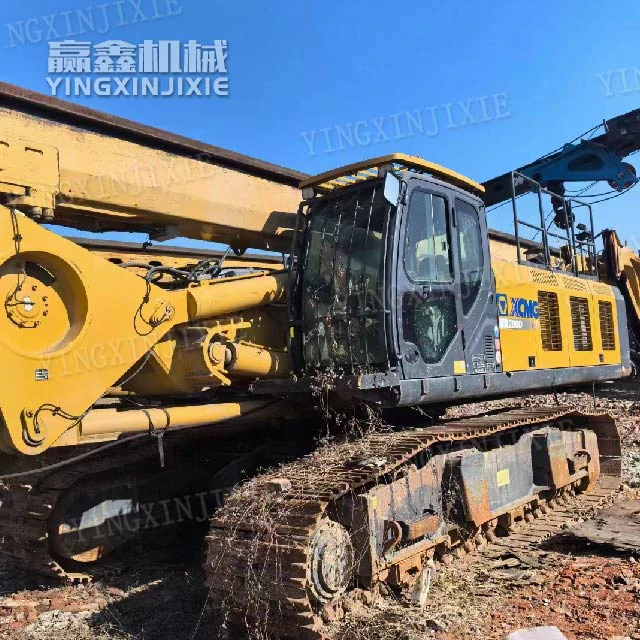
The XCMG XR280D rotary drilling rig acts as the industry’s “golden displacement” solution. Rated at a formidable 280 kN·m torque, it offers the heavy-duty rock penetration of a massive rig, yet retains the spatial flexibility required for tight infrastructure zones.
What Makes Mixed Strata Piling So Challenging?
When executing the rock-socketed piling method, the transition zone is where most equipment failures occur.
Severe Downhole Vibrations: As the cutting teeth intermittently bite into hard rock and slip through softer soil pockets, the mast and chassis absorb chaotic lateral forces. This can lead to borehole deviation if the rig lacks a highly stable footprint.
Accelerated Cable Wear: Drilling into rock requires heavy crowd force and frequent hoisting to extract rock fragments. On standard winches, this repetitive heavy lifting causes multi-layer wire ropes to crush and bite into each other, drastically reducing their lifespan.
Torque Stalls: Sudden encounters with boulders or dense bedrock can stall an underpowered rotary drive, leading to tool jamming and wasted concrete during the pouring phase.
How the XCMG XR280D Masters the Rock-Socketing Process
To solve the pain points of mixed strata drilling, the XCMG XR280D incorporates several proprietary engineering upgrades designed specifically for heavy-duty foundation tasks.
Single-Row Rope Main Winch: This is the game-changer for rock-socketed piling. Unlike traditional multi-layer spooling, the XR280D’s main winch uses a large-diameter drum that accommodates the entire wire rope in a single layer. This completely eliminates rope overlapping, crushing, and biting, extending the cable’s lifespan by up to 50% even under continuous heavy-duty rock extraction.
TDP Series Rotary Drive: Equipped with a multi-gear control system, the rotary drive automatically senses rock resistance and adjusts the torque output. It shifts from high-speed soil spinning to high-torque rock crushing flawlessly, maintaining a steady penetration rate in up to 50 MPa weathered rock.
Telescopic Crawler Chassis: Despite its heavy-duty capabilities, it remains a highly flexible rotary drilling rig. The specialized hydraulic retractable crawler allows the machine to shrink its width for easy urban transportation, then expand onsite to provide an exceptionally stable, low-center-of-gravity base for deep rock drilling.
Single-Row vs Multi-Layer Rope Winches in Rock Drilling
The wear and tear on the main winch during rock-socketed piling cannot be overstated. Here is why the single-row rope technology on the XCMG XR280D offers a superior ROI compared to traditional designs.
| Performance Metric | Single-Row Rope (XCMG XR280D) | Traditional Multi-Layer Rope |
| Spooling Mechanism | Cables lay flat in one continuous layer | Cables stack on top of each other |
| Wire Rope Lifespan | Extremely long (No internal crushing) | Short (Frequent wear from friction) |
| Pulling Force Stability | 100% constant pull force at any depth | Pull force decreases as layers build up |
| Maintenance Overhead | Low (Fewer cable replacements) | High (Costly downtime and parts) |
| Rock Extraction Safety | Excellent control during heavy lifting | Prone to sudden jerks and rope snapping |
Maximize Deep Foundation ROI with YingXin
Scaling up to tackle lucrative rock-socketed piling contracts shouldn’t require exhausting your operational cash flow on brand-new machinery. Securing a meticulously inspected, pre-owned XCMG XR280D from YingXin provides top-tier mixed strata capabilities at a fraction of the capital expenditure.
YingXin guarantees that every single-row winch drum, hydraulic pump, and rotary drive meets strict factory performance baselines. With comprehensive maintenance histories and global logistics support, your fleet is instantly ready to dominate complex urban piling projects from day one.
Frequently Asked Questions
What is the maximum drilling depth for the XCMG XR280D in rock-socketed mode?
Utilizing an interlocking Kelly bar designed for hard rock, the XCMG XR280D can efficiently achieve drilling depths of up to 56 meters, depending on the rock’s compressive strength and the specific tooling equipped.
Why is the single-row rope main winch important for mixed strata?
Mixed strata drilling requires frequent, heavy lifting of rock core barrels. A single-row winch ensures the steel wire rope does not overlap or crush itself under this massive tension, maintaining constant lifting force and preventing costly cable snaps on the job site.
How does the XCMG XR280D maintain stability in confined urban sites?
The rig utilizes a dedicated heavy-duty hydraulic retractable crawler chassis. It can retract to a narrower width for transport on standard trailers and navigate tight urban corners, then expand fully on-site to provide the wide, stable footprint necessary to counteract the vibrations of rock drilling.