

Replacement Guide for Wear Parts of Rotary Drilling Rig: Selection and Cycle Specifications of Drill Bits, Sealing Rings and Filter Elements
Release time: 2026-04-22
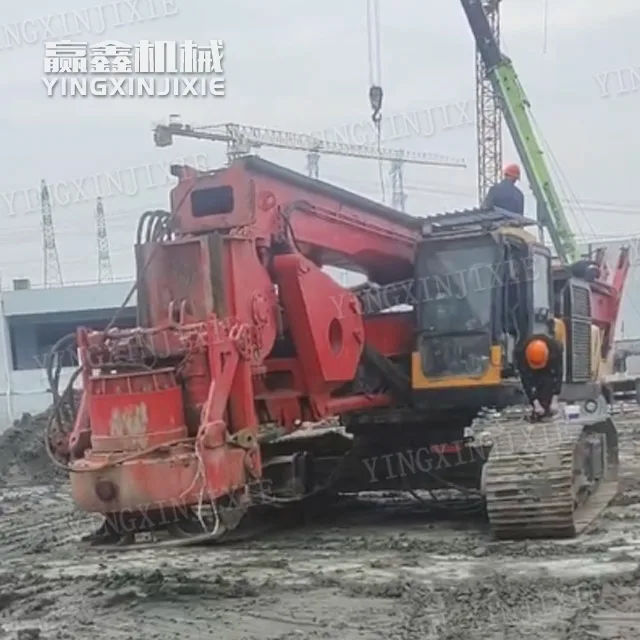
As the core equipment for pile foundation construction, the rotary drilling rig operates high-intensity in complex geological environments such as soft soil, sand layers, weathered rocks, and hard rocks for a long time. The drill bit, sealing ring, and filter element are the core vulnerable parts, and their performance and timely replacement directly affect the equipment’s operating efficiency, construction quality, and service life. In the context of high-quality promotion of infrastructure projects, reasonable selection and standardized replacement of vulnerable parts can not only reduce equipment failure rates and downtime losses, but also effectively control operation and maintenance costs, avoid hydraulic system damage, drilling efficiency decline, safety hazards and other problems caused by the failure of vulnerable parts. This article combines practical scenarios of rotary drilling rig construction to provide detailed disassembly of selection techniques, replacement cycles, and precautions for drill bits, sealing rings, and filter elements. It provides practical references for construction enterprises and operators, and helps improve equipment operation and maintenance levels.
Core cognition: The importance of vulnerable parts and the core causes of wear and tear
The wear and tear of vulnerable parts in rotary drilling rigs is essentially the result of the combined effects of friction, impact, medium erosion, and improper adaptation to working conditions during long-term operation. The drill bit directly contacts the formation and bears the impact force and cutting force during drilling, which is prone to wear, tooth breakage, and deformation; Sealing rings are used to seal hydraulic systems, fuel systems, and water systems. They are prone to aging, cracking, and leakage due to long-term exposure to high pressure, high temperature, and oil pollution; The filter element is responsible for filtering impurities in hydraulic oil, fuel, and lubricating oil to prevent impurities from entering the core components. After long-term use, it will lose its filtering function due to impurity blockage, indirectly leading to wear and tear of precision components such as pumps and valves. Neglecting the selection and replacement of vulnerable parts not only reduces drilling efficiency and increases energy consumption, but may also cause major equipamento problems such as hydraulic system failures and engine damage, significantly increasing operation and maintenance costs and the risk of project delays. Therefore, standardizing the management of vulnerable parts is the key to efficient operation and maintenance of rotary drilling rigs.
Drill bit: Select and adapt to geological conditions, replace and adapt to wear and tear conditions
The drill bit is the core executing component of the rotary drilling rig, and its selection directly determines the drilling efficiency and loss rate. The replacement cycle needs to be comprehensively judged based on geological conditions, drilling duration, and loss degree, and cannot be generalized. In terms of selection, it is necessary to strictly match the construction geology: loose formations such as soft soil and silty soil should be selected, and double bottom sand bucket drill bits should be preferred. They have high soil discharge efficiency, low wear, and are suitable for low-speed drilling; Sand and gravel layers should use louvered sand scoop buckets with sand control devices to reduce sand particle wear and improve sand discharge efficiency; Tooth shaped drill bits can be used for cohesive soil to reduce clay adhesion and lower drilling resistance; For hard formations such as weathered rocks and hard rocks, it is necessary to use toothed roller cutters or roller bits to enhance rock breaking ability and wear resistance, and avoid rapid tooth breakage of the drill bit.
In terms of replacement cycle, it needs to be dynamically adjusted according to the working conditions: when drilling in soft soil geology, the wear of the drill bit is slow, and it can be used for 80-120 hours under normal operating conditions. If there is poor soil discharge or a sudden drop in drilling speed, the wear of the drill bit should be checked and replaced in a timely manner; Drilling into sand and gravel layers accelerates the wear of drill bits, reducing the replacement cycle to 40-80 hours. The focus is on inspecting the wear of drill bit tips and the integrity of sand control devices; Drilling in hard rock formations results in the most severe wear and tear, with a replacement cycle of only 20-40 hours. If the drill bit experiences tooth breakage or deformation, it must be stopped immediately for replacement to avoid damaging the drill rod and drilling rig power system. In addition, after each drilling operation, it is necessary to promptly clean the soil and rock debris on the surface of the drill bit, check the wear of the tooth tip and the condition of the drill bit weld, and perform lubrication and maintenance to extend its service life.
Sealing ring: Selection takes into account compatibility, replacement closely monitors aging signals
The sealing ring is the core of the sealing system of the rotary drilling rig, mainly used for hydraulic pumps, hydraulic cylinders, pipeline interfaces, and other parts to prevent hydraulic oil, fuel, and water leakage. Its selection should take into account pressure, temperature, and medium adaptability, and the replacement cycle should be judged according to the usage environment and aging degree. In terms of selection, suitable materials and specifications should be chosen based on the working pressure and temperature of the sealing parts. For high-pressure parts of the hydraulic system (such as the outlet of the hydraulic pump), nitrile rubber sealing rings that are resistant to high pressure and oil should be selected to meet the system pressure requirements and avoid leakage under high pressure; High temperature areas (such as engine peripheral pipelines) require the use of high-temperature resistant fluororubber sealing rings to prevent aging and cracking; The waterway system can use water-resistant and corrosion-resistant silicone rubber sealing rings to enhance sealing stability. At the same time, the specifications of the sealing ring need to be accurately matched with the interface size, as being too large or too small can affect the sealing effect and accelerate wear.
In terms of replacement cycle, under normal working conditions, the service life of the sealing ring is 6-12 months, but actual replacement needs to be adjusted according to the usage environment. For rotary drilling rigs that operate in high temperature, high humidity, and dusty environments for a long time, the aging rate of the sealing ring accelerates, and the replacement cycle is shortened to 3-6 months; For equipment with unstable hydraulic system pressure and severe oil pollution, the sealing ring is prone to damage and needs to be inspected monthly and replaced in a timely manner. When the following signals occur, the sealing ring needs to be replaced immediately: leakage at the sealing part, aging, cracking, deformation, hardening of the sealing ring surface, or pressure drop or abnormal oil temperature rise during equipment operation. When replacing, it is necessary to clean the interface impurities, apply special lubricating grease, ensure that the sealing ring is installed in place, and avoid sealing failure caused by improper installation.
Filter cartridge: Selection focuses on filtration accuracy, replacement strictly controls clogging threshold
The filter elements of rotary drilling rig mainly include hydraulic oil filter element, fuel filter element, and lubricating oil filter element. The core function is to filter impurities and metal debris in the oil, protect core components such as engine, hydraulic pump, and valve. The selection should focus on filtration accuracy and adaptability, and the replacement cycle should strictly follow the usage specifications to avoid equipment failure caused by filter element blockage. In terms of selection, it is necessary to choose a filter element with appropriate accuracy according to the type of oil and filtration requirements: hydraulic oil filter elements should be selected with a filtration accuracy of ≥ 10 μ m, effectively filtering out small impurities in hydraulic oil and preventing wear and tear of hydraulic precision components; The fuel filter element should be selected from products that are compatible with diesel grades, with a filtration accuracy of ≥ 5 μ m, to prevent impurities from entering the engine fuel injector and affecting combustion efficiency; The lubricating oil filter element should be selected with a product that matches the engine model to ensure the filtering effect and extend the service life of the engine. At the same time, the rated flow rate of the filter element should match the oil circulation flow rate of the equipment to avoid insufficient oil filtration caused by insufficient flow.
In terms of replacement cycle, it is necessary to strictly follow the equipment manual and adjust the working conditions: the hydraulic oil filter element should be replaced every 500 hours under normal operating conditions, and every 300 hours if the construction environment is dusty or heavily contaminated with oil; The fuel filter should be replaced every 200-300 hours. If the purity of the diesel used is low, it should be shortened to once every 150 hours; The lubricating oil filter element is replaced synchronously with the engine oil, every 1000 hours to ensure the cleanliness of the lubricating oil. In addition, it is necessary to regularly check the pressure difference of the filter element in daily operations. When the pressure difference exceeds the specified value (usually 0.3-0.5MPa), it indicates that the filter element is blocked and needs to be replaced immediately to avoid equipment failure caused by poor oil circulation and wear of core components due to filter element blockage. When replacing the filter element, it is necessary to first drain the old oil, clean the impurities in the filter element seat, install the new filter element, and perform exhaust treatment to ensure the normal operation of the equipment.
General precautions for replacing vulnerable parts: standardize operation and extend equipment life
In addition to targeted selection and cycle specifications, the replacement of vulnerable parts of rotary drilling rigs also needs to follow general operating guidelines to avoid equipment damage caused by improper operation. One is to shut down and cut off power before replacement, release the pressure of the hydraulic system and fuel system to ensure safe operation; The second is to choose original or compatible consumables to avoid using inferior products. Poor quality consumables not only have a short service life, but may also damage the core components of the equipment; Thirdly, during the replacement process, impurities and oil stains on the relevant components need to be cleaned to ensure a clean installation environment and prevent impurities from entering the interior of the equipment; The fourth step is to conduct a trial operation after replacement, check the operating status of the equipment, confirm that vulnerable parts are installed in place, without leakage or abnormal noise, and ensure that the equipment is put into normal use.
At the same time, it is necessary to establish a vulnerable parts ledger, which records in detail the selection specifications, replacement time, usage duration, working conditions, and other information of vulnerable parts. Combined with equipment operation data, the replacement cycle should be gradually optimized to achieve precise operation and maintenance. In addition, daily equipment cleaning, lubrication and maintenance should be done well to reduce the speed of wear and tear of vulnerable parts, such as regularly cleaning the drill bit, checking the sealing condition of the sealing ring, timely replacing contaminated oil, reducing the frequency of vulnerable part replacement from the source, and controlling operation and maintenance costs.
Industry practical summary: precise selection, standardized replacement, cost reduction and efficiency improvement
The selection and replacement of drill bits, sealing rings, and filter elements for rotary drilling rigs are based on “adapting to working conditions, accurate judgment, and standardized operation”. Construction companies need to scientifically select vulnerable parts based on construction geology, equipment models, and operational intensity to avoid accelerated wear and tear caused by improper selection; Operators need to closely monitor the loss signals of vulnerable parts, strictly follow the replacement cycle, timely replace failed vulnerable parts, and avoid equipment failures; At the same time, do a good job in daily maintenance and ledger management, optimize operation and maintenance processes, and achieve refined and standardized management of vulnerable parts. Through scientific selection and standardized replacement, the service life of rotary drilling rigs can be extended, construction efficiency can be improved, and operation and maintenance costs can be effectively controlled, providing equipment support for the efficient promotion of infrastructure projects.