

Must-read for Beginners: Complete Guide to Rotary Drilling Rig Selection – Core Parameter Interpretation + Practical Tips to Avoid Pitfalls
Release time: 2026-05-09
For novice pile foundation construction workers, selecting a rotary drilling rig is a crucial step in getting started, directly determining construction efficiency, project profits, and later operating costs. The current market for rotary drilling rigs has a variety of brands and models, and the parameter labeling is obscure and difficult to understand. Novices are easily trapped in the dilemma of “only looking at price and ignoring adaptability” and “being misled by gimmicks and losing money”. As the core equipment of heavy-duty pile foundation, rotary drilling rig has high unit price and long service life. When selecting, it is necessary to consider the four core factors of “working condition adaptation, parameter matching, cost-effectiveness, and later guarantee”. It is necessary to understand the practical significance of key parameters and avoid common selection traps in the industry. This article combines the cognitive characteristics of novice pile foundation construction, disassembles and selects core parameters, sorts out high-frequency pit avoidance points, and helps beginners quickly choose the right equipment and avoid detours.
The core prerequisite for novice purchasing is to clarify the working conditions and refuse to blindly follow the trend
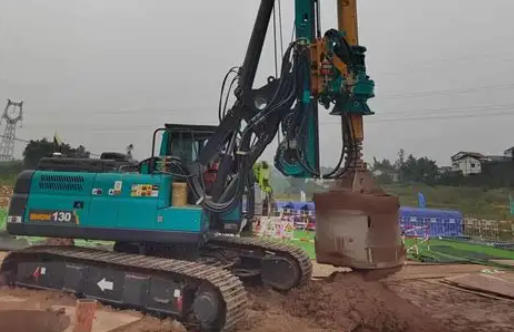
The primary misconception for beginners when choosing a rotary drilling rig is to blindly pursue “large tonnage, high configuration” or “low-priced equipment” without considering their own construction conditions. Different types of plataformas de perfuração rotativa are suitable for different types of pile foundation projects based on their geological conditions, drilling depths, and aperture sizes. Choosing equipment that is not suitable for the working conditions will only result in equipment being overused or inadequate. For example, rural infrastructure and small-scale municipal projects are mostly shallow boreholes and soft soil geology. Choosing a small and medium-sized (15-25 meters) rotary drilling rig can meet the demand without the need to purchase large tonnage equipment at a high price; However, wind power foundations, bridge pile foundations, and other engineering projects often involve deep holes and hard rock geology, requiring the selection of large tonnage (over 30 meters) and high torque equipment, otherwise problems such as low drilling efficiency and rapid equipment wear and tear may occur. Novices need to first clarify their core construction scenarios, and then selectively screen equipment, which is the basic prerequisite for purchasing.
Must see core parameters: 3 key indicators to understand equipment strength
The core parameters of a rotary drilling rig determine its construction capability and adaptability. Novices do not need to master all parameters, but focus on understanding three core indicators to quickly determine whether the equipment meets the requirements and avoid being deceived by merchants.
Core parameter 1: Maximum drilling depth and aperture, matching construction requirements
The maximum drilling depth and maximum drilling diameter are the most fundamental performance indicators of plataformas de perfuração rotativa, which directly determine the scope of engineering that the equipment can undertake. When making a purchase for beginners, it is necessary to consider the pile foundation project they have undertaken and select parameters that are “slightly higher than the regular construction requirements”, leaving a certain margin to avoid equipment incompatibility during later expansion projects. For example, in conventional construction, the drilling depth is usually 18-22 meters with a diameter of 1.2 meters. Equipment with a maximum drilling depth of 25 meters and a diameter of 1.5 meters can be selected to meet current needs and cope with future small-scale project upgrades. It should be noted that the “maximum drilling depth” marked by merchants is mostly a theoretical value, which may be affected by geology and drilling tools during actual construction. When purchasing, you can consult peers or manufacturers to understand the actual construction capacity of the equipment.
Core parameter 2: Power head torque, determining drilling efficiency and geological adaptability
The torque of the power head is the “core power” of the rotary drilling rig. The greater the torque, the stronger the drilling ability, and the better it can adapt to complex geological conditions such as hard rocks, sand and gravel. Novices are prone to falling into the misconception of “the greater the torque, the better”. In fact, torque is linked to equipment tonnage and energy consumption. The greater the torque, the higher the energy consumption and price of the equipamento. If it is only used in soft soil geology, it will cause energy waste and cost increase. Equipment with a torque of 180-280kN · m can be selected for soft soil geology, while equipment with a torque of over 300kN · m should be selected for hard rock and composite geology. The optimal choice is to match the geological conditions reasonably.
Core parameter 3: Engine and hydraulic system, related to equipment stability
The engine is the “heart” of the rotary drilling rig, and the hydraulic system is the “lifeblood”. The quality of both directly determines the failure rate and service life of the equipment. When beginners choose, they should prioritize equipment equipped with well-known brand engines (such as Cummins, Weichai) and hydraulic systems (such as Rexroth, Kawasaki). These core components have reliable quality, complete after-sales support, low maintenance costs in the later stage, and less downtime. At the same time, pay attention to the emission standards of the engine, which must comply with current national environmental protection requirements to avoid being unable to enter the construction site due to non-compliance with emission standards. In addition, attention can be paid to the sealing performance of the hydraulic system. The better the sealing, the more it can avoid rainwater infiltration during rainy season construction and reduce potential faults.
Novice high-frequency avoidance points: 5 minefields, resolutely avoid them
The rotary drilling rig market is mixed with good and bad players, and beginners lack industry experience, making it easy to be misled by merchants’ promotional gimmicks and fall into the trap of purchasing. The following 5 high-frequency pitfalls must be remembered by beginners and avoided resolutely.
Avoiding pitfalls point 1: Do not be greedy for low prices, be wary of “refurbished machines” and “assembled machines”
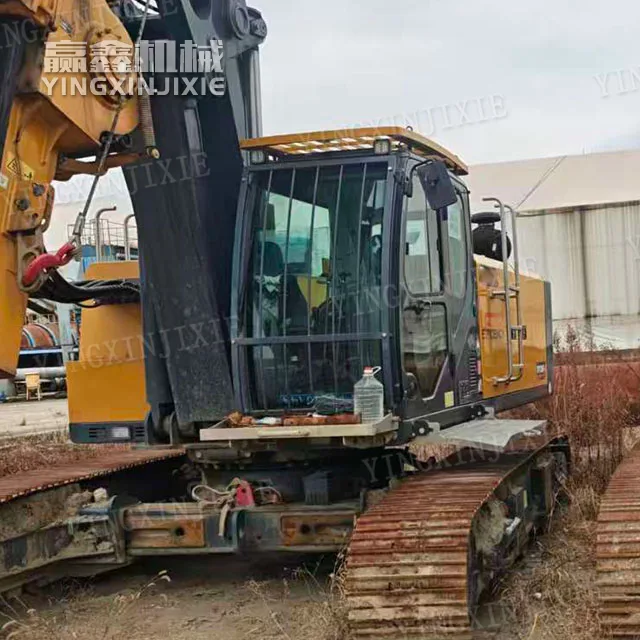
Novices with limited budgets are easily attracted to low-priced equipment, but rotary drilling rigs that are much lower than the market average are most likely refurbished or assembled machines. These types of devices often use second-hand core components, which are refurbished on the surface and disguised as new machines. In the initial use, they may appear normal, but in the later stage, they are prone to frequent failures, high maintenance costs, and even cannot be constructed normally, which is not worth the loss. When making a purchase, priority should be given to selecting equipment from reputable manufacturers and well-known brands. Even if the budget is limited, one can choose second-hand equipment from reputable manufacturers (with complete testing reports and after-sales support), and reject low-priced refurbished machines without qualifications or guarantees.
Avoiding pitfalls point 2: Do not blindly pursue high configuration, adaptation is the key
Some merchants deliberately promote “high configuration, multi-functional” to lure beginners to spend high prices on devices that exceed their own needs. For example, beginners only undertake small shallow hole projects, while merchants recommend large tonnage equipment with intelligent control systems, which not only increases purchase costs, but also increases operational burden due to idle intelligent systems and high energy consumption in the later stage. When beginners make purchases, they should adhere to the principle of “adapting to working conditions” and not pursue unnecessary configurations. Adequate and user-friendly are the core.
Key point 3 for avoiding pitfalls: Pay attention to after-sales support and refuse to sell it at once
Rotary drilling rigs are heavy equipment, and maintenance and upkeep are crucial in the later stages. Novices may overlook after-sales support and only focus on equipment prices. Some small manufacturers and distributors no longer provide after-sales service after selling the equipment. When the equipment malfunctions, there is no way to repair it and parts are difficult to find, resulting in work stoppages and heavy losses. When making a purchase, it is necessary to confirm the manufacturer’s after-sales policy, clarify the after-sales response time, distribution of repair outlets, and supply of accessories. Priority should be given to choosing manufacturers with a complete after-sales system and good reputation to avoid the trap of “selling them all at once”.
Key point 4 for avoiding pitfalls: Do not ignore the supply of accessories to avoid later “jamming”
The drill rods, drill teeth, hydraulic seals and other vulnerable parts of the rotary drilling rig need to be replaced regularly. If the supply of parts is not smooth, it will cause equipment shutdown. When beginners make purchases, they need to understand the manufacturer’s ability to supply accessories, whether there is a complete accessory warehousing and distribution system, and whether the accessory prices are reasonable. Avoid choosing niche brands and obscure models, as these types of equipment accessories are difficult to find and have high prices, which will significantly increase operating costs in the later stage.
Key point 5 for avoiding pitfalls: Sign a formal contract and clarify the boundaries of rights and responsibilities
Newcomers tend to overlook contract signing when making purchases, verbally agreeing on equipment configuration, price, after-sales service, and other matters, making it difficult to protect their rights in case of disputes later on. When making a purchase, it is necessary to sign a formal purchase and sales contract, specifying the equipment model, core parameters, price, payment method, after-sales guarantee, breach of contract responsibility and other details, especially the key terms such as equipment quality standards, after-sales response time limit, and accessory supply, which need to be confirmed one by one to avoid the merchant’s later buck passing and buck passing.
Summary of novice purchasing: rational decision-making, balancing cost-effectiveness and practicality
The core of novice selection of rotary drilling rig is to “clarify the working conditions, understand the parameters, and avoid traps”. There is no need to pursue “high-end, high price”, nor should one be tempted by “low price, easy”. Firstly, clarify the construction scenario and select suitable equipment models; Focus on key parameters such as drilling depth, power head torque, and core components to assess equipment strength; Finally, be wary of pitfalls such as low prices and lack of after-sales service, sign formal contracts, and protect your own rights and interests. For beginners with limited budget, it is advisable to prioritize using legitimate second-hand equipment from manufacturers or small and medium-sized tonnage compatible models. As the project expands, the equipment will be gradually upgraded to achieve a balance between cost and efficiency.