

“Made in EU” in Controversy: Changes and Breakthroughs in the Large Equipment Industry under the Industrial Accelerator Act
Release time: 2026-03-09
Introduction: The EU Industrial Accelerator Act (IAA) and Its Far-Reaching Impact on the Large Equipment Industry
On March 4, 2026, the European Commission officially released the Industrial Accelerator Act (IAA), centered around “EU manufacturing + low carbon + foreign investment control + expedited approvals”, aiming to reshape the EU’s industrial competitiveness, ensure supply chain security, and advance green transformation. However, since its inception, it has sparked widespread controversy both within and outside the EU. For the large equipment industry, which is highly dependent on global supply chains, has large investment scales, and faces high technological barriers, this bill is not a simple adjustment of industrial policy, but a profound transformation related to global layout, cost control, and technological iteration. The policy orientation behind the controversy is quietly rewriting the future development trajectory of the industry.
Overview of the Large Equipment Industry: Characteristics and Global Collaboration Features
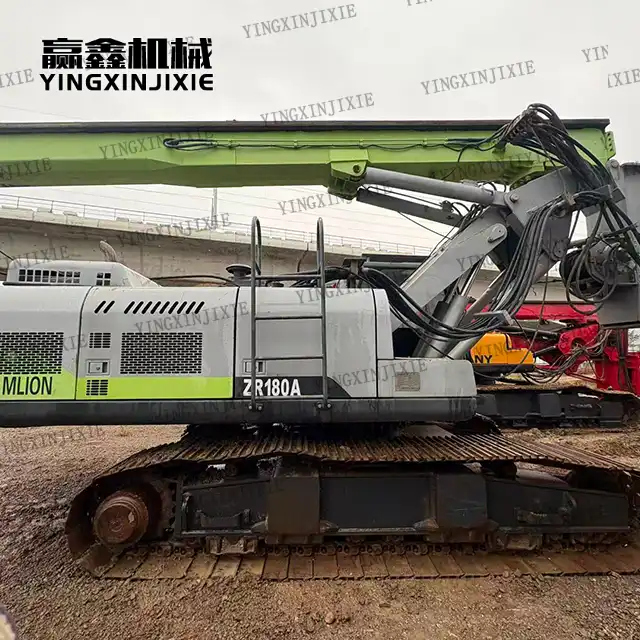
The large equipment industry encompasses multiple sub-sectors such as construction machinery, wind power equipment, nuclear power equipment, and high-end CNC machine tools. It is characterized by a long industrial chain, a high degree of global collaboration, and a reliance on precise matching of core components. For instance, the blades, gearboxes, and control systems of a large wind turbine may originate from different enterprises in Europe, Asia, and the Americas, respectively. The establishment of a high-end production line often requires the integration of technology, components, and manufacturing resources from around the world. The core provisions of the Industrial Accelerator Act directly address the pain points of this industry, with the public procurement thresholds related to “Made in the EU” and stringent foreign investment controls emerging as key variables affecting the industry’s development.
Controversial Core: “Made in EU + Low Carbon” Dual Threshold Increases Enterprise Costs
The most controversial aspect of the bill, the “Made in EU + Low Carbon” dual threshold, directly increases the market access and operational costs for the large equipment industry. According to the bill, in public procurement for strategic industries such as steel, aluminum, wind power, and photovoltaics, low-carbon products must account for a specific proportion. Specifically, the proportion of low-carbon products in steel and aluminum must not be less than 25%. For key components in fields such as photovoltaics and electric vehicles, the proportion of “Made in EU” products must gradually increase. In the future, products lacking EU origin certification may even be prohibited from participating in public procurement bidding. For large equipment companies, this means that if they want to compete for the EU’s public procurement market, which exceeds €2 trillion annually, they must adjust their supply chain layout: either by increasing procurement of local EU components or by establishing factories within the EU to produce core components. However, the practical challenge lies in the limited production capacity of core components in the EU and significantly higher manufacturing costs compared to regions such as Asia. Taking photovoltaic modules as an example, the production cost in the EU is about 60% higher than that in China. Moreover, the prices quoted by local EU suppliers for core components required by large equipment, such as high-end steel and precision bearings, are generally higher than the global average. This undoubtedly drives up the production costs of enterprises and squeezes profit margins.
Foreign Investment Control: Dilemma for Non-EU Large Equipment Enterprises
The more stringent provisions on foreign investment control pose significant challenges to non-EU large equipment enterprises, especially Chinese enterprises, in their expansion plans in Europe. The bill stipulates that if a single third country accounts for more than 40% of the global production capacity in a strategic sector (China meets this condition in photovoltaic, battery, and other large equipment-related fields), then for any single investment exceeding 100 million euros in that sector, a series of stringent conditions must be met, including foreign equity ownership not exceeding 49%, mandatory joint ventures with EU enterprises, technology and knowledge transfer, annual investment of 1% of global revenue in local R&D in the EU, and EU employees accounting for no less than 50%. Violators will face fines of up to 5% of annual turnover. For large equipment enterprises seeking to expand into the European market, this means that the previous model of “simply selling goods” is no longer sustainable. If they want to take root in Europe, they must relinquish some equity and share core technologies, which will not only weaken their technological advantages but also increase the risk of technology leakage. On the other hand, if they choose to abandon joint ventures and stick to independent layouts, they will be excluded from the EU public procurement market and lose core growth points in the European market. This dilemma is forcing global large equipment enterprises to reassess their investment strategies in Europe.
EU Internal Division: Exacerbating Market Uncertainty
The internal division within the EU triggered by the bill has further exacerbated market uncertainty in the large equipment industry. Proponents, primarily industrial giants such as Germany and France, believe that the “Made in EU” threshold can protect local high-end large equipment enterprises from external competition, safeguard employment, and ensure supply chain security. For example, local leading enterprises such as Siemens in Germany and ABB in Switzerland can leverage policy tilting to obtain more public procurement orders and consolidate their technological barriers in fields such as high-end CNC machine tools and industrial robots. However, opponents include small countries in Northern and Eastern Europe, as well as enterprises reliant on global supply chains. They believe that an excessively high “Made in EU” threshold would undermine the unity of the EU single market, drive up enterprise costs, and even violate WTO rules, leading to trade retaliation and ultimately harming the competitiveness of the entire European industry. This internal divergence implies that the bill may be softened during the deliberation process in the European Parliament and the Council of the EU. Core provisions such as local content requirements and foreign capital control may undergo adjustments. This policy uncertainty makes it difficult for large equipment enterprises to formulate long-term and stable layouts in Europe, forcing them to adopt a wait-and-see attitude and slow down their investment and expansion pace.
Long-Term Impact: Green Transformation and Industrial Chain Fragmentation
From the perspective of long-term industry development, the implementation of the bill will also force the large equipment industry to accelerate its green transformation and technological upgrading, but it may also exacerbate the fragmentation of the global industrial chain. Despite being criticized by environmental organizations as “pseudo-green”—with too low a threshold for low carbon, vague definitions, and no mandatory decarbonization timetable—the low carbon standards proposed in the bill will still encourage large equipment companies to increase their investment in low carbon technology, develop energy-efficient and low-emission equipment products, such as improving the power generation efficiency of wind power equipment and developing construction machinery made from low carbon steel. At the same time, the mandatory requirements for local research and development in the EU under the bill may also drive technological innovation resources in the industry to concentrate in Europe, especially in areas such as green manufacturing and digital transformation, leading to new technological breakthroughs. On the other hand, the protectionist tendency of “Made in EU” will prompt companies to shrink their supply chains towards regionalization, reducing resource integration on a global scale. The previous model of “global procurement and global production” will be impacted, and the large equipment industry may see the emergence of a new pattern of “regionalized manufacturing.” This will not only increase the redundancy costs of the supply chain but may also slow down the global diffusion of technology.
Coping Strategies: Differentiated Paths for Global Large Equipment Enterprises
For large global equipment enterprises, to cope with the impact of the bill, differentiated breakthrough strategies are needed. For EU-based enterprises, especially leading enterprises, they can leverage policy dividends to increase local production capacity layout and R&D investment, consolidate their high-end market advantages, and seize the opportunities of mergers and acquisitions (M&A) integration. It is estimated that by 2030, the total M&A transaction volume in the European machinery and equipment industry will reach over 80 billion euros. Local enterprises can improve their industrial chain layout and reduce costs by acquiring small and medium-sized innovative enterprises. For non-EU enterprises, if they want to continue to penetrate the European market, they need to actively adapt to the “Made in EU” and low-carbon requirements. They can consider deploying production capacity in EU industrial acceleration zones, leveraging the policy dividends of expedited approvals, and establishing strategic joint ventures with EU enterprises to avoid foreign capital control risks, achieve technological symbiosis, and share markets. If the cost of entering the European market is too high, they can shift their focus to emerging markets such as Southeast Asia and the Middle East to tap into new growth potential.
Conclusion: The Act’s Essence and the Industry’s Future Outlook
Controversy persists, yet change has already begun. The essence of the Industrial Accelerator Act lies in the EU’s strategic shift from “market openness” to “economic security + industrial autonomy” amid the backdrop of global supply chain restructuring and intensified competition between China and the United States. It attempts to strike a balance between trade protection and free trade, industrial autonomy and global division of labor, as well as short-term interests and long-term climate goals. However, achieving this balance will inevitably come at the cost of restructuring the large equipment industry. In the future, as the act is gradually implemented and adjusted, the large equipment industry will face multiple challenges such as rising costs, layout adjustments, and technological iterations. At the same time, it will also embrace new opportunities for green transformation and regional development. For every enterprise in the industry, only by actively adapting to policy changes, optimizing global layout, and strengthening technological innovation can they gain a firm foothold in this changing landscape and achieve sustainable development.