

Estados Unidos planea bloquear el estrecho de Ormuz, lo que ejerce presión sobre el transporte marítimo y la logística de equipos grandes debido al aumento vertiginoso de los precios del petróleo.
Release time: 2026-04-13
After the breakdown of negotiations between the United States and Iran, President Trump announced on April 12 that the US Navy would begin to block ships from entering and leaving the Strait of Hormuz. This move has sparked strong concerns in the market about escalating tensions in the Middle East and energy supply disruptions, leading to a significant surge in international oil prices at the beginning of the new week’s trading. As the world’s most critical energy shipping route, the Strait of Hormuz carries nearly one-fifth of the world’s crude oil shipping volume, and its navigation situation is directly related to the stability and cost fluctuations of the global shipping system. The cross-border transportation of large engineering equipment such as rotary drilling rigs and pile drivers is mainly by sea, which is highly sensitive to shipping costs, route safety, and transportation efficiency. The US plan to block the strait and the skyrocketing oil prices are having a significant impact on its global shipping logistics from multiple dimensions such as cost, efficiency, and risk, bringing multiple challenges to the construction machinery and logistics industries.
The oil price has skyrocketed significantly, and the cost of shipping large equipment by sea has risen sharply
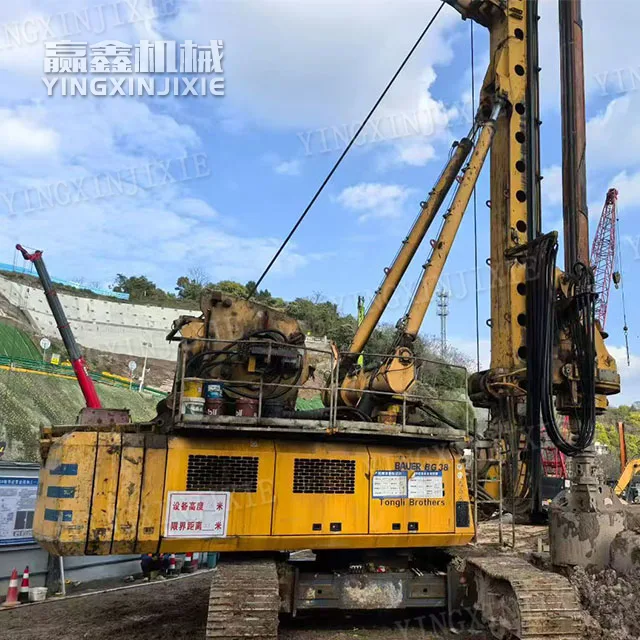
The significant increase in international oil prices has directly pushed up the core cost of shipping large equipment by sea, bringing heavy burdens to engineering machinery export enterprises and logistics enterprises. Large equipment such as rotary drilling rigs and pile drivers can weigh tens to hundreds of tons per unit. Cross border transportation mainly relies on special vessels such as heavy lift ships and semi submersible ships, and fuel costs account for 45% -55% of the comprehensive shipping cost. It is reported that as of April 9th, the price of light crude oil futures on the New York Mercantile Exchange has risen to $97.87 per barrel, an increase of 3.66%, and the market expects oil prices to continue to remain high. The soaring oil prices have directly led to a significant increase in the operating costs of special vessels, causing shipping companies to raise freight rates and increase fuel surcharges. The cost of transporting a single plataforma de perforación rotatoria across oceans has increased by more than 25% compared to before. The long-term supply gap in the Middle East predicted by Everbright Securities will continue to exist, and the oil price center will remain high. The upward pressure of large equipment shipping costs will continue to be transmitted, further compressing the profitability of enterprises.
Strait navigation is restricted, transportation efficiency is significantly prolonged, and uncertainty is exacerbated
The statement by the United States that it intends to block the Strait of Hormuz has led to a highly uncertain navigation situation in the strait. Even though there are still a small number of ships passing through, it is under strict control and directly affects the transportation efficiency of large equipment. According to a report by the British maritime analysis company Winward, the standard channel of the Strait of Hormuz is currently largely unused, and ships entering and leaving need to coordinate with Iran. Unauthorized passage may face the risk of attack. Currently, about 3200 ships are stranded west of the strait, including 800 oil tankers and cargo ships. The commonly used Asia Europe shipping route for transporting large equipment such as rotary drilling rigs used to achieve efficient passage through the Strait of Hormuz. However, shipping companies now commonly adopt alternative routes that bypass the Cape of Good Hope, resulting in an extension of the journey from Europe to the Gulf region from about 25 days to about 41 days, greatly reducing transportation efficiency. At the same time, the phenomenon of “hidden navigation” caused by the upgrading of cross-strait control continues to exist, and the automatic identification system of ships is closed, further increasing the uncertainty of large-scale equipo transportation, which is prone to risks such as transportation delays and cargo loss.
Shortage of shipping resources and prominent shortage of special vessel cabins
The restricted navigation in the Strait of Hormuz has triggered a global reallocation of shipping resources, and the shortage of special vessel resources has become increasingly prominent, posing additional obstacles to the transportation of large equipment. The transportation of large equipment such as rotary drilling rigs and pile drivers requires specialized heavy lift ships and semi submersible ships. The number of such ships is limited, and after the tense situation in the strait, a large number of special ships have been deployed to alternative routes or suspended operations due to high risks, resulting in a significant expansion of the cabin gap. At present, mainstream shipping companies and oil giants have not yet resumed shipping activities through the Strait of Hormuz, further exacerbating the supply-demand contradiction of special vessels. The difficulty for companies to book cabin space has greatly increased, and some export orders for rotary drilling rigs have been delayed due to the inability to book cabin space in a timely manner. This has a direct impact on equipo transportation in the Middle East and Europe, indirectly affecting the construction progress of overseas infrastructure projects.
High insurance costs and increased pressure on risk protection for the transportation of large equipment
The escalation of the situation in the Strait of Hormuz and the surge in oil prices have led to an increase in the risk level of the international maritime insurance market, further pushing up the insurance costs for the transportation of large equipment. The value of a single rotary drilling rig is generally in the millions of yuan, and cross-border transportation requires multiple types of insurance such as cargo insurance and war insurance. Currently, the Strait of Hormuz and surrounding waters are classified as high-risk areas by insurance institutions, and war insurance rates are still at a high level, several times higher than during stable periods. At the same time, the rise in oil prices has led to increased operational risks for ships, and insurance institutions have further raised freight insurance rates. The transportation insurance cost for a single rotary drilling rig has increased by 15% -20% compared to before. Due to high insurance costs, some small and medium-sized logistics enterprises have been forced to reduce or abandon their large-scale equipment transportation business in the Middle East and Europe, further exacerbating the tight situation of transportation resources.
Logistics system diversion forces enterprises to adjust their transportation layout
Faced with the navigation difficulties in the Strait of Hormuz, there has been a significant adjustment in global trade flows in the Gulf region. Large equipment transportation and logistics systems have been forced to be diverted, and companies have adjusted their transportation layouts to avoid risks. According to reports, shipping activities that originally passed through the Strait of Hormuz have shifted to ports on the east coast of Oman and the United Arab Emirates, forming a new logistics diversion system. The transfer and unloading of large equipment such as rotary drilling rigs need to be re planned at these ports, increasing transfer costs and time. At the same time, some enterprises have begun to explore diversified transportation channels, such as relying on the China Europe freight train to transport small rotary drilling rig accessories in the European direction, or adopting a multi port intermodal transportation model. Although it can to some extent avoid the risk of the strait, it also further increases the complexity and cost of the transportation process. In addition, domestic construction machinery enterprises exporting rotary drilling rigs overseas, such as equipment sent by Zoomlion to Kazakhstan and Europe, also need to optimize their transportation routes to cope with changes in the shipping pattern.
To cope with challenges, the industry needs to build a strong risk prevention and control defense line
The surge in oil prices and shipping turbulence caused by the US planned blockade of the Strait of Hormuz will have a long-term impact on the logistics of large equipment shipping. For engineering machinery export enterprises and logistics enterprises, they need to proactively respond and scientifically layout: firstly, closely monitor the situation in the Taiwan Strait and the dynamics of oil prices, lock in fuel and cabin costs in advance, and reduce losses caused by price fluctuations; Secondly, optimize transportation routes, prioritize alternative routes such as detours around the Cape of Good Hope and the Suez Canal, or rely on diversified transportation channels such as the China Europe freight train to reduce dependence on the Strait of Hormuz; Thirdly, it is necessary to plan the delivery cycle of orders reasonably, communicate with overseas customers in advance, explain the risks of transportation delays, and strengthen cooperation with insurance institutions to improve the risk protection system; The fourth is to draw on the design experience of Zoomlion’s rotary drilling rig with rod transportation and rapid transfer, optimize equipment packaging and transportation plans, and reduce transfer and transportation costs. By coordinating multiple measures, we aim to minimize the impact of turbulent situations and ensure smooth cross-border transportation of large equipment such as rotary drilling rigs.