

The formal implementation of the Europe-US trade agreement has brought structural adjustments to the transoceanic logistics of large pile foundation components.
Release time: 2026-06-26
The European Council has completed all legislative approvals, and the EU US tariff trade agreement has officially come into effect. The upper limit of industrial tariffs is locked at 15%, and trade protection and suspension clauses have been added. The steady growth of transatlantic trade flow and the redistribution of ship capacity have had a long-term impact on the ocean freight rates, port clearance, and route competition of oversized engineering equipment such as rotary drilling rigs and pile drivers.
Cross Atlantic freight is heating up, and Asia Europe large cargo routes are facing capacity diversion
The opening up of trade between Europe and the United States will stimulate mutual trade in industrial products between the two sides. Major shipping companies will prioritize increasing investment in direct shipping capacity between the United States and Europe, and some heavy lift ships and special large vessels will shift from the Asia Europe route to the Atlantic route. The availability of special cargo spaces for transporting pile foundation equipment is becoming increasingly tight, and there is a shortage of large cargo spaces on the Asia Europe route, resulting in upward pressure on long-term sea freight rates. The difficulty of booking space for plataformas de perforación rotatoria and pile drivers exported to Europe has increased, and foreign trade enterprises need to lock in space in advance to avoid temporary shortage of space and delayed delivery.
Clear and stable tariff rules, equipment export quotations to avoid policy fluctuations and risks
The agreement stabilizes industrial tariffs at 15% and includes a long-term safeguard mechanism, changing the previous situation of the US arbitrarily imposing tariffs. For pile foundation equipo exported to the European and American markets, the tax payment cost can be calculated steadily over the long term, and enterprises do not need to reserve additional tariff risk premiums. But the EU reserves the right to temporarily suspend tariff preferences. In the event of trade frictions, construction machinery may still be included in the temporary control list, and customs declaration documents and certificates of origin need to be more rigorous and standardized to avoid strict customs verification.
Customs clearance at European and American ports is becoming stricter, with longer clearance cycles for oversized equipment
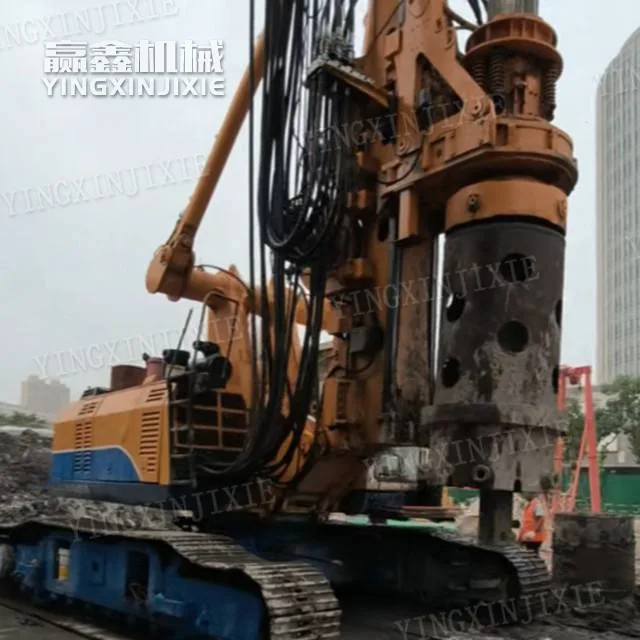
With the increase in bilateral trade, the congestion of goods in major ports in Europe and America has intensified, and customs have increased their efforts to verify heavy construction machinery documents. The rotary drilling rig belongs to the category of ultra-high and overweight goods that cannot be disassembled, and the inspection process is more complicated. In the short term, it is prone to port detention, resulting in demurrage fees and storage costs. Logistics companies need to apply for approval for oversized transportation in advance, improve the registration documents for complete machines, and choose specialized ports such as Antwerp and Rotterdam with the ability to lift large items to reduce transit links.
Expansion of local equipment trade in Europe and America, intensifying competition for Asian pile foundation equipment
The reduction of trade barriers has accelerated the circulation of construction maquinaria in Europe and the United States, making it easier for European self-produced drilling rigs to enter the US market and divert some overseas infrastructure orders. The export of domestically produced rotary drilling rigs to Europe and the United States cannot solely rely on price advantages. The logistics side needs to optimize the plan, adopt whole machine splitting and multimodal transportation to compress the comprehensive landing cost, consolidate the third-party market share in Europe, and hedge the order diversion pressure brought by the growth of internal trade in Europe and the United States.