

The EU Israel cooperation agreement remains unchanged, and the cross-border logistics pattern of large-scale engineering equipment remains stable
Release time: 2026-04-22
The EU has officially rejected Spain’s application to suspend the EU Israel Association Agreement, and both sides have fully retained their existing frameworks for trade, scientific research, and logistics cooperation. Relying on long-term effective bilateral agreements, the Mediterranean shipping routes, tariff access, port cooperation, and cross-border clearance mechanisms are maintained in normal operation. Against the backdrop of ongoing geopolitical tensions, the existence of the agreement effectively stabilizes the basic foundation of regional trade, providing stable support for the maritime transit, cross-border delivery, and regional circulation of large-scale infrastructure equipment such as rotary drilling rigs and pile drivers.
The bilateral cooperation framework continues the stable operation of trade rules for large equipment
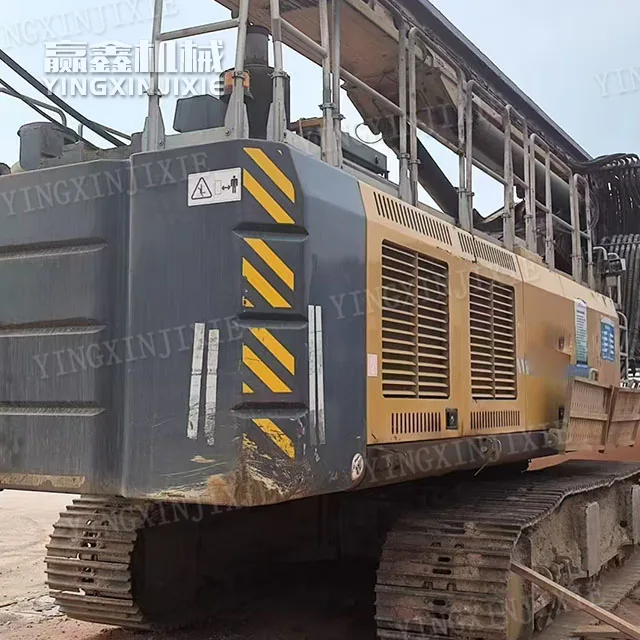
The EU Israel Association Agreement has long regulated customs clearance, tariff reductions, and market access conditions for goods from both sides. The rejection of the proposal for a comprehensive suspension means that there will be no sudden changes in trade rules in the field of construction machinery. Rotary drilling rigs and pile drivers belong to heavy infrastructure equipment, and their import and export involve complex mechanical and electrical certification, large-scale commodity inspection, and tariff classification. The continued effectiveness of the agreement can maintain existing access standards and avoid the escalation of trade barriers caused by a one size fits all policy. European engineering machinery export enterprises and equipment purchasers in the Middle East region do not need to temporarily adjust their procurement plans. The cooperation mode of complete machine trade, parts supply, and second-hand equipment circulation will remain continuous, and the regional engineering equipment supply and demand chain will not experience phased breaks.
The normal operation of the Mediterranean route and the large sea freight channel have not been affected by policies
The ongoing geopolitical conflict in the Middle East continues to disrupt envío in the Strait of Hormuz, making the Mediterranean route a core alternative route for Europe to reach the Middle East and North African markets. The EU reserves the cooperation agreement with Israel, allowing core ports such as Haifa and Ashdod to remain open to EU ships, and maintaining normal pace of port operation cooperation, ship berthing support, and heavy lifting services. Rotary drilling rigs and pile drivers rely on heavy lifting vessels and special large cargo transport ships, with relatively fixed route planning. The agreement is stable and avoids extreme measures such as port closures, route restrictions, and tightened vessel access, ensuring smooth sea transportation channels for large cargo from Europe to the Middle East and North Africa. There is no need for large-scale adjustments to transportation routes and transit arrangements.
Continuous simplification of customs clearance process, controllable transit time for large equipment
Based on the bilateral agreement framework between Europe and Israel, both sides have implemented mutual recognition of inspection standards and simplified the approval process for cross-border large items in the long term, especially for the temporary import of construction machinery and equipo, short-term customs clearance of projects, and convenient clauses for cross-border transportation. The agreement will not be suspended, and the special customs clearance channel for large equipment can continue to be retained. The transit permit, temporary license plate, and on-site verification process for ultra-high and overweight equipment will remain stable. For rotary drilling rigs and pile drivers sent to infrastructure projects in the Middle East, the approval cycle for transit, land transportation, and cross-border transportation in Mediterranean coastal ports will not be extended, effectively avoiding the risk of port detention caused by policy changes and preventing additional storage and detention costs.
Stable regional market demand, equipment export orders expected to continue to recover
If the agreement is fully suspended, bilateral investment, infrastructure cooperation, and engineering contracting projects between Europe and Israel will be restricted, directly suppressing the demand for pile foundation construction equipment procurement. The EU maintains a cooperation mechanism that can safeguard the legitimate rights and interests of European enterprises in participating in infrastructure projects in Israel and surrounding areas. Urban renewal, transportation transformation, and energy supporting infrastructure are steadily advancing, continuously driving the release of essential needs for rotary drilling rigs and pile drivers. At the same time, a stable economic and trade environment alleviates pessimistic market expectations, and the equipment procurement plans of engineering contractors are no longer forced to be put on hold. The stability of foreign trade orders for construction machinery is enhanced, and the allocation of regional large-scale logistics capacity is more planned.
Avoiding chain risks and further strengthening the resilience of the supply chain
The EU assessment believes that suspending the Association Agreement will trigger a chain of negative impacts in various fields such as trade, scientific research, and logistics, which is not conducive to regional supply chain stability. In the context of high energy prices and complex waterway situations, maintaining cooperation agreements can reduce policy risks and avoid secondary increases in logistics costs and frequent changes in transportation rules. The cross-border supply chain of construction machinery is already facing pressures such as oil price fluctuations, waterway detours, and rising raw material prices. The stable and controllable relationship between Europe and Israel can reduce external uncertainty, facilitate large logistics enterprises to lock in shipping schedules, plan transit nodes, and reasonably control the comprehensive cost of long-distance transportation of rotary drilling rigs.
Geopolitical risks still exist, and refined logistics risk control has become the norm in the industry
Although the cooperation agreement has been preserved and the economic and trade channels remain open, the local conflicts in the Middle East have not completely eased, and the risks of local navigation in the regional waters still exist. Large equipment logistics enterprises will not relax risk control due to stable policies, but will still optimize navigation routes, strengthen ship insurance, enhance equipment maritime protection, and do a good job in moisture-proof and shockproof reinforcement for precision hydraulic components and electrical control systems of rotary drilling rigs. At the same time, enterprises should make reasonable staggered shipments, disperse the risk of centralized transportation in a single region, and respond to the uncertainty of the geopolitical situation with refined operations, achieving a balance between stable delivery and safe transportation.