

Non-tariff measures drive up trade costs, putting cross-border logistics of large engineering equipment under pressure
Release time: 2026-05-09
The report from the United Nations Conference on Trade and Development shows that non-tariff measures such as technical regulations and mandatory standards have become the core factors driving up trade costs, with significant impacts on the export of large engineering equipment such as rotary drilling rigs and pile drivers. These types of equipment have complex structures and large volumes, and their export needs to meet multiple technical standards and certification requirements. The differentiated safety, environmental protection, and performance standards of various countries form strict non-tariff barriers. EU CE certification, US EPA emission regulations, etc. require equipment to pass special testing and submit full lifecycle technical documents. The certification cost for a single rotary drilling rig can reach tens of thousands of yuan, and the certification period can last for several months. Developing countries also face the dual pressure of rising tariffs and non-tariff measures, with some regions doubling tariffs and increasing compliance costs, directly raising the total cost of equipment exports and weakening the cost-effectiveness advantage of Chinese products.
The standard differences have intensified, and the difficulty of logistics adaptation and inspection has increased
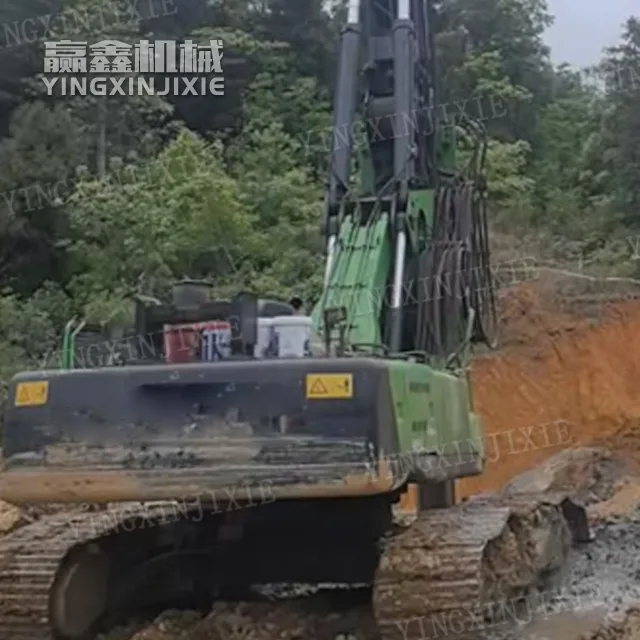
The fragmentation of technical standards and regulatory requirements in various countries has significantly increased the difficulty of cross-border logistics adaptation for large equipment. Rotary drilling rigs and pile drivers are oversized, ultra-high, and overweight goods that require special containers such as frame boxes and open top boxes, as well as specialized land transportation equipment such as axle trucks for transportation. However, there are differences in size restrictions, load standards, and lifting regulations for the transportation of large items in different countries. The EU’s strict requirements for equipo noise and carbon emissions force export equipment to be retrofitted and adapted in advance, adding logistics additional links such as disassembly, retrofitting, and reassembly. At the same time, under non-tariff measures, customs inspections have become increasingly strict. Due to the complex structure and numerous components of large equipment, they need to be dismantled and inspected during inspection, resulting in prolonged port detention time, increased demurrage fees, storage fees, and other additional costs, severely hindering logistics efficiency.
Restricted market access and shrinking logistics flow force route adjustments
The market access barriers caused by non-tariff measures have directly led to a contraction in the export market for large equipment such as rotary drilling rigs and pile drivers, resulting in a significant reduction in the previously stable cross-border logistics flow. Due to the inability to meet non-tariff measures, the least developed countries have suffered export losses of approximately 10% to the G20 market, resulting in a decrease in export orders for large engineering equipo. Previously, the transportation of large equipment between China and Europe, as well as between China and the United States, relied on fixed sea routes and China Europe freight trains, with stable traffic and mature capacity configurations. Due to access restrictions, some routes are underutilized and capacity is idle. Logistics companies are forced to adjust their routes and turn to markets with relatively relaxed non-tariff barriers such as Southeast Asia, the Middle East, and Africa, or reduce schedules to lower operating costs. The instability of logistics flow also leads to an imbalance in the supply and demand of special transportation vehicles, further increasing the risk of price fluctuations in the large-scale logistics market.
Compliance costs are being passed on, and logistics costs across the entire chain continue to rise
The compliance costs brought about by non-tariff measures are ultimately transmitted along the supply chain to the logistics link, resulting in an increase in cross-border logistics costs for rotary drilling rigs and pile drivers. In addition to the initial certification and modification costs, the export of equipo requires the addition of compliance processes such as filing, testing, and traceability, which increases the cost of document review and communication, directly pushing up logistics agency service fees. At the same time, to avoid policy risks, logistics companies need to choose transportation routes and transit nodes with stronger compliance but higher costs, or purchase additional trade insurance to further increase logistics expenses. These additional costs are ultimately passed on to equipment prices, weakening the price competitiveness of Chinese rotary drilling rigs and pile drivers in the international market and restricting the expansion of export scale.
The restructuring of the global supply chain is forcing the professionalization and upgrading of the logistics system
The long-term existence of non-tariff measures has promoted the restructuring of the global large-scale engineering equipment supply chain, forcing cross-border logistics to transform towards specialization and compliance. To cope with differentiated regulatory requirements, logistics companies need to establish a professional large-scale logistics service system, equipped with teams familiar with technical standards and certification processes in various countries, and provide integrated services of “certification+transportation+customs clearance+distribution”. At the same time, equipment export enterprises and logistics enterprises are accelerating collaboration to reduce cross-border long-distance transportation frequency and avoid the impact of non-tariff barriers through localized production, overseas warehousing layout, and other methods. In addition, there is an increasing demand in the industry for improving trade transparency and strengthening regulatory cooperation. In the future, reducing non-tariff costs through unified standards, mutual recognition and certification will become an important development direction for cross-border logistics of large equipment.