

Unilateral Tariff Barriers Disrupt Trade Patterns, Putting Cross-border Logistics of Large Engineering Equipment under Pressure To Transform
Release time: 2026-07-20
Unilateral tariff increase, significant increase in trade costs of large equipment
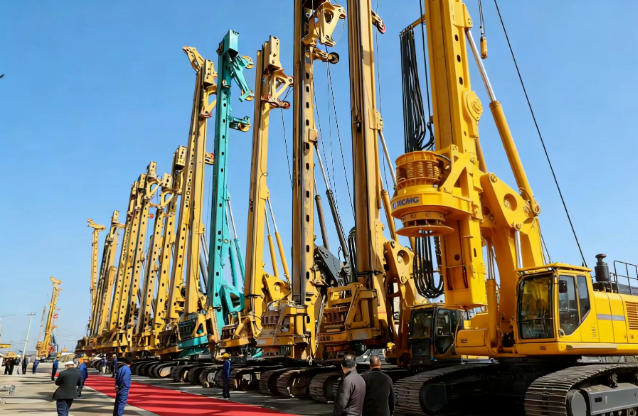
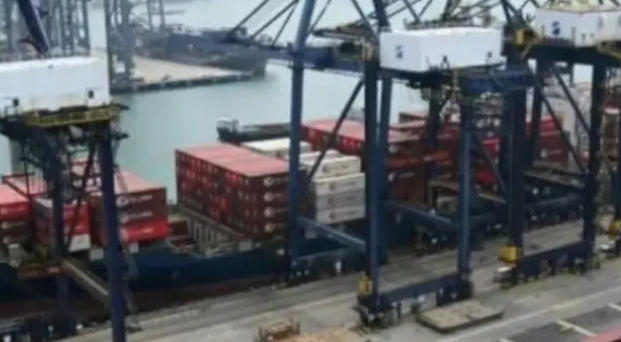
The United States has once again unilaterally imposed tariffs on overseas products under Section 301, and the unilateral trade protection measures continue to impact the global multilateral trade order, confirming the industry consensus that there is no winner in the tariff war. Large pile foundation engineering equipment such as rotary drilling rigs and pile drivers belong to high-value and heavy cargo categories, and have long relied on ocean shipping for cross-border delivery, making them easily included in the tariff control list. The addition of tariff barriers by the US directly increases the landing cost of equipment imports, coupled with the additional tax rate under the original 301 clause, resulting in a significant increase in overall customs clearance taxes and fees for equipment, and the profit margin of enterprise exports is continuously compressed. Unlike ordinary small commodities, large engineering equipment has a high single batch value and a large tax base. The cost increase caused by tariff increases is more prominent, directly weakening the price competitive advantage of domestic equipment in the Americas and related radiation markets.
Customs clearance rules are becoming stricter, and cross-border logistics performance risks are intensifying
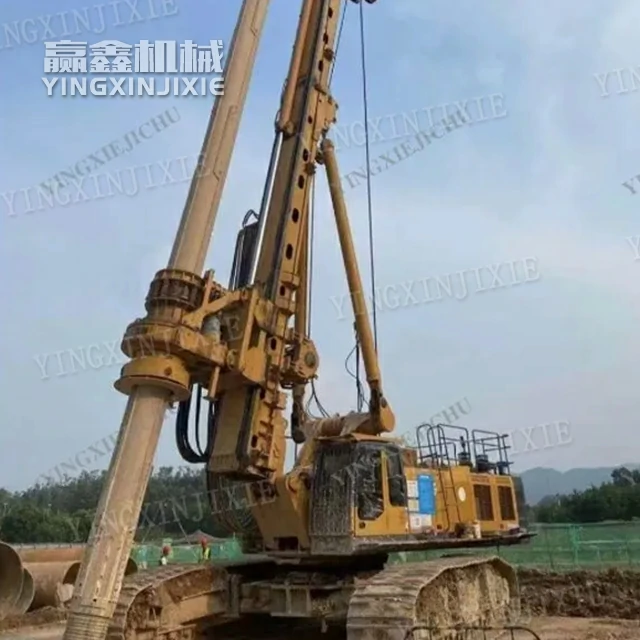
With the implementation of unilateral tariff policies, the US Customs continues to tighten its audit standards for construction machinery and equipment, significantly increasing the difficulty of cross-border customs clearance for منصات الحفر الدورانية and pile drivers. This type of large-scale equipment has complex structures and multiple supporting components, making customs classification and qualification review processes more cumbersome. It is prone to classification disputes, document verification delays, and other issues, resulting in frequent port delays and clearance delays. The frequent changes in tariff policies also make it difficult for foreign trade enterprises to lock in long-term tax and fee costs, and the stability of the quotation system decreases. Equipment demurrage not only incurs high storage and demurrage fees, but also disrupts the established logistics rhythm and significantly increases the risk of breach of contract for overseas projects of enterprises.
Route layout adjustment, global logistics links are undergoing restructuring
The unilateral tariff barriers imposed by the United States have broken the traditional cross-border logistics pattern of large engineering equipment, and the industry is gradually undergoing structural restructuring of the market and shipping routes. The export model relying on the core routes of Europe and America in the past has continued to face increasing risks. Domestic جهاز حفر دوار and pile driver export enterprises have begun to actively reduce their dependence on the US market and shift their export focus to emerging markets such as Southeast Asia, the Middle East, and Latin America, where the multilateral trading system is well-established and the tariff environment is stable. Logistics companies are synchronously adjusting their transportation capacity layout, optimizing the ratio of long-distance routes, reducing the deployment of high-risk routes, and increasing the reserve of stable market dedicated line transportation capacity. The two-way adjustment of routes and markets effectively avoids the impact of unilateral trade barriers, making the logistics chain of large equipment more diversified and stable.
Industry adaptation and upgrading, large-scale logistics opens up a compliant and refined mode
Faced with normalized tariff trade frictions, the cross-border logistics industry of large-scale engineering equipment is accelerating its transformation and upgrading, shifting from extensive transportation to compliant and refined operations. Foreign trade and logistics enterprises actively optimize the customs declaration process, complete معدات qualification pre-approval, HS code accurate classification, and document closed-loop verification in advance, and minimize customs clearance obstacles and additional tax losses. At the same time, relying on the multilateral trade rules of the World Trade Organization, enterprises actively unite with industry entities from various countries to resist unilateral trade protectionism, and safeguard their export rights and interests through a stable multilateral trading system. By implementing refined cost control, optimizing logistics solutions, and upgrading compliance systems, we aim to offset the negative impact of tariff barriers and ensure the smooth operation of cross-border trade for large equipment such as rotary drilling rigs and pile drivers.
Multilateral consensus highlights, industry adheres to mutually beneficial and win-win trade logic
The Ministry of Foreign Affairs has clearly stated that there is no winner in the tariff war, and unilaterally imposing tariffs is not in line with the development interests of either party. This viewpoint is in line with the global trend of engineering equipment trade development. The large-scale infrastructure equipment industry belongs to the global supporting industry, with deeply intertwined industrial chains, supply chains, and logistics chains. Unilateral trade barriers will only undermine the global division of labor in the infrastructure industry, which will not only harm the interests of export enterprises, but also lead to an increase in the procurement cost of infrastructure engineering equipment and project construction costs in the United States. The current industry is continuously deepening economic and trade cooperation with multiple countries such as Brazil, Southeast Asia, and the Middle East, relying on fair and just multilateral trade mechanisms, continuously stabilizing the global logistics and trade system, and promoting the long-term healthy development of the cross-border logistics industry for large-scale engineering equipment.