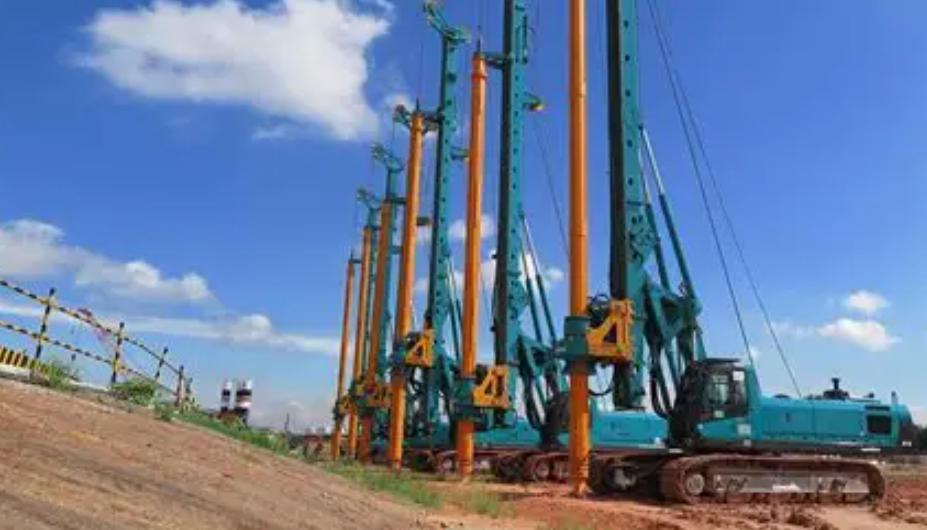


دليل أساسي لاختيار قضبان الحفر لمنصات الحفر الدورانية: الاختلافات في ظروف التشغيل بين قضبان الحفر الاحتكاكية وقضبان الحفر ذات القفل الآلي، وتكييف التطبيق العملي
Release time: 2026-04-30
In the construction process of various pile foundation projects, the drill rod of the rotary drilling rig serves as the core key component for transmitting torque, pressurized drilling, and bearing the load of the drilling tool, directly determining the efficiency of drilling construction, drilling stability, equipment failure rate, and comprehensive construction cost. Whether it is urban building pile foundations, municipal rail transit foundations, or large-scale pile foundation projects such as high-speed rail bridges and wind power foundations, the corresponding types of drill rod adaptation are also completely different due to differences in geological conditions, hardness, and drilling depth. At present, the mainstream drill rods for rotary excavation construction in China are mainly divided into two categories: friction drill rods and machine lock drill rods. The two types of drill rods have significant differences in structural design, force transmission principles, bearing performance, and wear resistance, and each has its own focus on adapting to construction scenarios. Many construction units blindly follow the trend in selecting drilling rods without matching the hardness of the formation with the construction conditions, which can easily lead to construction failures such as drilling slippage, rapid wear of the drilling rods, weak pressure, stuck or buried drilling rods, and even drill rod fractures, seriously delaying the construction period and increasing equipment maintenance losses. Combining the normalized construction conditions of the industry, clearly distinguishing the core characteristics of friction drill rods and machine lock drill rods, and mastering the scientific selection basis and practical application scenarios are the fundamental core work for improving the quality and efficiency of pile foundation construction, reducing costs and consumption.
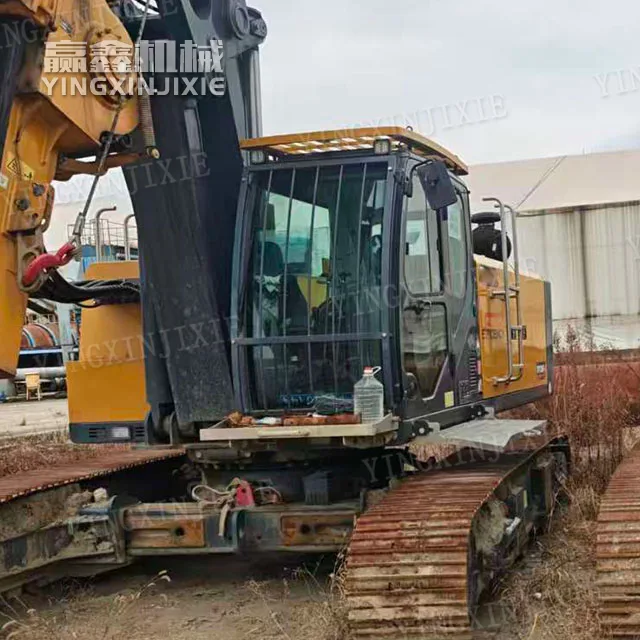
The current application status of rotary drilling rods in the industry, and the selection and adaptation determine the comprehensive benefits of pile foundation construction
Nowadays, the construction of pile foundation engineering presents the development characteristics of complex geology, compact construction period, and high standardization of pore formation. Composite alternating geology such as soft soil silt layers, sand and gravel interlayers, weathered rock layers, and hard rock layers can be seen everywhere. Different strata have vastly different requirements for drill rod torque transmission, compression capacity, and impact resistance performance. As the core hub of power transmission for rotary drilling rigs, the drill rod is subjected to high-intensity operating conditions such as high-frequency torque impact, axial compression load, and reciprocating expansion friction for a long time. Whether the selection and adaptation are reasonable or not directly affects the drilling speed, hole verticality, drilling tool service life, and construction safety. At present, some construction teams in the industry only rely on experience to select drill rods, ignoring core matching factors such as formation hardness, drilling depth, and drilling rig tonnage. Misuse of machine lock drill rods in soft soil formations results in energy waste and increased wear, while misuse of friction drill rods in hard rock formations leads to drilling slippage, slow footage, and a sharp decline in construction efficiency. With the continuous improvement of refined management متطلبات for pile foundation construction, accurately distinguishing between friction drill rods and machine lock drill rods based on the actual construction situation, standardizing selection standards, and adapting to application scenarios have become essential links for standardized operations on construction sites.
Detailed explanation of the principle of friction drill rod structure, relying on friction to achieve flexible power transmission
The friction drill rod adopts a multi-stage telescopic nested structure design, with no rigid mechanical locking point structure between the rod sections. It relies entirely on the squeezing friction force between the contact surfaces of the drill rod sections to transmit rotational torque and axial compression force. The inner and outer walls of the drill rod are processed with precision machining, and the clearance is evenly matched. When the drilling rig rotates, the static friction force generated by the tight fit between the rod sections drives the drilling bucket to rotate synchronously during drilling. During the pressurization operation, the pressure of the machine body pressurization system is relied on, and the downward pressure is transmitted through the frictional resistance of the contact surface. The overall structural design is simple and compact, with smooth and seamless expansion and contraction of the rod joints, sensitive and lightweight extension and pulling action, light overall weight of the drill rod, low idle load of the drilling rig, and low fuel consumption of the معدات. During the operation of the friction drill rod, there is no hard mechanical biting or impact, the working noise is low, the vibration amplitude is low, the wear between the rod sections is uniform, and it is not easy to encounter mechanical failures such as lock point collapse and rod jamming. The daily disassembly and maintenance are simple and convenient, the maintenance cost is low, and the long-term continuous operation stability is strong. The core advantages of flexible transmission, lightweight and durable, and simple operation and maintenance are emphasized.
Detailed explanation of the structural principle of the machine lock drill rod, relying on mechanical locking points to achieve strong and rigid force transmission
The machine lock drill rod also adopts a multi-stage telescopic structure, but a mechanical rigid locking tooth and locking point structure is specially designed at the joint position of each rod section, which belongs to the rigid mechanical bite transmission structure. During the drilling operation, the locking teeth of the rod section are precisely engaged and locked by rotating the drill rod, forming a rigid overall structure. Torque and pressure are directly transmitted through the mechanical locking point, without relying on the frictional force of the contact surface to do work. After the machine lock drill rod is locked, the overall rigidity and strength are extremely high, with outstanding resistance to torsion, impact, and overload. It can withstand high torque, high pressure, and high-intensity rock breaking operations, with no loss or slippage in power transmission. When drilling into high hardness rock formations, it can continuously output stable rock breaking pressure without experiencing power attenuation or idle drilling problems. Compared to friction drill rods, machine lock drill rods have a larger overall weight, and precise alignment is required for the joint biting operation. The telescopic action is relatively cumbersome, and frequent biting and impact of the locking teeth during operation can easily cause wear. Maintenance and upkeep require regular inspection of the locking teeth status, and the operation and maintenance process is relatively complex. The main focus is on high-strength, high rigidity, and strong rock breaking operation characteristics.
The difference in core performance between two types of drill rods, and the intuitive distinction between transmission methods and construction shortcomings
The core advantages of friction drill rods are concentrated in flexible transmission, smooth extension and contraction, low wear, low energy consumption, and few faults. The weakness is limited pressure bearing capacity and insufficient torque transmission strength. When facing hard formations, it is prone to problems such as rod slippage, pressure failure, and stagnant footage, making it unsuitable for high-intensity rock breaking operations. The characteristics of friction transmission determine that it can only adapt to shallow drilling in soft geological conditions, and the power transmission efficiency is significantly reduced under hard rock conditions, resulting in a serious delay in construction progress. The machine lock drill rod relies on the mechanical locking teeth to firmly bite, with almost zero loss in torque and pressure transmission. It has excellent impact and overload resistance, and does not slip or drop during high-intensity rock breaking operations. The construction drilling efficiency is high, but its shortcomings lie in its large self weight, high equipment load, and high fuel consumption. The long-term biting of the locking teeth is prone to wear and tear, and frequent disassembly and assembly can easily lead to problems such as inaccurate positioning of the locking point and locking of the rod. The cost of daily maintenance and replacement parts is higher, and the operation and maintenance time is longer. There are two types of drill rods, one flexible and one rigid, and one soft and one hard, with complementary core performance shortcomings. There is no universal substitute attribute, and precise selection must be made according to needs.
Friction drill rods are suitable for construction scenarios, such as conventional pile foundation operations in shallow, medium, and deep holes in soft formations
Friction drill rods are exclusively suitable for construction in various soft, loose, and low hardness formations, and are the mainstream selection for conventional civil pile foundation engineering. They are suitable for homogeneous soft soil layers such as silty soil, clay, silt soil, backfill soil layers, and loose sand layers. The applicable construction scenarios are mainly for conventional engineering projects such as urban building foundations, small municipal pile foundations, and ordinary road foundations. The drilling depth is mainly for conventional shallow and medium deep holes, without the need for high-intensity pressure rock breaking operations. This type of construction condition has the advantages of low drilling resistance, no need for excessive torque output, flexible transmission of friction drill rods, fast expansion and contraction, high construction efficiency, and low operation and maintenance costs. The construction process is not easy to collapse or get stuck, and the equipment can operate continuously for a longer period of time. At the same time, in construction sites with a stable schedule, strict budget control, and long-term high-frequency equipment turnover, using friction drill rods can effectively reduce fuel consumption and maintenance costs, while balancing construction efficiency and operational economy. It is the most cost-effective choice for soft soil foundation pile construction.
Machine lock drill rod is suitable for construction scenarios, such as deep hole heavy-duty pile foundation construction in complex hard rock formations
The machine lock drill rod is specially designed for heavy-duty drilling conditions in high hardness and complex composite formations, suitable for geological conditions including dense sand and gravel layers, strongly weathered rock layers, moderately weathered rock layers, hard rock bedrock, karst complex formations, etc., where drilling resistance is high and rock breaking difficulty is high. Applicable construction scenarios focus on high standard, large-diameter, and deep hole pile foundation projects such as high-speed railway bridge pile foundations, large-scale wind power foundations, cross sea municipal engineering, and deep foundation projects for super high-rise buildings. This type of construction requires high torque and strong rock breaking, high-pressure continuous pressure drilling, and friction drill rods are prone to slip and failure. It is necessary to rely on the rigid locking teeth of the machine lock drill rod to transmit force and ensure continuous and stable footage. The characteristics of impact resistance, torsion resistance, and sufficient power of the machine lock drill rod can effectively deal with complex situations such as hard rock drilling stuttering, interlayer obstruction, and sudden changes in drilling resistance, prevent drilling slippage and footage stagnation, ensure the efficiency and construction quality of deep hole and large-diameter pile foundation drilling, and increase the safety of complex and high-risk pile foundation construction.
Scientific selection and practical principles for rotary drilling rods, combined with precise matching of working conditions to improve quality and reduce costs
The selection of drilling rods on the construction site must strictly follow the core practical principles of geological priority, depth adaptation, drilling rig matching, and cost consideration, and eliminate blind selection and arbitrary mixing. In the early stage of construction, based on the geological survey report, accurately assess the softness and hardness of the geological strata, interlayer distribution, and rock hardness data at the construction site. Friction drill rods are directly used for routine construction of pure soft soil layers, balancing efficiency and economy; When the stratum contains hard interlayers such as pebbles, weathered rocks, and hard rocks, or when the drilling depth is large and the aperture specification is large, heavy-duty working conditions must be equipped with machine lock drill rods as standard. At the same time, combining the tonnage size of rotary drilling rigs to match the specifications of drill rods, small and medium-sized drilling rigs are suitable for conventional operations of friction drill rods, and large tonnage heavy-duty drilling rigs are matched with machine lock drill rods for tough construction. During the construction process, it is necessary to eliminate the mixing and replacement of two types of drill rods. Regular inspections and maintenance of drill rod wear should be carried out. Soft soil conditions should not waste machine lock drill rod wear, and hard rock conditions should not tolerate friction drill rod construction. Through scientific selection, drilling efficiency can be maximized, equipment wear can be minimized, and construction costs can be optimized.