


The European Central Bank warns of energy inflation, putting pressure on global shipping of large equipment
Release time: 2026-03-26
On March 25th local time, European Central Bank President Lagarde issued a warning that the impact of the US Israel military strike on Iran, which has led to disruptions in energy supply in the Gulf region, has caused a sharp increase in economic uncertainty in the eurozone, and the risk of inflation continuing to rise. The transmission effect of rising energy prices is becoming apparent. The energy supply disruption this time has been described by the International Energy Agency as one of the “most serious situations in the history” of the global oil market. Coupled with disruptions in liquefied natural gas supply, it directly impacts the global shipping system that relies on fuel. Cross border transportation of large equipment such as rotary drilling rigs and pile drivers is facing new pressures in terms of cost, timeliness, and demand.
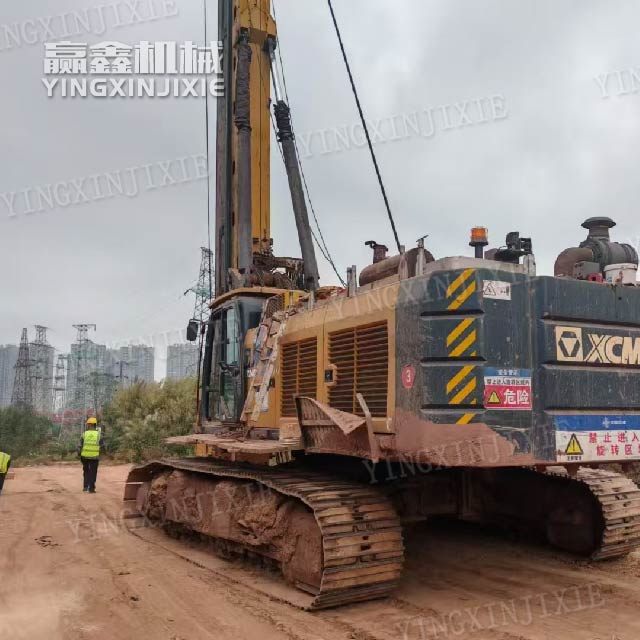
Energy inflation transmission, equipment shipping rigid costs continue to rise
The obstruction of energy supply in the Middle East has pushed up global fuel and natural gas prices, coupled with inflation diffusion effects, significantly increasing the full chain cost of large-scale equipment shipping. Rotary drilling rigs and pile drivers are over limit and heavy-duty equipment, with a high proportion of fuel expenses for ocean shipping, port hoisting, and land transportation. The rise in energy prices directly increases the costs of ship navigation and port operations. At the same time, inflation is transmitted to labor, warehousing, insurance and other links, and the operating costs and large equipment storage fees of major hub ports in Europe and around the world are rising simultaneously. The comprehensive cost of transporting a single large equipment across oceans continues to rise, further squeezing the profit margins of logistics companies and equipment exporters.
High interest rate expectations are heating up, putting pressure on logistics companies’ cash flow
Lagarde has made it clear that she will unconditionally defend the 2% medium-term inflation target. If inflation continues to rise, there is a possibility of the European Central Bank raising interest rates, which will exacerbate the financial pressure on the large equipment logistics industry. Global shipping companies carrying out cross-border large-scale transportation need to advance large funds such as fuel costs, booking fees, and customs clearance fees. In the high interest rate environment, the financing costs of enterprises have increased and the difficulty of capital turnover has increased. In order to control costs, some shipping companies have been forced to tighten the allocation of heavy-duty transport capacity, and the resources of heavy lift ships and semi submersible ships suitable for the transportation of rotary drilling rigs and pile drivers have become increasingly scarce, further pushing up the premium cost of equipment transportation.
Weakening demand in the Eurozone and limited increase in equipment shipping orders
Energy inflation and uncertain economic prospects have led to cautious infrastructure investment in the eurozone, resulting in a contraction in the demand for engineering equipment such as rotary drilling rigs and pile drivers, directly affecting global shipping orders. The eurozone is an important demand market for large-scale engineering equipment. High inflation and slowing economic growth have slowed down the progress of local infrastructure projects and reduced the number of new construction projects, resulting in a decline in import demand for pile foundation construction equipment. The number of large equipment transportation orders for round-trip European routes has decreased, leading to a decrease in the utilization rate of logistics companies’ transportation capacity. They have to diversify their transportation capacity and adjust their route layout to cope with the weak demand situation.
The disturbance of the shipping chain has intensified, and the stability of transportation efficiency has declined
The energy supply crisis coupled with inflationary pressure has further exacerbated the already disrupted links in global shipping due to the “soft blockade” of the Strait of Hormuz. In order to control fuel consumption, shipping companies are likely to slow down again, coupled with port congestion and delayed capacity allocation, the transportation cycle of rotary drilling rigs and pile drivers continues to lengthen. At the same time, unstable energy supply has led to increased uncertainty in ship fuel supply, resulting in temporary stops and delays in some shipping routes. Equipment cannot arrive at the construction site on time, which can easily affect the construction progress of infrastructure projects and trigger delivery default risks.
Industry pressure response, strict cost control to build a strong risk defense line
Faced with energy inflation and policy uncertainty, the large-scale equipment shipping and logistics industry is forced to tighten operations and strengthen risk management. Logistics companies should prioritize optimizing the modular disassembly and transportation plan for rotary drilling rigs and pile drivers, improving loading and unloading efficiency, shortening port detention time, and reducing additional cost expenditures; Simultaneously locking in long-term fuel and transportation contracts, avoiding price volatility risks, avoiding high-risk routes and congested ports, and optimizing multimodal transportation routes. The industry as a whole is shifting towards stable operation and delaying capacity expansion to cope with the long-term shipping pressure brought by energy inflation.