

Конфликт на Ближнем Востоке подорвал экономику еврозоны, создав многочисленные проблемы для транспортировки крупной техники и логистики.
Release time: 2026-03-25
Affected by the ongoing US Israel Iran conflict, the recovery momentum of the Eurozone economy has significantly slowed down. According to S&P global data, the Eurozone composite PMI fell to 50.5 in March, and the service sector PMI hit a new low since May last year, highlighting the risk of stagflation. The European Central Bank predicts that the inflation rate in the eurozone will reach 2.6% in 2026, with an economic growth rate of only 0.9%. Coupled with the impact of the “soft blockade” of the Strait of Hormuz caused by the Middle East conflict and fluctuations in energy prices, the global shipping system will continue to be under pressure. Large engineering equipment such as rotary drilling rigs and pile drivers are facing significant impacts on global shipping logistics in terms of cost, demand, and timeliness due to their long transportation links, high cargo value, and high sensitivity to economic cycles. The industry is responding to the dual challenges of economic slowdown and shipping turbulence.
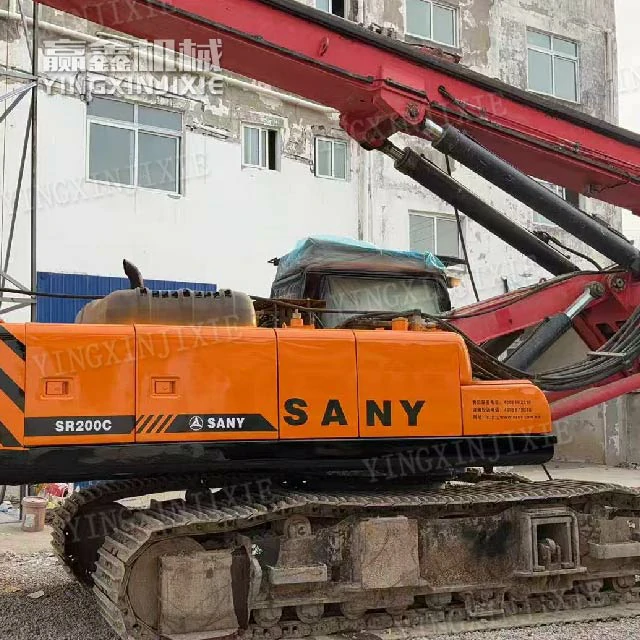
Shrinking demand in the Eurozone puts significant pressure on large equipment shipping orders
The slowdown in economic activity in the Eurozone has directly led to a contraction in market demand for large equipment such as rotary drilling rigs and pile drivers, which in turn has dragged down global shipping orders. The service industry in the eurozone is sluggish, economic growth is weak, and infrastructure investment is becoming cautious. Whether it is public infrastructure projects or private engineering, the pace of equipment procurement has slowed down. The demand for rotary drilling rigs for pile foundation construction and pile drivers for foundation reinforcement within the EU has significantly decreased. At the same time, although the manufacturing industry in the eurozone has slightly rebounded, it is difficult to offset the overall economic weakness. The production and export transportation demand for large engineering equipment have declined synchronously. In global shipping, the transportation orders for rotary drilling rigs and pile drivers to and from the eurozone have shrunk by 15% -20% compared to before, and some shipping companies have been forced to reduce related heavy load capacity.
Inflation and energy shocks combined, equipment shipping costs continue to remain high
The energy shock caused by the Middle East conflict resonates with the rising inflation in the eurozone, further pushing up the global shipping costs of large equipment. S&P Global pointed out that the energy shock brought about by the Middle East conflict will significantly push up inflation, and the European Central Bank has also made it clear that upward pressure on inflation will continue. Fuel costs account for more than 30% of the total shipping costs of large equipment, and due to the “soft blockade” of the Strait of Hormuz, fuel prices remain high. Coupled with the rising port operating fees and labor costs caused by inflation in the eurozone, the global shipping comprehensive cost of rotary drilling rigs and pile drivers continues to rise. The shipping cost of a single rotary drilling rig from Asia to the eurozone has increased by more than 20% compared to before, coupled with exchange rate fluctuations caused by inflation, further squeezing the profit margins of logistics companies and equipment exporters.
The shipping chain is turbulent, and the stability of equipment transportation efficiency decreases
The global shipping chaos caused by the Middle East conflict, coupled with the reduced efficiency of port operations due to the economic slowdown in the Eurozone, has led to a significant decline in the stability of large-scale equipment transportation efficiency. The “soft blockade” status of the Strait of Hormuz continues, with international merchant ships generally circling the Cape of Good Hope, extending the voyage from Asia to the eurozone by 10-14 days, and significantly prolonging the transportation cycle of large equipment such as rotary drilling rigs and pile drivers. At the same time, some ports in the Eurozone have high congestion rates due to economic slowdown and insufficient capacity allocation, resulting in prolonged equipment detention time. In addition, shipping companies have slowed down their speed to control costs, further exacerbating the fluctuation of equipment transportation efficiency. Some equipment cannot enter the site on time due to delays, leading to the risk of breach of contract for overseas projects.
Shipping capacity adjustment, tight supply of large equipment transportation
The demand contraction caused by the slowdown of the Eurozone economy, as well as the pressure of high shipping costs, have driven global shipping companies to adjust their capacity layout, and the supply of large-scale equipment transportation is becoming increasingly tight. Faced with a decrease in large equipment transportation orders and rising costs in the eurozone, some shipping companies have shifted their heavy load capacity from eurozone routes to areas with relatively high demand, resulting in a reduction in the deployment of heavy lift and semi submersible vessels suitable for transporting rotary drilling rigs and pile drivers. At the same time, the global shipping market itself is already in a fragile state, with excess shipping capacity and weak demand coexisting. The Middle East conflict further exacerbates the mismatch of shipping capacity, making it more difficult to schedule large equipment transportation, and finding suitable shipping capacity for some urgent orders, further restricting the flow of equipment transportation.
The industry takes the initiative to respond and hedge the dual risks of economy and shipping
Faced with the multiple impacts of the Middle East conflict on the Eurozone economy, the large-scale equipment shipping and logistics industry is actively adjusting its strategies to reduce the impact of risks. On the one hand, logistics companies optimize global shipping routes, avoid high-risk areas and congested ports, rely on multimodal transport models, shorten the transportation cycle of rotary drilling rigs and pile drivers, and at the same time, lock in transportation capacity and costs through large-scale operations and long-term agreements to alleviate the pressure brought by inflation and energy price fluctuations. On the other hand, enterprises are accelerating their diversified market layout, reducing their dependence on the single market of the Eurozone, expanding their equipment transportation needs in emerging markets such as Southeast Asia and the Middle East, while optimizing their modular transportation solutions, improving port loading and unloading efficiency, reducing demurrage costs, and adapting to the dual challenges of economic slowdown and shipping turbulence with resilience.