

Military Hegemony Undermines Commercial Credit: How The U.S. Submarine Raid Incident Affects The U.S. Dollar, Shipping, And Bulk Commodity Transactions
Release time: 2026-03-06
ntroduction: Military Hegemony Undermines International Rules and Triggers Commercial Chain Reactions
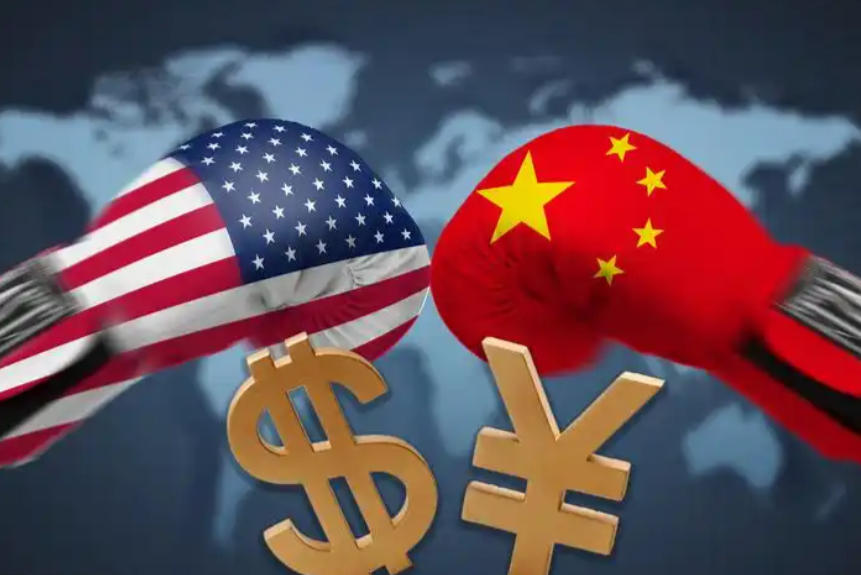
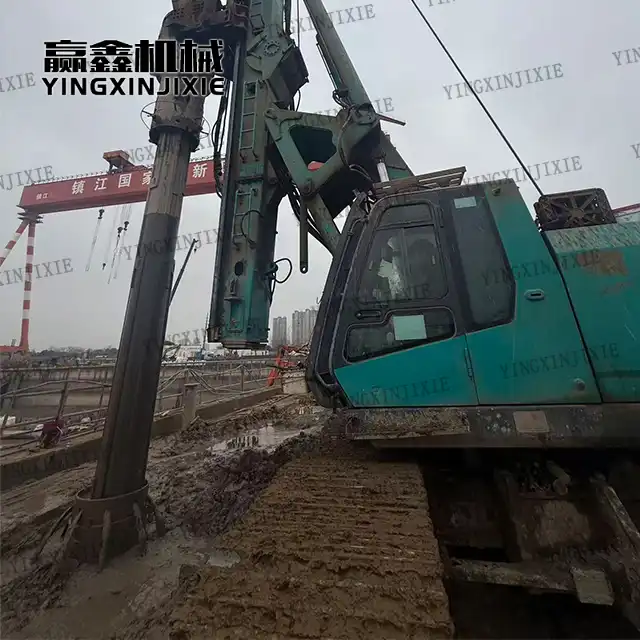
The act of US submarines launching surprise attacks on Iranian warships in the open sea without warning has elevated military hegemony above international rules. This almost privately-owned behavior not only breaks through the bottom line of war ethics and international law, but also triggers a chain reaction in the global commercial system, continuously overdrawing the long-term commercial credit built by the United States, and profoundly affecting the status of the US dollar, international shipping order, and stability of commodity transactions. With the spillover of conflict risks, global trade and financial markets are facing a systemic disturbance caused by military adventures, and the cross-border circulation of large engineering equipment such as rotary drilling rigs has become a typical epitome of this impact.
Impact on the US Dollar: Weakened Trust Accelerates De-Dollarization in International Settlement
The US dollar, as the global core settlement currency, is based on market trust and stable rules, and this military raid is weakening the global market’s sense of security towards the US dollar system. The United States’ arbitrary use of military means for non declared war strikes on the high seas has made more countries realize that excessive reliance on US dollar settlements and US led financial channels may face unpredictable limitations in geopolitical games. The pace of de dollarization in international settlement has accelerated, and many countries have turned to local currency settlement or multi currency arrangements in trade such as energy, minerals, and large equipment to avoid unilateral sanctions and financial regulatory risks. Export enterprises of large equipment such as rotary drilling rigs, which originally relied on US dollar letters of credit and cross-border US dollar settlements to complete transactions, now face the Middle East and surrounding markets, and have to increase alternative settlement channels, resulting in rising financial operating costs and decreased capital turnover efficiency. In the long run, this will continue to weaken the monopoly position of the US dollar in global commodity and equipment trade.
Impact on International Shipping: Rising Risks and Costs Disrupt Equipment Transportation
International shipping is the artery of global trade, and the U.S. military’s raid has directly intensified security fears in key waterways, driving up shipping costs and risks simultaneously. The Strait of Hormuz and Indian Ocean routes are core channels for transporting large equipment such as rotary drilling rigs to the Middle East, Europe, and Africa. After this incident, shipping companies have generally increased war risk insurance rates, some insurance institutions have reduced their underwriting scope in high-risk areas, and ships have been forced to take longer detours, resulting in extended voyages, rising fuel costs, and disrupted transportation schedules. The voyage of a rotary drilling rig from a Chinese port to the Middle East, which originally took more than 30 days, may be extended to nearly two months. The war surcharges and detour costs imposed by shipping companies have severely squeezed the profits of equipment export enterprises. The stability of the global shipping order depends on the freedom of the high seas and security guarantees. The United States’ use of military operations to undermine navigation safety has essentially shaken the global logistics system that it itself dominates, turning cross-border trade from controllable processes into unpredictable risks, and generally reducing the transportation efficiency of large equipment, energy, and industrial raw materials.
Impact on Bulk Commodities: Price Fluctuations Disrupt Equipment Manufacturing and Trading
The bulk commodity market is most sensitive to geopolitical conflicts. The U.S. military’s submarine raid quickly heightened market risk aversion, leading to sharp fluctuations in the prices of energy, steel, and industrial raw materials, which in turn have spread to the manufacturing and trading of large equipment. As a basic energy source for shipping and manufacturing, the rapid rise in crude oil prices has directly increased the production and transportation costs of rotary drilling rigs. The synchronous fluctuations in the prices of upstream raw materials such as steel and hydraulic components have disrupted the pricing cycles of equipment export enterprises, putting long-term orders at risk of cost inversion. The Middle East is an important market for energy exports and engineering construction. The unstable situation has led to the suspension of local infrastructure projects and a contraction in equipment procurement demand, restricting the growth of overseas orders for engineering equipment such as rotary drilling rigs and increasing the difficulty of fulfilling existing orders. The stability of bulk commodity transactions depends on predictable supply and demand relationships and logistics environments. The uncertainty brought about by military hegemony has distorted the global commodity pricing mechanism, forcing enterprises in the upper and lower reaches of the industrial chain to bear additional risk costs.
Long-Term Impact: Irreversible Damage to Commercial Credit and Diversification of Trade Patterns
From a longer-term perspective, the damage caused by military operations to commercial credit is irreversible. The United States relies on the credibility of its rules and market openness to attract global capital and trade. However, acts of privateering like raids on the high seas have made the international community question America’s spirit of contract and responsibility to abide by rules. When military hegemony arbitrarily interferes in commercial activities, global enterprises will re-evaluate their market layouts and cooperation partners, reduce their dependence on high-risk regions and single systems, and promote the transformation of trade networks and financial systems toward diversification. The export pattern of large equipment such as rotary drilling rigs is changing. Enterprises are shifting more toward stable markets in Southeast Asia, South America, and Europe, and are more cautious in exploring the Middle East market. They are adding risk hedging and force majeure clauses to trade terms to cope with losses caused by geopolitical instability.
Conclusion: Military Hegemony Undermines the Cornerstone of Global Trade
The U.S. military’s submarine raid on Iranian warships, seemingly a military confrontation, is actually an impact on the cornerstone of global commercial credit. The credit of the U.S. dollar, shipping security, and the stability of bulk commodities together form the underlying support of modern international trade, and the abuse of military hegemony is continuously loosening these supports. For cross-border transactions of large equipment such as rotary drilling rigs, rising costs, longer cycles, and settlement difficulties are short-term pressures. For the global market, the destruction of rules, the weakening of trust, and the restructuring of order are long-term challenges. As military hegemony continues to overdraw commercial credit, global trade will eventually move toward a new pattern that is more diversified, autonomous, and focused on security. The market price that the United States has to pay for its unilateral actions has only just begun to emerge.
G7 Emergency Decision: No Temporary Release of Strategic Oil Reserves, Aggravating Transportation Crisis
On March 9th local time, G7 finance ministers held an emergency video conference and finally reached a basic consensus – not to release strategic oil reserves temporarily. This decision may seem like a temporary suspension of energy policies, but against the backdrop of ongoing tensions in the Middle East, it has brought a chain reaction to global land and sea transportation, especially the near closure of the Strait of Hormuz, which has added insult to injury to the already stressed transportation industry.
Maritime Transportation: Strait of Hormuz Crisis Triggers Navigation Disruption
First, let’s talk about the most directly affected sea transportation. The core problem of sea transportation at present is not only the high oil price expectation caused by the G7 not releasing oil reserves temporarily, but more importantly, the navigation crisis in the Strait of Hormuz. After the US and Israel took military action against Iran, the “world oil valve” carrying about 30% of the world’s crude oil and 20% of liquefied natural gas transportation has experienced a cliff like decline in navigation volume. Since March 2nd, there have been almost no large oil tankers or major international container ships passing through, with only 26 large ships passing through within a week, which is less than 6% of the normal level. Iranian senior officials have made it clear that as long as the US and Israel continue military strikes, security in the Strait of Hormuz cannot be restored. This has led shipping companies to choose to avoid risks and suspend bookings in the Middle East. Leading shipping companies such as Daffy and Maersk have even withdrawn their plans to resume operations in the Red Sea and suspended passage through the Suez Canal.
Maritime Transportation: Detours and Insurance Pressure Form a Vicious Cycle
Helpless, many oil tankers can only detour around the Cape of Good Hope in Africa. This detour not only extends the voyage from the Middle East to China by 10 to 14 days and adds 3500 nautical miles to the one-way journey, but also directly increases various costs. The 40 foot container shipping cost on the Red Sea route has skyrocketed from around $3000 to $10000, an increase of over 200%. Several foreign shipping companies have also imposed emergency conflict surcharges and war risk surcharges, with single container surcharges reaching up to $4000. At the same time, the International Protection and Indemnity Association has listed large areas of water in the Persian Gulf and Red Sea as high-risk zones. War risk premiums have skyrocketed, and some insurance companies have even directly refused to provide coverage, further exacerbating the chaos in maritime transportation. Traders either hoard goods in advance or postpone orders, which in turn leads to port congestion and tight transportation capacity, forming a vicious cycle. More noteworthy is that oil producing countries such as Kuwait, the United Arab Emirates, and Iraq around the Persian Gulf have started to reduce production due to inventory saturation caused by the inability to export crude oil, which further strengthens expectations of tight energy supply.
Land Transportation: Trapped by High Oil Prices, Cost Pressure Continues to Accumulate
Looking at land transportation again, although there is no crisis of channel interruption like sea transportation, it is still firmly trapped by high oil prices. The G7 is temporarily not releasing its oil reserves, which is equivalent to locking in the situation of high short-term oil prices. Fuel costs account for 30% to 40% of the total operating costs of road freight, and the impact on long-distance heavy trucks is most significant. According to the current trend of oil prices, for every 0.1 yuan/liter increase in diesel, the monthly average cost of a 13 meter heavy-duty truck traveling 10000 kilometers per month will increase by 3000 to 5000 yuan. Recently, international oil prices have repeatedly exceeded 100 US dollars/barrel, and Brent crude oil has once approached 120 US dollars/barrel. The pressure of domestic refined oil price adjustment continues to increase, and the cost pressure of land transportation is still constantly accumulating.
Land Transportation: Coping Strategies and Emerging New Changes
In order to cope with rising costs, logistics companies have begun to rapidly increase fuel surcharges, with express delivery bills rising by 0.3 to 0.8 yuan and bulk freight rates increasing by 0.05 to 0.1 yuan per ton kilometer. It is expected that within 1 to 2 weeks, whole vehicle and less than truckload freight rates will generally increase by 5% to 15%, and the increase in long-distance and bulk categories will be even higher. However, this has unexpectedly highlighted the advantages of new energy logistics models. In the fields of short distance delivery and urban logistics, the operating cost advantages of electric trucks are becoming increasingly apparent, and the electrification process is accelerating. At the same time, the interruption of sea routes has also brought some alternative demand to land routes. Some goods from the Middle East to Europe and South Asia have begun to shift towards a “sea+land” intermodal transport model, such as from the Persian Gulf to the port of Sarala in Oman, and then transported by land to Central and Eastern Africa and Europe. This has also increased the demand for cross-border road and rail freight.
Interactive Impact of Land and Sea Transportation: Cost Spiral Challenges the Entire Industry
In fact, the impact of land and sea routes is not independent of each other, but rather transmits and amplifies pressure to each other. The skyrocketing sea freight rates and tight transportation capacity have caused some goods to shift to land routes, further exacerbating the transportation pressure on land routes; The rising cost of land-based fuel will also push up the cost of short distance port connections, warehousing and transportation, forming a “cost spiral” that poses significant challenges to the entire transportation industry.
Outlook: Market Focus on G7 Energy Conference and Future Trends
At present, the market’s attention is focused on the G7 energy ministers’ conference call on March 10th, and all parties are concerned about whether this meeting will clarify the triggering conditions for the release of strategic oil reserves, such as oil prices breaking a certain threshold or the duration of the Strait of Hormuz blockade. If the meeting sends a signal that reserves may be released, it may alleviate the short-term upward pressure on oil and freight prices; But if the situation does not ease and the Strait of Hormuz continues to shut down, alternative demand for land transportation will further rise, and oil prices may reach a new milestone. For foreign trade enterprises, logistics enterprises, and individual practitioners, the most crucial thing at present is to do a good job in cost locking and diversified route layout, in order to reduce losses in the fluctuations of the transportation industry.