

Purchase value-added package service: replacement of hydraulic cylinder oil seal for the entire machine
Release time: 2026-04-03
Classification of oil seal faults
The core difference between internal leakage and external leakage is that the hydraulic cylinder oil seal of a rotary drilling rig is a key component for sealing hydraulic oil and preventing leakage. Its faults are mainly divided into two types: internal leakage and external leakage, and their manifestations, causes, and hazards are different. Accurate differentiation is the prerequisite for efficient replacement. Leakage is the most easily detected fault, manifested as obvious oil stains and hydraulic oil droplets on the surface of the cylinder piston rod, often caused by aging, damage, installation deviation of the oil seal, or scratches and rust on the surface of the piston rod. The fault location is intuitive and easy to troubleshoot; Internal leakage is relatively concealed, with no obvious external oil stains, mainly manifested as weak cylinder movement, slow expansion and contraction, decreased pressure holding performance, and even automatic retraction. The causes are mostly due to the deterioration of oil seal sealing performance, wear of sealing surface, or scratches or impurities stuck on the inner wall of the cylinder, which need to be judged through action testing.
Hidden hazards cannot be ignored
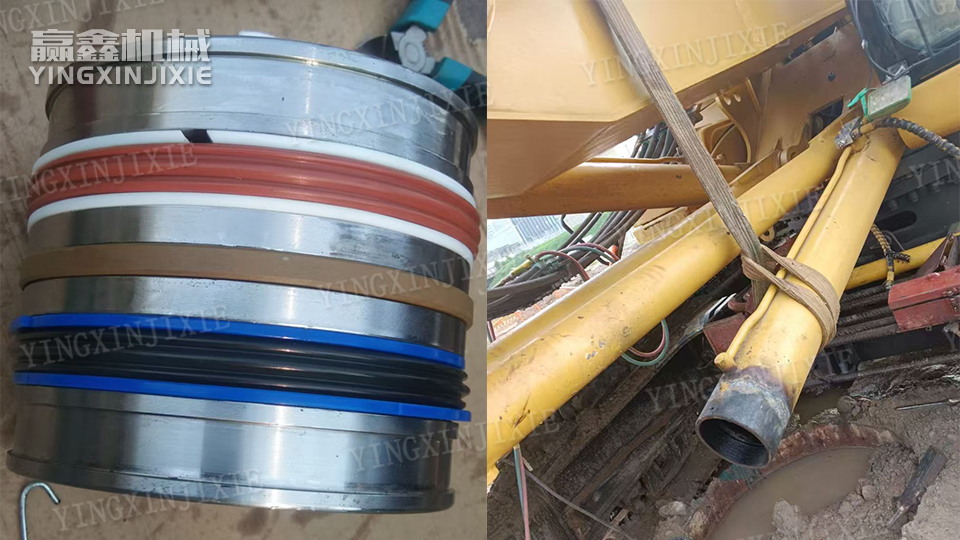
Although there is no obvious external leakage in hydraulic cylinders, their harm to equipment is concealed and persistent. Internal leakage can cause hydraulic oil to move inside the oil cylinder, which cannot effectively transmit power and directly affects the operational performance of the rotary drilling rig, such as weak lifting and lowering of the mast, slow expansion and contraction of the drill rod, and reduced drilling efficiency and accuracy. Long term leakage can also exacerbate the load on the hydraulic system, leading to excessive wear of core components such as oil pumps and valve groups, increasing hydraulic oil consumption, and possibly causing abnormal oil temperature rise, further accelerating oil seal aging and hydraulic component damage. If the oil seal is not replaced in a timely manner, the fault will gradually escalate and even cause the oil cylinder to malfunction.
Detailed explanation of leakage fault
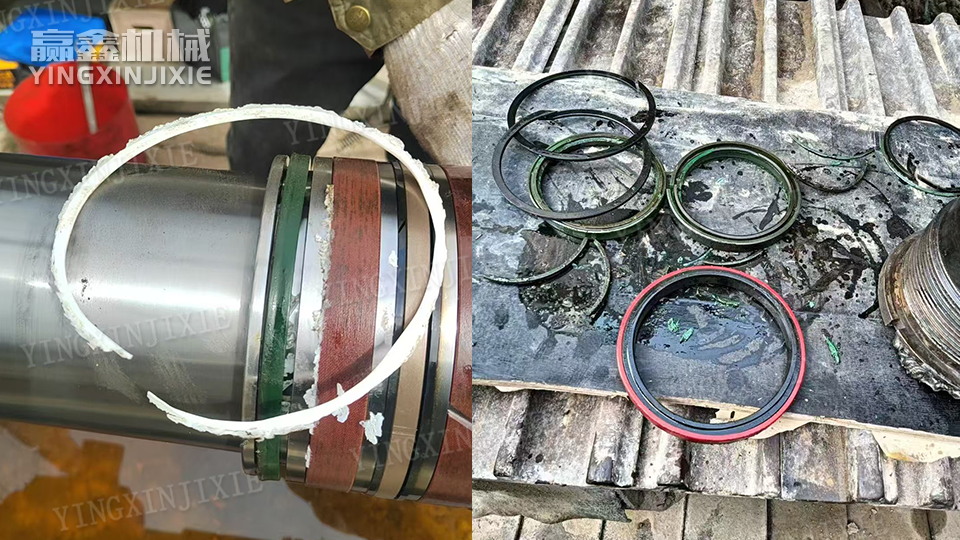
The most common malfunction of hydraulic cylinder oil seals is leakage, which requires timely handling of intuitive hidden dangers. Its harm is direct and has a wide range of impacts. The hydraulic oil leaking from the outside of the oil cylinder not only causes oil waste and increases operating costs, but also pollutes the construction site and affects the working environment. More importantly, leakage can cause a decrease in hydraulic system pressure, resulting in sluggish and weak cylinder operation. At the same time, after the oil seal is damaged, external dust, mud, and other impurities can easily enter the interior of the cylinder, scratch the cylinder wall and piston rod, exacerbate component wear, and in severe cases, lead to the scrapping of the cylinder. If the leaked hydraulic oil comes into contact with electrical components of the equipment, it may also cause electrical failures.
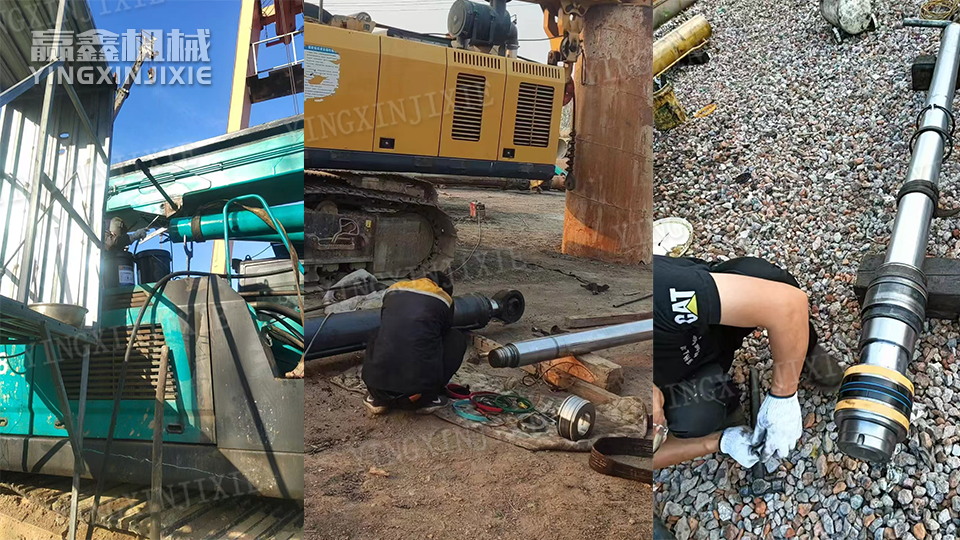
The core benefits of replacing oil seals
Restoring performance, reducing losses, and timely replacing the hydraulic cylinder oil seal of the rotary drilling rig are key measures to solve internal and external leakage faults and ensure stable equipment operation. The core benefits are reflected in three aspects. One is to completely solve the leakage problem. After replacing the internal leakage, the pressure holding performance and power transmission efficiency of the oil cylinder can be restored. After replacing the external leakage, oil waste and environmental pollution can be eliminated; The second is to protect the components of the hydraulic system, prevent impurities from entering and abnormal pressure, reduce the wear of oil pumps, valve groups, oil cylinders and other components, and extend the service life of the hydraulic system; The third is to improve the efficiency of equipment operation. After replacement, the oil cylinder moves smoothly and has sufficient force. The operation of mast lifting, drill rod extension and contraction is precise and controllable, reducing downtime caused by faults and ensuring construction progress.
Timely replace the oil seal to ensure the long-term operation of the hydraulic system
The internal and external leakage faults of hydraulic cylinder oil seals in rotary drilling rigs, although manifested in different forms, can affect equipment performance, exacerbate component wear, and increase operating costs. Accurately distinguishing between two types of faults and promptly replacing the original oil seal with the appropriate model can not only completely solve the leakage problem and restore the normal working state of the oil cylinder, but also protect the core components of the hydraulic system, reduce maintenance costs and downtime losses. For customers with self maintenance capabilities, standardized replacement of oil seals can further improve equipment operation and maintenance efficiency, extend the service life of the entire machine, and provide strong guarantees for efficient and safe operation of rotary drilling rigs.