

The EU Australia trade agreement has been implemented, and the transportation and logistics of large equipment are reshaping the landscape
Release time: 2026-03-25
On March 24th local time, the European Union and Australia signed an eight year long trade agreement, canceling tariffs on almost all goods and key mineral exports from both sides, and simultaneously promoting defense cooperation and scientific research collaboration. This move is not only an important measure for both sides to deal with the uncertainty of US tariffs and promote trade diversification, but also implies a tendency to reduce the so-called “dependence on China”. The implementation of this agreement not only reshapes the logistics link between the EU and Australia, but also has a profound impact on the import and export transportation of large equipment such as rotary drilling rigs and pile drivers in China, as well as the global logistics pattern of large equipment. Opportunities and challenges coexist.
EU Australia tariff exemption, significant reduction in transportation costs for large equipment on both sides
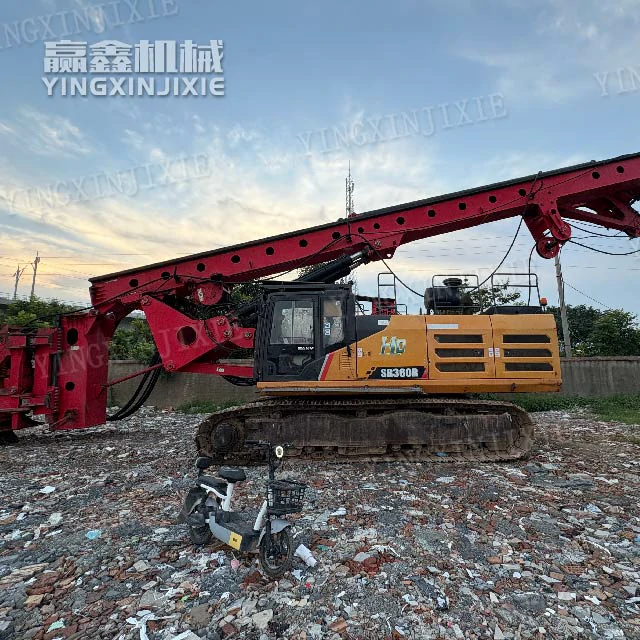
The core tariff exemption clause of the EU Australia trade agreement directly benefits the trade and transportation of large equipment such as rotary drilling rigs and pile drivers between the two sides. According to the agreement, Australia has lifted tariffs on over 99% of EU goods, including engineering machinery and equipment exported by the EU. The EU has also lifted export tariffs on key Australian minerals to provide cost support for the production and transportation of large-scale equipment. Previously, EU rotary drilling rigs and pile drivers exported to Australia had to pay certain tariffs, which, combined with transportation costs, weakened their market competitiveness; After the agreement comes into effect, tariff exemptions can reduce the overall cost of exporting a single EU large-scale equipment by 10% -15%. At the same time, the zero tariff entry of key Australian minerals such as aluminum, lithium, and manganese into the European Union will reduce the cost of raw materials for large-scale equipment production in the EU, indirectly drive the release of equipment transportation demand, and promote the increase in cross-border transportation frequency of equipment between the two sides.
Optimization of trade links, improvement in transportation efficiency and capacity of equipment between Europe and Australia
The EU Australia trade agreement reached after eight years of negotiations not only eliminates tariffs, but also promotes the coordinated upgrading of logistics between the two sides, optimizing the transportation links of large equipment such as rotary drilling rigs and pile drivers. After the agreement is implemented, both parties will simplify the customs clearance process, lower the inspection threshold, especially for the oversized transportation permit of large equipment, modular component inspection and other links, promote more convenient administrative and legal procedures, and shorten the equipment clearance cycle. Combined with the newly added defense cooperation between the two sides, the synergy of logistics transportation will be further enhanced. The deployment of heavy-duty transport capacity between the EU and Australia will gradually increase, and the frequency of scheduling heavy lift ships and semi submersible ships that are suitable for oversized equipment such as rotary drilling rigs and pile drivers will be increased. This will effectively solve the problems of long equipment transportation schedules and cumbersome transfers between the two sides, and promote a 3-5 day improvement in equipment transportation efficiency.
Chinese equipment exports face challenges, logistics layout needs to proactively adapt
The hidden tendency of the EU Australia agreement to reduce dependence on China poses certain challenges to the export transportation of large equipment such as rotary drilling rigs and pile drivers from China. For a long time, Chinese large-scale equipment has occupied a certain market share in the European Union and Australia. Among them, Australia is required to pay a 10% value-added tax on the import of Chinese construction machinery, while some EU countries (such as Germany) levy a 19% value-added tax. Chinese equipment has taken the initiative in the market with its cost-effectiveness advantage. After the exemption of tariffs between Europe and Australia, the cost of exporting EU equipment to Australia has significantly decreased, which will directly compete with Chinese equipment. This may lead to a temporary contraction of Chinese export orders for rotary drilling rigs and pile drivers to Australia and Europe, and the corresponding cross-border transportation demand will also be affected. At the same time, the trade diversification promoted by both sides may further squeeze the market space for Chinese equipment, forcing Chinese logistics companies to optimize their transportation layout to Europe and Australia.
Pushing China’s logistics to upgrade and open up new paths for diversified transportation
The competitive pressure brought by the EU Australia trade agreement has also forced China’s large-scale equipment transportation and logistics industry to accelerate upgrading and open up diversified development paths. On the one hand, logistics companies need to optimize the transportation plans of Chinese rotary drilling rigs and pile drivers to Europe and Australia, reduce transportation costs through large-scale operations, multimodal transport, and other methods, and offset the competitive disadvantage brought by the exemption of tariffs between Europe and Australia; On the other hand, leveraging the opportunities presented by China’s new blueprint for the 15th Five Year Plan, we will strengthen logistics collaboration with other countries, expand into emerging markets such as Southeast Asia and the Middle East, and reduce our dependence on the European Australian single market. At the same time, drawing on the experience of logistics collaboration between Europe and Australia, optimizing cross-border customs clearance processes, improving equipment protection and transportation efficiency, enhancing the core competitiveness of China’s large-scale equipment logistics, and responding to the challenges brought by the adjustment of the global trade pattern.
The reshaping of the global landscape presents new opportunities for large-scale equipment logistics collaboration
The implementation of the EU Australia trade agreement is an important manifestation of the trend of global trade diversification, and also brings new collaborative opportunities for the transportation and logistics of large-scale equipment worldwide. The agreement promotes cooperation between the EU and Australia in the fields of defense and scientific research, which will drive the advancement of infrastructure and defense supporting projects on both sides, thereby generating more transportation demand for rotary drilling rigs and pile drivers, and attracting global logistics companies to layout European Australian routes. At the same time, the logistics collaboration model between Europe and Australia also provides valuable experience for global large-scale equipment logistics, promoting countries to simplify cross-border transportation processes for large-scale equipment and strengthen capacity collaboration. For China, although facing short-term competitive pressure, in the long run, it can rely on its own logistics network advantages, strengthen cooperation with European and Australian logistics enterprises, participate in global large-scale equipment logistics collaboration, and achieve mutual benefit and win-win results.